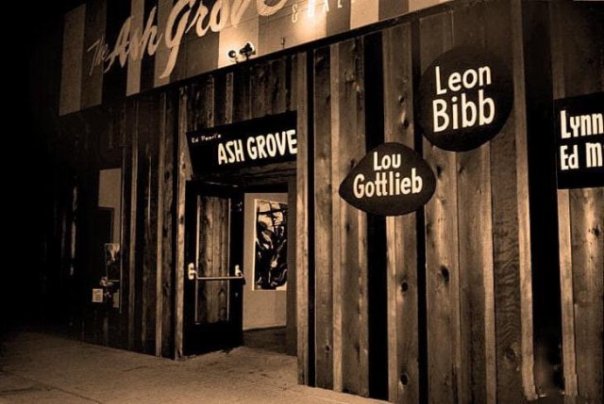
Bern Porter (1911–2004)

1960s: Days of Rage's avatar1960s: Days of Rage

Wisdom of the Questioning Eye: Five books from the 1960s, by found poet Bern Porter – Mark Melnicove. “What to call Bern Porter? Found poet? Visual poet? Mail artist? Book artist? Pop artist? Concrete poet? He was each of these, and he will take his place in the histories of their genres (histories which have only begun to be written). And while it is true that the boundaries of these genres are permeable, allowing one to impregnate another, if we look for Porter’s singular achievement, the one he delved into deeper and with more consistency than his contemporaries, it was as a found poet. As such, he is arguably the most significant found poet of the 20th century, if not all time. Found implies lost. What others discarded he appropriated and claimed its authorship. He combed through trash (often at the post office, after sending off a fresh batch of…
View original post 236 more words

FOX News Hates Public Schools

dianeravitch's avatarDiane Ravitch's blog

FOX “News” posted a slanderous, absurd, dim-witted article about public schools, based on the complaints of a rightwing fringe group group called “No Left Turn in Education.” This group specializes in scare tactics and has a long list of books that they think should be banned.

In their eyes, educating “the whole child” is a nefarious plot to take away the role of parents. Social and emotional learning—like teaching children to be kind, to be considerate of others, to talk instead of fight—is insidious. No wonder people who watch FOX nonstop turn to homeschooling or religious schools, where their kids will get an inferior education.

FOX reports:

Educators at over 120 districts across the country are implementing a pervasive school curriculum that has been denounced by opponents as an effort to manipulate children’s values and beliefs and replace parents as the primary moral authority in their child’s lives, with many…

View original post 754 more words

Professor Calculus

1960s: Days of Rage's avatar1960s: Days of Rage


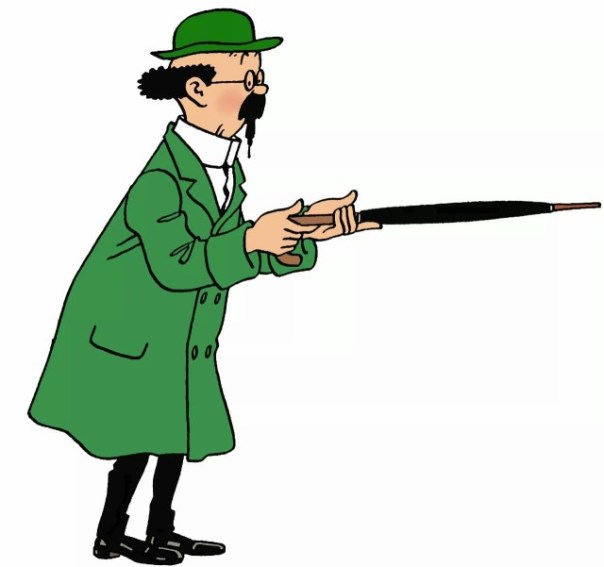
Professor Cuthbert Calculus (French: Professeur Tryphon Tournesol[pʁɔ.fɛ.sœʁ tʁi.fɔ̃ tuʁ.nə.sɔl], meaning ‘Professor TryphonSunflower‘) is a fictional character in The Adventures of Tintin, the comics series by Belgian cartoonist Hergé. He is Tintin’s friend, an absent-minded professor and half-deaf physicist, who invents many sophisticated devices used in the series, such as a one-person shark-shaped submarine, the Moon rocket, and an ultrasound weapon. Calculus’s deafness is a frequent source of humour, as he repeats back what he thinks he has heard, usually in the most unlikely words possible. He does not admit to being near-deaf and insists he is only a little hard of hearing in one ear. Calculus first appeared in Red Rackham’s Treasure (more specifically in the newspaper prepublication of 4–5 March 1943), and was the result of Hergé’s long quest to find the archetypal mad scientist or

View original post 182 more words

Fred Hampton Murder / Angela Davis Revolutionary

1960s: Days of Rage's avatar1960s: Days of Rage

The Black Panther, Fred Hampton

“… On the night of November 13, 1969, while Hampton was in California, Chicago police officers John J. Gilhooly and Frank G. Rappaport were killed in a gun battle with Panthers; one died the next day. A total of nine police officers were shot. Spurgeon Winter Jr, a 19-year-old Panther, was killed by police. Another Panther, Lawrence S. Bell, was charged with murder. In an unsigned editorial headlined ‘No Quarter for Wild Beasts’, the Chicago Tribune urged that Chicago police officers approaching suspected Panthers ‘should be ordered to be ready to shoot.’ As part of the larger COINTELPRO operation, the FBI was determined to prevent any improvement in the effectiveness of the BPP leadership. The FBI orchestrated an armed raid with the Chicago police and Cook County State’s Attorney on Hampton’s Chicago apartment. … Photographic evidence was presented of ‘bullet holes’ allegedly made by…

View original post 385 more words

Red Silk and the Never-Ending Honeymoon

wordcloud9's avatarFlowers For Socrates

Good Morning!

_______________________

Marriage is falling in love over and over again – always with the same person.
_______________________

“So are you to my thoughts as food to life,
Or as sweet-seasoned showers are to the ground.”
William Shakespeare, Sonnet 75
_______________________

This will not be my usual Monday post. My husband and I are celebrating our 40th wedding anniversary this week.

We only had a one-night honeymoon when we got married, so each year since (except during the Covid lockdown), we’ve taken a few days to go away together, another chapter of our “never-ending” honeymoon.

Most little girls daydream about getting married, and some stage mock weddings with dolls, pets, or friends. I was not one of those little girls. It was never “When I get married” – it was always “If  I ever do get married.”

The one thing I said about a…

View original post 525 more words

A Range of Role Reversal Reads

Dave Astor's avatarDave Astor on Literature

Roll reversals! When you eat a roll from the bottom up. Actually, my topic this week is ROLE reversals…in literature.

There’s plenty of potential drama in those reversals — including how the protagonists act in the unexpected/unfamiliar situations they find themselves in, and how other people react to those characters.

Perhaps the best known example of a role reversal in fiction is Mark Twain’s The Prince and the Pauper, whose two main characters dizzyingly switch stations in life. But role reversals can be more realistic and recognizable.

In a novel I recently read — Kristin Hannah’s heart-wrenching, masterful Home Front — Jolene is deployed as a helicopter pilot in the Iraq War while her attorney husband Michael remains on the…home front…to take care of their two daughters. A somewhat unusual gender reversal. Of course, many women are now in the military, but the novel is set nearly 20 years…

View original post 352 more words

five discussion chapter challenges

pat thomson's avatarpatter

In everyday speech, a discussion is usually understood as an in depth treatment of a topic, a way to exchange ideas or a process of talking about something in order to reach a decision. An academic discussion in a thesis or paper has elements of each of these three possibilities – an academic discussion is you

  • working further on your empirical material (in depth)
  • putting your ideas into conversation with the existing literatures (exchange) and
  • reaching a conclusion ( deciding on your “answers’ to your question or hypothesis).

However by the time PhDers come to the discussion chapter they are often tired. They’ve done a load of work generating and analysing stuff – and they have results. So why do more? Isn’t this enough already? Do you really have to start all over again?

It’s not really surprising that discussion chapters can have one or more of five predictable problems:

View original post 442 more words

The Hipster of Joy Street: An introduction to the life and work of John Wieners

1960s: Days of Rage's avatar1960s: Days of Rage

1966 “John Wieners (January 6, 1934 – March 1, 2002) was a Beat poet and member of the San Francisco Renaissance; an antiwar and gay rights activist. His poetry combined candid accounts of sexual and drug-related experimentation with jazz-influenced improvisation.”

“John Wieners once wrote, ‘I will be an old man sometime / And live in a dark room somewhere.’ Today Wieners is an old man, but his small apartment on the far side of Beacon Hill — on Joy Street, where he has lived since 1971 — is not dark. It is bright and disorderly and crowded with visual evidence of a mind constantly shuffling perceptions: a kind of four-room, lived-in collage. One of his own books, an out-of-print paperback, lies open on a Formica-topped table, spine broken, lines of poetry crossed out and rewritten in pencil as if the literary choices he made 40 years ago still gnaw at…

View original post 292 more words

Prairie Fire: The Politics of Revolutionary Anti-Imperialism

1960s: Days of Rage's avatar1960s: Days of Rage


“The Prairie Fire Organizing Committee is an activist group whose members advocate the overthrow of the current capitalist system as the only solution to racism, sexism, homophobia, classism and imperialism. … The Prairie Fire Organization began in 1975. It sprang up from the radical group known as Weatherman. Members of the group, Bernardine Dohrn, Bill Ayers, Jeff Jones, and Celia Sojourn (a pseudonym for several individuals who were unnamed), created a six-part book titled Prairie Fire:The Politics of Revolutionary Anti-Imperialism (1974), composed of sections titled, ‘Arm the Spirit,’ ‘Vietnam,’ ‘On the Road: Impressions of US History,’ ‘Imperialism in Crisis: The Third World,’ ‘Imperialism in Crisis: The Home Front,’ and ‘Against the Common Enemy’. The book’s preparation was a 12-month process, written collaboratively and adopted as the collective statement of the Weather Underground. Mark Rudd stated that the book ‘was an attempt to influence the movement that…

View original post 211 more words

A Poem by Louise Glück on Her Birthday

wordcloud9's avatarFlowers For Socrates

Louise Glück born on April 22, 1943, in New York City and grew up on Long Island; American poet and essayist; winner of the 1993 Pulitzer Prize for Poetry for The Wild Iris; Library of Congress Special Bicentennial Consultant (2000-2002) and Poet Laureate (2003-2004); and 2014 National Book Award (Poetry) for Faithful and Virtuous Night. In 2020, she won the Nobel Prize in Literature. Her father was a Hungarian Jewish immigrant who helped invent and market the X-Acto Knife. She attended Sarah Lawrence College and Columbia University without graduating from either school. In her mid-twenties, she published her poetry collection Firstborn to mixed reviews. Glück has since published over a dozen collections which have been heaped with honors.

To read Louise Glück’s poem “Nostos” click:

View original post 141 more words