Forcing Roses by Ranney Campbell (HOW TO Series)

silverbirchpress's avatarSilver Birch Press

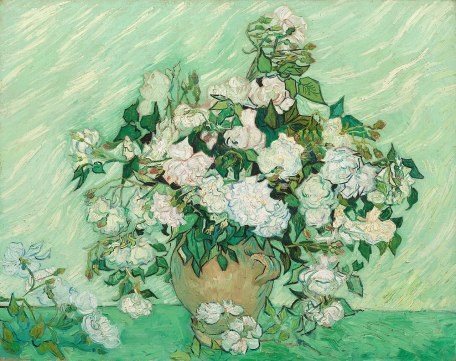
1280px-Roses_-_Vincent_van_GoghForcing Roses
by Ranney Campbell

tent and keep clement
cover, secure,

and wait

bathe in warm water

give a sharp cut

set aside
in a vase

upon your return, blow
into the closed
bud

reflex and pull
and pour
your heated water
into her

let gravity
spread petals

untouched by your hand

then quickly upend her
let drain
to ready

run your fingers
between the folds into crevices
and gently
push
through
tips tracing
the ruffles
circling open

A version of this poem was originally published by The Main Street Rag.

PAINTING:Roses by Vincent van Gogh (1890).

RanneyCampbell copyABOUT THE AUTHOR: Ranney Campbell earned an MFA in fiction from the University of Missouri at St. Louis and lives in Southern California. Her poetry has been published by Misfit Magazine, Shark Reef and others, and is forthcoming in the Rat’s Ass Review and Haight Ashbury Literary Journal. Her chapbook, Pimp

View original post 6 more words

Instructions for Writing a Poem by Jennifer Finstrom (HOW TO Series)

silverbirchpress's avatarSilver Birch Press

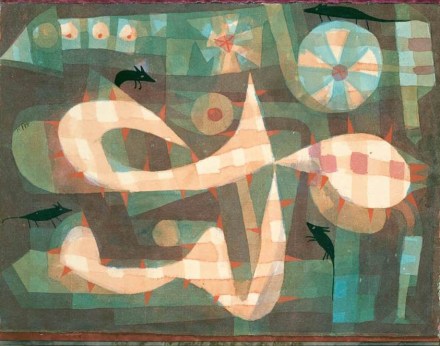
Paul_Kleea_-_The_Barbed_Noose_with_the_Mice_1152x800 copyInstructions for Writing a Poem
—First line after Amy Crane Johnson
by Jennifer Finstrom

You start beyond the field in back of my house.
Never mind that this is the city.

Never mind that I don’t live in a house.
Stand still for a moment and listen. The mice

run through the weeds at your feet,
crying in their small, shrill voices.

Their shabby coats don’t keep out
winter. The seeds they hoard do not

protect them. Wind comes, and makes
its own hoard of husks and bones.

Never mind that this field doesn’t end.
Cross it anyway. Carry nothing in your hands.

Previously published in Threshold LIterary Magazine.

PAINTING:The Barbed Noose with the Mice by Paul Klee (1923).

NOTE FROM THE AUTHOR: I wrote this poem approximately 10 years ago, and reading it again during the pandemic, its absence of people feels even more relevant.

FinstromABOUT THE…

View original post 72 more words

How to breathe by Patrick T. Reardon (HOW TO Series)

silverbirchpress's avatarSilver Birch Press

Kexin Di 2018.jpeg!LargeHow to breathe
by Patrick T. Reardon

Accept air in.
Process it. Expel it.

Accept bliss and ache,
random acts of existence.

Accept other voices
or don’t listen.

Accept the flower and dog shit
or close your eyes.

Accept a journey
that starts and ends.

Accept the gamble
of waking up.

Accept limits.
Accept freedom.
Accept gravity.
Accept fragility.
Accept the cloud of unknowing.

Accept unscheduled beauty.

Accept your own sins.

Accept confused alarms,
bad intent,
the chafing of coupling.

Accept the communion of saints,
the quick and the dead,
the mob, the family, the dance.

Accept another’s fingerprint.
Accept the risk of reaching.

Accept alone.

Accept the blinding white beyond.

PAINTING:Breath by Kexin Di (2018).

NOTE FROM THE AUTHOR: Breathing, it seems to me, is a synonym for living. So what does that entail? That’s what I sought to express in the poem. When I was done, I…

View original post 219 more words

A Poem by Wilfred Owen on His Natal Day

wordcloud9's avatarFlowers For Socrates

Wilfred Owen was born on March 18, 1893. He was an English poet and a soldier, one of the most memorable and powerful poets of WWI, whose poems depicted the horrors of the trenches and gas warfare. Most of his poems which are now best-known were published posthumously. He suffered shell shock after being caught in the blast of a trench mortar shell, lying unconscious on an embankment among the grisly remains of a fellow officer for days. He was sent to Craiglockhart War Hospital  in Edinburgh for treatment. While there, Owen met poet Siegfried Sassoon, who became his friend and mentor as a poet. After further recuperation on light duty in North Yorkshire, he returned to active service in France in July, 1918, and was awarded the Military Cross for his bravery and leadership during an attack in October. He was killed in action on November 4, 1918, exactly…
View original post 183 more words

Birmingham campaign

1960s: Days of Rage's avatar1960s: Days of Rage

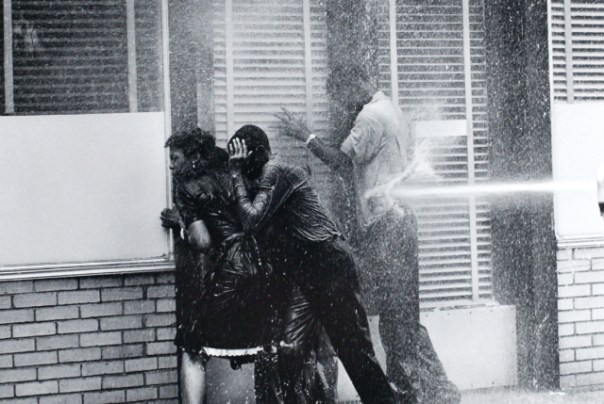
High school students are hit by a high-pressure water jet from a fire hose during a peaceful walk in Birmingham, Alabama in 1963. As photographed by Charles Moore, images like this one, printed in Life, galvanized global support for the demonstrators.

“The Birmingham campaign, also known as the Birmingham movement or Birmingham confrontation, was a movement organized in early 1963 by the Southern Christian Leadership Conference (SCLC) to bring attention to the integration efforts of African Americans in Birmingham, Alabama. Led by Martin Luther King Jr., James Bevel, Fred Shuttlesworth and others, the campaign of nonviolentdirect action culminated in widely publicized confrontations between young black students and white civic authorities, and eventually led the municipal government to change the city’s discrimination laws. In the early 1960s, Birmingham was one of the most racially divided cities in the United States, both as enforced…

View original post 298 more words

How to Fly by Lisa Alletson (HOW TO Series)

silverbirchpress's avatarSilver Birch Press

henri-matisse-rare-vintage-1997-modernist-large-fine-art-silkscreen-print-les-oiseaux-1947-2632How to Fly
by Lisa Alletson

Love the cliff face first.

Measure and weigh
the hands that shackle your ankles
holding you back.

Test the troposphere
with a snowdrop
sprung from your glow.

Leave out a bowl
of black holes
to consume gravity.

Inhale the sweetness
of the wet blade of grass
between you and freedom.

Build a pair of wings
out of tendons and memories
with your naked fingers.

The wings will stick
to your body at first —
low and frightened.

Towel them down
with your childhood blanket
to soak up burdens.

Don’t forget
to take your children —
past and future.

(They will know if you leave without them.)

Don’t forget your strength.
Never forget your strength.

Let go.

IMAGE:Les Oiseaux (The Birds), silkscreen by Henri Matisse (1947).

LisaAlletsonPhotoABOUT THE AUTHOR: Lisa Alletson writes poetry using stark imagery inspired by the political, geographic, and cultural…
View original post 88 more words

TCS: World Speech Day – Say to the Down-Keepers and the Sun-Slappers

wordcloud9's avatarFlowers For Socrates

. Good Morning!

______________________________

Welcome to The Coffee Shop, just for you early risers
on Monday mornings. This is an Open Thread forum,
so if you have an off-topic opinion burning a hole in
your brainpan, feel free to add a comment.

______________________________

If you want to tell people the truth,
make them laugh, otherwise
they’ll kill you.

– Oscar Wilde

View original post 1,372 more words

How to Eat an Avocado by Michael Minassian (HOW TO Series)

silverbirchpress's avatarSilver Birch Press

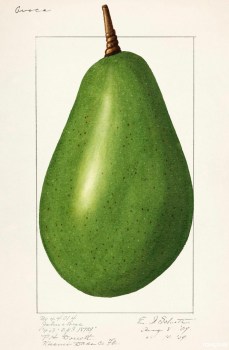
avocado1How to Eat an Avocado
by Michael Minassian

Cover yourself in green—
nestle it in your hand,
squeeze until it yields
to gentle pressure;
slice in half,
then scoop out the pit
as if you were
removing a broken heart.

When you taste the flesh,
let it linger on your tongue,
flowering like a grove
of epiphanies—
earth, rain and sun,
hunger and thirst,
like the first touch of lips
in a voluptuous embrace.

IMAGE: Avocado (Persea) (1916) by Amada Almira Newton. Original from U.S. Department of Agriculture Pomological Watercolor Collection. Rare and Special Collections, National Agricultural Library. Digitally enhanced by rawpixel, rawpixel.com.

Avocado2NOTE FROM THE AUTHOR: Avocados have long been considered symbols of love and fertility. Used by Aztecs as an aphrodisiac, the fruit takes its name from the Nahuatlword ahuacatl, which means “testicle.”

AUTHOR’S NOTE ON THE PHOTO: When we lived in Florida we had a huge…

View original post 125 more words

Have You Heard This One?

Nan's avatarNan's Notebook

During one of his campaign trips Donald Trump is visiting an elementary school and goes into one of the classes. They are in the middle of a discussion related to words and their meanings.

The teacher asks Mr. Trump if he would like to lead the discussion of the word “Tragedy.” So he asks the class for an example of a tragedy.

One little boy stands up and offers: “If my best friend who lives on a farm, is playing in the field and a runaway tractor comes along and knocks him dead, that would be a tragedy.”

“No,” says Mr. Trump, “that would be an accident.”

A little girl raises her hand: “If a school bus carrying 50 children drove over a cliff, killing everyone inside, that would be a tragedy.”

“I’m afraid not,” explains the exalted businessman. “That’s what we would call a great loss.”

The room goes…

View original post 107 more words