
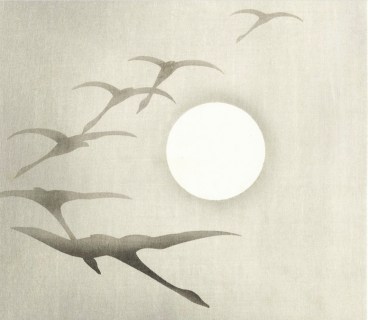
 Instructions for painting a bird in six steps
by Fokkina McDonnell
Let your shadow be present. Someone needs to interpret their dreams.
First paint or draw a circle, as many claw prints as your years. Soot is fine. Work clockwise.
Call, chirrup, caw, chirp, chatter – wake your inner aviary.
Black ink is needed and tears. It cannot be rushed.
Use one hand. You may change hands when your fingers are cramped, like a talon.
Hunger. Fatigue. This is their life – hunting on the wing for insects, grub, the odd vole.
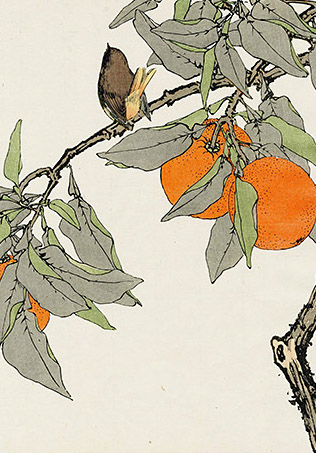
PAINTING:Geese at full moon (detail) by Ohara Koson (1945).
NOTE FROM THE AUTHOR: Doing a writing course The Avian Eye, I’ve become obsessed with birds, researching online: migration, the behaviour of cuckoo, the cleverness of crows.
 ABOUT THE AUTHOR: Dutch-born Fokkina McDonnell has two poetry collections (Another life, Oversteps Books Ltd, 2016; Nothing serious, nothing…
View original post 45 more words
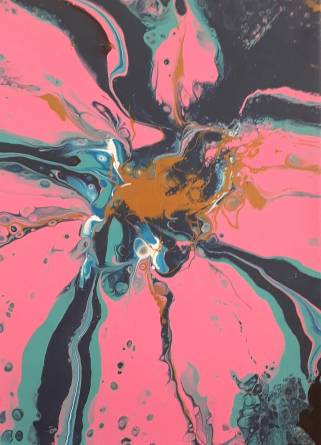 Acrylic Pour at the Art Center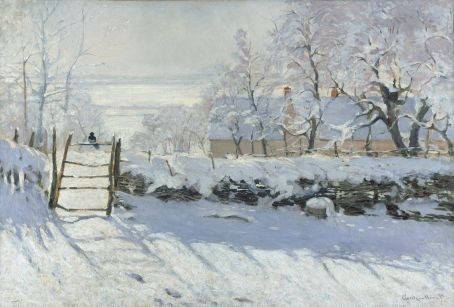
 How to Identify a Bird


 Learning How to Make Meyer Lemon Muffins
 How to Savour a Favourite Memory
 dean ramser