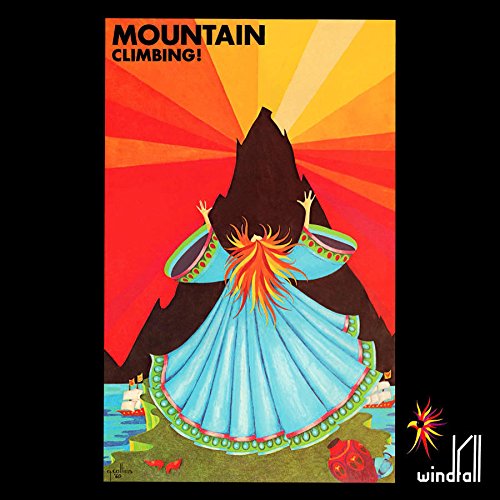
Mountain – Climbing! (1970)

1960s: Days of Rage's avatar1960s: Days of Rage


“A new band named Mountain delivered their debut album on March 7, 1970, then watched the cheekily named Climbing! quickly move into the Billboard Top 20 on the strength of the smash hit single and future classic rock staple, ‘Mississippi Queen.’ Sounds simple, right? The story of Mountain’s quick ascension to mainstream fame is a little more complicated than that. Mountain was actually named after the solo album released by singer and guitarist Leslie West, formerly of the Vagrants, in July 1969. This had been produced by bassist and talented arranger Felix Pappalardi, who had spent the previous years working in close cahoots with the world’s first rock supergroup, Cream. Less than a month later, the newly rechristened group, rounded out by organist Steve Knight and drummer N.D. Smart, found themselves on stage at Woodstock, which immediately transformed these and other relative unknowns into virtual household names…

View original post 223 more words

The Village: 400 Years of Beats and Bohemians, Radicals and Rogues, a History of Greenwich Village – John Strausbaugh

1960s: Days of Rage's avatar1960s: Days of Rage


“… Hail, hail, the gang’s all here: a galaxy of scoundrels, artists and geniuses commingle in John Strausbaugh’s ambitious 600-plus-page history of Greenwich Village. Strausbaugh — who presided over this newspaper’s ‘Weekend Explorer’ series on New York City and wrote what felt like the entirety of The New York Press in its 1990s heyday — turns a collection of stories and profiles into something less like a textbook than a party spinning happily out of control. … And he has a great ear. Telling the story of Off Off Broadway’s creation, Strausbaugh mentions work like ‘Awful People Are Coming Over So We Must Be Pretending to Be Hard at Work and Hope They Will Go Away.’ He cites the folk musician Dave Van Ronk on what Van Ronk expected to see when he arrived in the Village: ‘bearded, bomb-throwing anarchists, poets, painters and nymphomaniacs whose ideology was slightly to the…

View original post 264 more words

Perry Mason (TV series)

1960s: Days of Rage's avatar1960s: Days of Rage


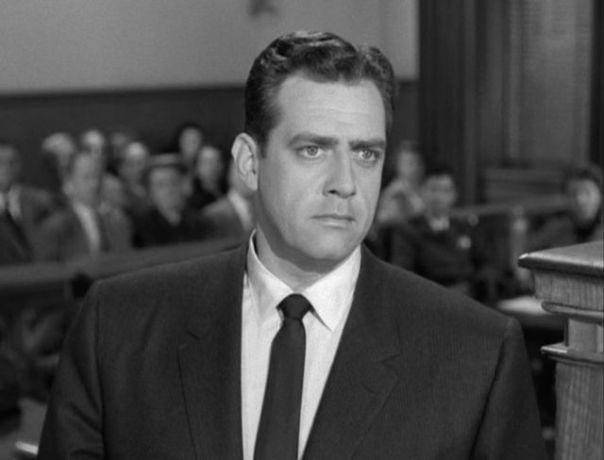
Perry Mason is an American legal drama series originally broadcast on CBS television from September 21, 1957, to May 22, 1966. The title character, portrayed by Raymond Burr, is a Los Angeles criminal defense lawyer who originally appeared in detective fiction by Erle Stanley Gardner. Many episodes are based on stories written by Gardner. Perry Mason was Hollywood’s first weekly one-hour series filmed for television, and remains one of the longest-running and most successful legal-themed television series. … Perry Mason is a distinguished criminal-defense lawyer practicing in Los Angeles, California, most of whose clients have been wrongly charged with murder. Each episode typically follows a formula. The first half of the show introduces a prospective murder victim and several people, including Mason’s client, who have strong motives to commit murder. Once the crime has been committed, Mason, his chain smoking private investigator Paul Drake, and…

View original post 307 more words

The Legacy of the Algerian Revolution

1960s: Days of Rage's avatar1960s: Days of Rage

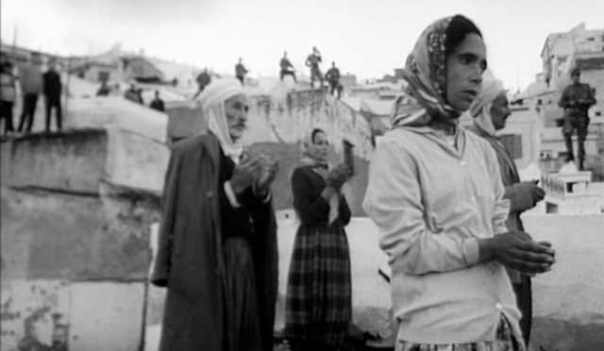
Still from ‘Battle of Algiers’ (1966).

“The Algerian revolution against French settler colonialism, which marks its anniversary today, March 19th, stands as one of the most iconic victories for Third World liberation. In the furnace of the brutal, seven-year-long struggle, Franz Fanon forged The Wretched of the Earth. The Front de Libération Nationale’s (FLN), victory was remarkable not only because of the brutality of the French settler colonial project but because, although splits within the FLN certainly existed, there was a general consensus that political independence was not the end of the revolutionary process. The next stage was to transform Algerian society and reverse what the FLN understood as the economic and social backwardness caused by colonial exploitation, through a sweeping project of nationalization, centralization, and planning. The experience of Algeria’s revolution then, serves as a powerful example of both the achievements and failures of a revolutionary program put…

View original post 178 more words

A Poem by Alfred, Lord Tennyson on the Anniversary of His Birth

wordcloud9's avatarFlowers For Socrates

Alfred Tennyson (1809-1892) born on August 6, 1809, remains one of Britain’s most popular poets; he served as the Poet Laureate from 1850 until his death in 1892, the longest tenure of any English Poet Laureate. In 1883, he was elevated to the peerage, after twice declining the honour. In 1884, Queen Victoria created him Baron Tennyson, of Aldworth in the County of Sussex and of Freshwater in the Isle of Wight. Tennyson was the first author to be raised to the British peerage for his writing. His father was an Anglican clergyman and his mother was a vicar’s daughter. Tennyson’s first major award, the Chancellor’s Gold Medal, was bestowed in 1829 while he was a student at Cambridge, for his poem ‘Timbuktu” when he was 20 years old.  But he had to leave Cambridge before taking his degree because of the death of his father in 1831. He spent the…

View original post 761 more words

Avalon Hill

1960s: Days of Rage's avatar1960s: Days of Rage

Platoon: A Game of the Vietnam War

Avalon Hill Games Inc. is a game company that publishes wargames and strategic board games. It has also published miniature wargaming rules, role-playing games and sports simulations. It is currently a subsidiary of the game company Wizards of the Coast, itself a subsidiary of Hasbro. Avalon Hill introduced many of the concepts of modern recreational wargaming, including the use of a hexagonal grid (a.k.a. hexgrid) overlaid on a flat folding board, zones of control (ZOC), stacking of multiple units at a location, and board games based upon historical events. Avalon Hill was started in 1952 outside Baltimore in Catonsville, Maryland by Charles S. Roberts under the name of ‘The Avalon Game Company’ for the publication of his game Tactics. It is considered the first of a new type of war game, consisting of a self-contained printed…

View original post 255 more words

Stephen Jonas – Exercises For Ear (1968)

1960s: Days of Rage's avatar1960s: Days of Rage


“First published by Ferry Press in 1968, long out of print, Stephen Jonas’ Exercises for Ear was rescued in 1994 when Talisman House republished the complete book in Stephen Jonas, Selected Poems. Over the years I’ve wanted to extend the discussion of Exercises for Ear that I began in my introduction to that Selected, to look more closely at particulars, not-so particulars, local, not-so local, and to jump into the mix anywhere I choose—amidst characters and dramas of a tawdry, highbrow late 50s through mid-60s milieu—to listen to songs of Boston gone. To begin, these are not poems in a traditional sense. Gerrit Lansing has called them etudes. They are bits and pieces—some complete units, others trail off—snippets of conversations, tongue-in-cheek shouts, persona poems, rants, quick snapshots of Boston above and below ground. If anything, they are a marvelous whole, yet individually they’re more like riffs a…

View original post 303 more words

The Concert for Bangladesh

1960s: Days of Rage's avatar1960s: Days of Rage


The Concert for Bangladesh (or Bangla Desh, as the country’s name was originally spelt) was a pair of benefit concerts organised by former Beatles guitarist George Harrison and Indian sitar player Ravi Shankar. The shows were held at 2:30 and 8:00 pm on Sunday, 1 August 1971, at Madison Square Garden in New York City, to raise international awareness of, and fund relief for refugees from East Pakistan, following the Bangladesh Liberation War-related genocide. The concerts were followed by a bestselling live album, a boxed three-record set, and Apple Filmsconcert documentary, which opened in cinemas in the spring of 1972. The event was the first-ever benefit of such a magnitude, and featured a supergroup of performers that included Harrison, fellow ex-Beatle Ringo Starr, Bob Dylan, Eric Clapton, Billy Preston, Leon Russell and the band Badfinger

View original post 243 more words

TCS: The Dame Days of Summer – Four Women Poets

wordcloud9's avatarFlowers For Socrates

. Good Morning!

______________________________

Welcome to The Coffee Shop, just for you early risers
on Monday mornings. This is an Open Thread forum,
so if you have an off-topic opinion burning a hole in
your brainpan, feel free to add a comment.

______________________________

It was August. For years it was August . . .
there was heat like wet gauze and a high, white sky
and music coming from everywhere at once.

— Paula McLain,  A Ticket to Ride

View original post 1,380 more words

The Quiet American – Graham Greene: Directed by Phillip Noyce (2002)

1960s: Days of Rage's avatar1960s: Days of Rage

“The mood of wry disillusion that seeps through the screen adaptation of Graham Greene’s novel ‘The Quiet American’ is sounded in the movie’s opening moments by the voice of Michael Caine musing dreamily on the mystique of Saigon in the early 1950’s. It is a place, declares his character, Thomas Fowler, where colors and tastes seem sharper than they do elsewhere and where even the rain has a special intensity. People who go to Saigon in search of something, he suggests in a silky murmur, are likely to find it. That something has everything to do with faraway places and a mirage of sex and adventure in an exotic clime. Fowler is a wistfully cynical British journalist who has fled an arid marriage in England to live in Southeast Asia, where he is reporting on the Vietnamese fight for independence from French colonial rule. His attitude toward the political turmoil…

View original post 329 more words