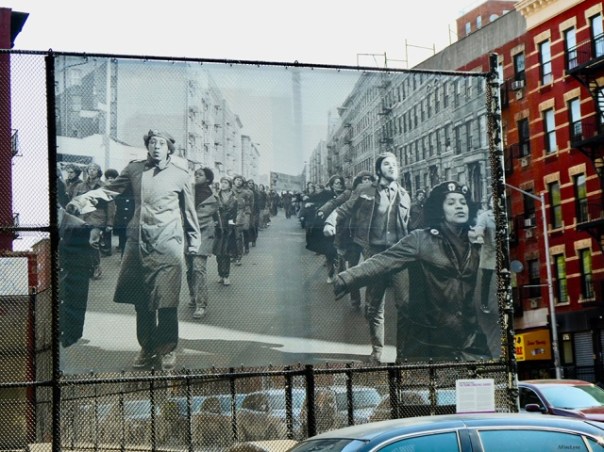
Mapping Resistance: The Young Lords in El Barrio

1960s: Days of Rage's avatar1960s: Days of Rage


“This past July, after thousands upon thousands of protestors flooded the streets of Puerto Rico calling for the ouster of former governor Ricardo Rosselló because of his administration’s offensive chat messages and a pattern of money laundering, conspiracy, and wire fraud, they succeeded. Roselló resigned on August 2. However, the saga of compromised and unsure political leadership continued after this resignation with two more governors being inaugurated in succession within a week. Still, in terms of their political leadership, the protestors refused to accept that what they had been served on their plates was what they had to eat. I have some reservations about protest wielded as a tool for compelling changes in public or administrative policy. I find that there is a tendency to valorize large public demonstrations rather than the difficult work of negotiating compromises. But in Puerto Rico, the organizers and demonstrators absolutely had a righteous…

View original post 226 more words

Hip Capitalism Fails

1960s: Days of Rage's avatar1960s: Days of Rage

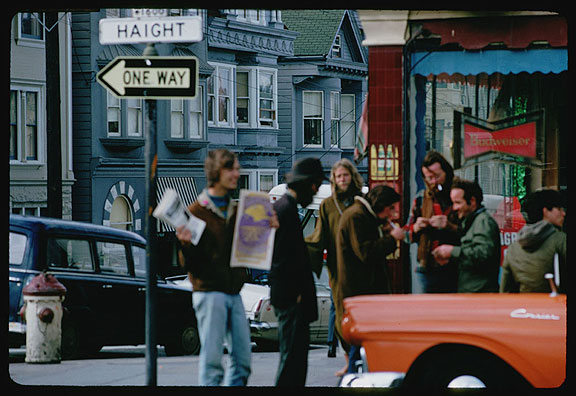
March 14, 1968: Selling the underground press on Haight and Clayton.
“By 1971 the original 1967 ambivalence among one element of hippie culture with the urban setting manifested itself in what I call the Long March to Tennessee, led by Steve Gaskin. Steve Gaskin was a philosopher-guru who held meetings at the beach and was associated with Family Dog Production Company, the producer for many of the early rock and roll bands in the Haight Ashbury. Gaskin and his followers, which grew to several thousand people, increasingly found it impossible to pursue their version of spirituality in an urban setting and developed an ideology of the countryside. In a dramatic event, they formed a caravan of buses and vehicles of all sizes and shapes and drove to Tennessee, leaving the urban hippie in the Haight Ashbury. This was a period of great disease in the Haight, overlapping with the heroin…

View original post 142 more words

Islip, New York: Six Students Refuse to Obey Mask Mandates, Backed by Parents

dianeravitch's avatarDiane Ravitch's blog

New York State mandated mask-wearing in school. Six students arrived at school in Islip without masks. They were directed to a separate room. Their parents showed up promptly and called the police. This is a story that is repeated, in various ways, in districts across the nation, as parents debate and fight over whether their children should follow public health guidelines.

This is the question: why don’t these parents object too vaccines for measles, mumps, rubella, polio, smallpox, and other contagious diseases?

On Thursday morning, six Islip Middle School students came to school without masks. When staff asked them to put masks on, as required by current New York State health rules, the students refused. They were escorted to a room with a security guard when, according to the Suffolk County Police Department, a parent of one of the students called police, who arrived at 9:50 a.m…

Islip Superintendent Dennis…

View original post 43 more words

A Household of Minor Things: The Collections of Robert Duncan and Jess

1960s: Days of Rage's avatar1960s: Days of Rage

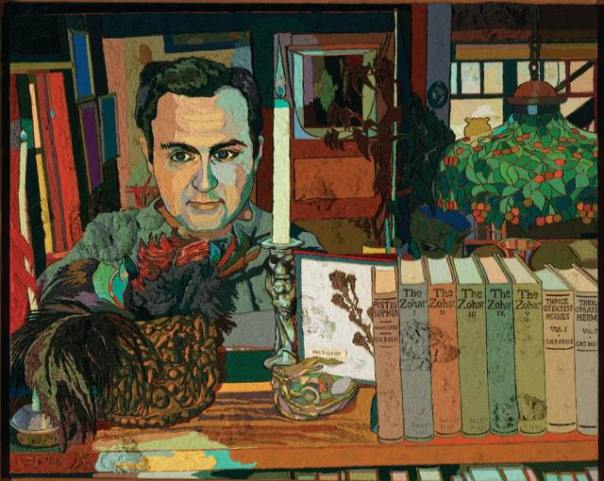
Jess, The Enamord Mage: Translation #6, 1965.
“Jess and Robert Duncan pursued separate artistic paths—the former as a visual artist, the latter as a poet, though each experimented with the other’s chosen medium. Jess, who had a lifelong interest in the play inherent in language, wrote poetry and prose, and Duncan, who was drawn to the open form and movement he perceived in abstract expressionism, painted and drew. Yet neither approached the facility with which the other engaged his own field, and the benefits of these excursions into the other’s territory lay more in the insights brought back than in any contribution made on foreign ground. They collaborated rarely, which may seem surprising given the intensity of their shared worldview and the length of their relationship, some 37 years. But they did have one lasting collaboration: the joint labor of maintaining the household. Despite their different temperaments and commitments…

View original post 242 more words

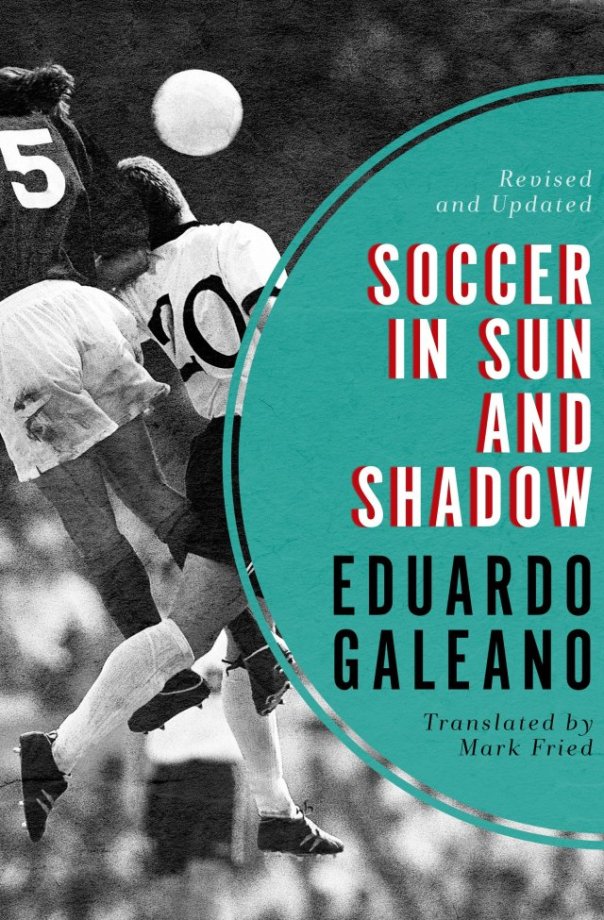
Eduardo Galeano – Soccer in Sun and Shadow

1960s: Days of Rage's avatar1960s: Days of Rage


“And Eduardo Galeano‘s book seems to reverberate that sentiment, though in much spectacular detail. ‘Soccer in Sun and Shadow‘ is easily the most beautiful book written on the Beautiful Game in every respect. Beauty lies in simplicity & the joy of reading this book comes from its its elegant yet effortless writing. In fact, Galeano abhors the language of the so-called soccer doctors or the football analysts & commentators while mocking them for complicating the game more than necessary through the use of fancy words & terminologies which the common man doesn’t understand. He presents a utopian vision of the game – how the game ought to be played in today’s world, where winning has become so vital that adventure is sacrificed for the sake of efficiency. The chapters are very short indeed, some of them barely a page or so. Through these chapters, the book explores…

View original post 311 more words

Post-painterly abstraction

1960s: Days of Rage's avatar1960s: Days of Rage

Morris Louis, Alpha-Phi (1961)

“As a rebellion against the gestural and painterly approach of numerous Abstract Expressionists, term post-painterly abstraction was coined to help define the variety of styles which came forth. In 1964, the author of the term, critic Clement Greenberg used it in the title of the exhibition featuring new tendencies in color field painting, hard-edge abstraction, and the Washington Color School. Believing that early 1950s Abstract Expressionism has stopped achieving any innovations in painting, the critic turned his eye and the eye of the public towards works lacking any evidence of the artist’s inner workings. Anonymous in its execution, the new paintings reflected the move away from the grandiose drama and spirituality of Abstract Expressionism. … Seen as the most important event, which has helped to place post-painterly abstraction on the map of art history, is the 1964 show at the Los Angeles…

View original post 290 more words

Flash of the Spirit: African & Afro-American Art & Philosophy – Robert Farris Thompson

1960s: Days of Rage's avatar1960s: Days of Rage


“… Introduction: The Rise of the Black Atlantic Visual Tradition by Robert Farris Thompson. Listening to rock, jazz, blues, reggae, salsa, samba, bossa nova, juju, highlife, and mambo, one might conclude that much of the popular music of the world is informed by the flash of the spirit of a certain people specially armed with improvisatory drive and brilliance. Since the Atlantic slave trade, ancient African organizing principles of song and dance have crossed the seas from the Old World to the New. There they took on new momentum, intermingling with each other and with New World or European styles of singing and dance. Among those principles are the dominance of a percussive performance style (attack and vital aliveness in sound and motion); a propensity of multiple meter (competing meters sounding all at once): overlapping call and response in singing (solo/chorus, voice/instrument – interlock systems of performance); inner pulse…

View original post 216 more words

Spanish Harlem / El Barrio

1960s: Days of Rage's avatar1960s: Days of Rage


East Harlem, also known as Spanish Harlem or El Barrio, is a neighborhood of Upper Manhattan, New York City, roughly encompassing the area north of the Upper East Side and bounded by 96th Street to the south, Fifth Avenue to the west, and the East and Harlem Rivers to the east and north. Despite its name, it is generally not considered to be a part of Harlem proper, but it is one of the neighborhoods included in Greater Harlem. … Southern Italians and Sicilians, with a moderate number of Northern Italians, soon predominated, especially in the area east of Lexington Avenue between 96th and 116th Streets and east of Madison Avenue between 116th and 125th Streets, with each street featuring people from different regions of Italy. The neighborhood became known as ‘Italian Harlem’, the Italian American hub of Manhattan; it was the first…

View original post 228 more words

Collected Poems – Edward Dorn

1960s: Days of Rage's avatar1960s: Days of Rage


“A Collected Poems of Edward Dorn, the American poet who died in 1999, is a necessary and overdue publication, and, whatever the circumstances, the fact that it was not published in U.S.A. suggests that there is something very wrong with the local culture over there, a fact of which Ed Dorn was very much aware. In fact most of the time it dominated his writing. It has often been said that a ‘Collected Poems’ is a dreadful thing, and when it is 1000 pages long it is certainly a daunting thing, and there are all sorts of problems in how to use it. When Frank O’Hara’s Collected Poems appeared in 1971 I got rid of all the original books, and now can’t find a poem I want unless I can clearly remember the title or incipit. The first collected poems of Charles Olson (Archaeologist of Morning, 1970) had…

View original post 321 more words

By the Sound – Edward Dorn (1965)

1960s: Days of Rage's avatar1960s: Days of Rage


“One of the things the novel can and often does do for its readers is to extend their range of sympathy, to make them see with a new clarity groups of people that might otherwise be forgotten except in statistical charts, and to make them feel that the individuals inside these groups partake of our common humanity. This is one of the main impulses of writers such as Dreiser, Steinbeck, or Solzhenitsyn, writers who not only want to record certain kinds of social oppression but also want to correct them. They take sides in their novels and openly moralize, preferring compassion and authorial commitment to aesthetic distance, and often they do bring about at least some social change. Such a writer is Edward Dorn in By the Sound. By the Sound was originally called Rites of Passage when it was published in 1965, and now it is re-issued with…

View original post 359 more words