‘The Garden State’ Grows Writers

Dave Astor's avatarDave Astor on Literature

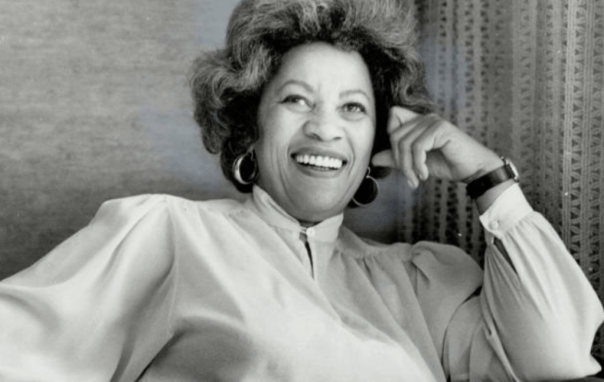
Toni Morrison

Last week I posted about renowned author Sir Walter Scott of Scotland — a country far from my country of the United States. This week my focus will be much closer to home: novelists and other fiction writers I’ve read who were born and/or spent some years in the state of New Jersey.

I’ve lived in NJ much of my life — except for 16 years in New York City and one year near Chicago — and I can see why many successful writers have called the state their home. For one thing, it’s the law of averages — NJ has nearly nine million residents, so some of them were bound to become excellent producers of fiction.

Also, “The Garden State” has NYC near its northeast section and Philadelphia near its southwest section, a mix of cities and suburbs and rural areas, lots of racial and ethnic diversity…

View original post 560 more words

TCS: The Nigerian Connection and the Glory of Butterflies

wordcloud9's avatarFlowers For Socrates

Good Morning!

______________________________

Welcome to The Coffee Shop, just for you early risers
on Monday mornings. This is an Open Thread forum,
so if you have an off-topic opinion burning a hole in
your brainpan, feel free to add a comment.

______________________________

When I ran, I felt like a butterfly that was free.

– Wilma Rudolph

View original post 749 more words

Experimental music

1960s: Days of Rage's avatar1960s: Days of Rage

The score for John Cage’s indeterminate composition “Fontana Mix”

Experimental music is a general label for any music that pushes existing boundaries and genre definitions. Experimental compositional practice is defined broadly by exploratory sensibilities radically opposed to, and questioning of, institutionalized compositional, performing, and aesthetic conventions in music. Elements of experimental music include indeterminate music, in which the composer introduces the elements of chance or unpredictability with regard to either the composition or its performance. Artists may also approach a hybrid of disparate styles or incorporate unorthodox and unique elements. The practice became prominent in the mid-20th century, particularly in Europe and North America. John Cage was one of the earliest composers to use the term and one of experimental music’s primary innovators, utilizing indeterminacy techniques and seeking unknown outcomes. In France, as early as 1953, Pierre Schaeffer had begun using the term musique expérimentale to describe compositional…

View original post 240 more words

Occasionally, a poem by artist Florine Stettheimer

wordcloud9's avatarFlowers For Socrates

Today is Florine Stettheimer’s day of birth.

Florine Stettheimer (1871–1944), American modernist painter, designer and poet; credited as the artist who painted the first feminist nude self-portrait; in the 1930s, she hosted a salon with her sisters that attracted members of the avant-garde in Manhattan, and where she exhibited her work. Stettheimer created the stage designs and costumes for Gertrude Stein and Virgil Thomson’s avant-garde opera, Four Saints in Three Acts. She is best known for her four monumental works illustrating what she considered to be New York City’s “Cathedrals”: Broadway, Wall Street, Fifth Avenue, and New York’s three major art museums.

To read Florine Stettheimer’s poem “Occasionally” click

View original post 137 more words

Yellow Back Radio Broke-Down – Ishmael Reed (1969)

1960s: Days of Rage's avatar1960s: Days of Rage


Yellow Back Radio Broke-Down, by the African-American writer Ishmael Reed, is a satirical take on the traditional Western. It is Ishmael Reed’s second novel, following The Freelance Pallbearers (1967), and was first published in 1969. It tells the story of the Loop Garoo Kid, an African-American cowboy who practices the religion of Neohoodooism, and describes his struggle against established religion and cultural oppression. Yellow Back Radio Broke-Down is a western that spans some three centuries of history and references locations from across the United States landscape. Through the three colorful protagonists, Chief Showcase, a Native American, Drag Gibson, a white land capitalist, and the Loop Garoo Kid, an African-American cowboy, Reed criticizes the hypocrisy of the American Church, the warping of history to degrade the portrayal of African Americans, and ways the ‘white man’ attempts to destroy the ‘black man’. The novel’s title summarizes…

View original post 221 more words

States and Districts Impose Bans on “Critical Race Theory”: Why They Should Not

dianeravitch's avatarDiane Ravitch's blog

State legislatures and even school districts are banning ”critical race theory,” typically based on misinformation about what it is and what it isn’t. The laws and bans are sweeping, and many teachers assume they are prohibiting
discussions of racism, slavery, the KKK, or anything that might make white students feel uncomfortable. Where such views become law, the accurate teaching of American and world history becomes impossible. There have been many shameful episodes in history, and students deserve to learn about them honestly, not sugar-coated.

The National Education Policy Center posted an interview with Professor Adrienne Dixson, a scholar of CRT, who explained what CRT is and what it isn’t. Here is a small part.

Q: In just a few sentences, what is critical race theory?

A: CRT is a theoretical framework that originated in legal scholarship in the late 1980s. The founding CRT scholars were dissatisfied with anti-discrimination laws and…

View original post 741 more words

Two Poems by Rita Dove on Her Birthday

wordcloud9's avatarFlowers For Socrates

Rita Dove was born August 28, 1952, in Akron, Ohio; American poet and essayist; winner of the 1987 Pulitzer Prize for Poetry for her book Thomas and Beulah; U.S. Library of Congress Poet Laureate Consultant in Poetry, 1993-1995, the first African-American (after the title change from Poetry Consultant to Poet Laureate), and at age 40, the youngest poet to be appointed Poet Laureate by the Librarian of Congress. Her poetry collections include The Yellow House on the Corner, Mother Love, On the Bus with Rosa Parks, and American Smooth.

To read Rita Dove’s poems “Adolescence I” and “Dawn Revisted” click:

View original post 204 more words

Point Blank – John Boorman (1967)

1960s: Days of Rage's avatar1960s: Days of Rage


Point Blank is a 1967 Americancrime film directed by John Boorman, starring Lee Marvin, co-starring Angie Dickinson, Keenan Wynn and Carroll O’Connor, and adapted from the 1963 crime noir pulp novel The Hunter by Donald E. Westlake, writing as Richard Stark. Boorman directed the film at Marvin’s request and Marvin played a central role in the film’s development. The film was not a box-office success in 1967, but has since gone on to become a cult classic, eliciting praise from such critics as film historian David Thomson. … Walker works with his friend Mal Reese to rob a major crime operation, ambushing the courier on deserted Alcatraz Island. After counting the money, Reese shoots Walker, leaving him for dead. Reese takes the money and Walker’s wife, Lynne. Walker recovers. With assistance from the mysterious Yost, Walker sets out to find…

View original post 244 more words

The Alexandria Quartet: ‘Love is every sort of conspiracy’

1960s: Days of Rage's avatar1960s: Days of Rage

Alexandria Castle, Egypt

“Lawrence Durrell claimed that the four books of The Alexandria Quartet were ‘an investigation of modern love’. It’s possible to take that idea at face value. Some have even used it as a stick with which to beat him. Notably, his Guardian obituarist (writing in 1990, at a time when Durrell’s reputation was possibly at its lowest ebb) said ‘a harsh judgment’ of his masterpiece might be that it was ‘a four-volume romantic novel written by a poet steeped in Freud and on nodding terms with Einstein’. I’m guessing from the warm response the books have had from this month’s Reading Group that most of you reading this will see that as an absurd rather than just a harsh judgment. Even if we accept that Durrell was only concerned with romantic love, that gives us endless scope for discussion – as Reading Group contributor Wheldrake has…

View original post 344 more words

“Back in the U.S.S.R.” – The Beatles (1968)

1960s: Days of Rage's avatar1960s: Days of Rage


“‘Back in the U.S.S.R.’ is a song by the English rock band the Beatles and the first track of the 1968 double album The Beatles (also known as the ‘White Album’). Written by Paul McCartney and credited to the Lennon–McCartney partnership, the song is a parody of Chuck Berry‘s ‘Back in the U.S.A.‘ and the Beach Boys‘ ‘California Girls‘. The lyrics subvert Berry’s patriotic sentiments about the United States, as the narrator expresses relief upon returning home to the Soviet Union, formally the Union of Soviet Socialist Republics (USSR). The Beatles recorded ‘Back in the U.S.S.R.’ as a three-piece after Ringo Starr temporarily left the group, in protest at McCartney’s criticism of his drumming and the tensions that typified the sessions for the White Album. Instead, the other Beatles created a composite drum track from numerous takes. McCartney’s singing was based on

View original post 261 more words