Taking a Look at the Banning of Books

Dave Astor's avatarDave Astor on Literature

Angie Thomas with her compelling novel. (Teen Vogue photo.)

When a Tennessee school district last month removed from its curriculum Art Spiegelman’s Holocaust graphic novel Maus, book banning was once again in the news.

I, like most avid readers, oppose book banning. (No surprise there.) If you don’t like a book, don’t read it. Nothing would make me read, say, an Ayn Rand novel, but others are welcome to do so. Some will even survive the experience. 🙂

Then there’s the matter of book banning often making the banned book more popular — as exemplified by Maus climbing current best-seller lists despite it dating back to 1980 (when it started to be serialized). It’s not a banner day for a book banner when there’s a sales spike caused by curiosity and/or people wanting to push back against narrow-mindedness.

Of course, the vast majority of book banning is perpetrated by people…

View original post 708 more words

TCS: Valentines to the Fellowship of Books

wordcloud9's avatarFlowers For Socrates

Good Morning!

____________________________

Welcome to The Coffee Shop, just for you early risers
on Monday mornings. This is an Open Thread forum,
so if you have an off-topic opinion burning a hole in
your brainpan, feel free to add a comment.
____________________________

All poets are club-footed
with wings of ink and paper.

– Nona Blyth Cloud

View original post 1,802 more words

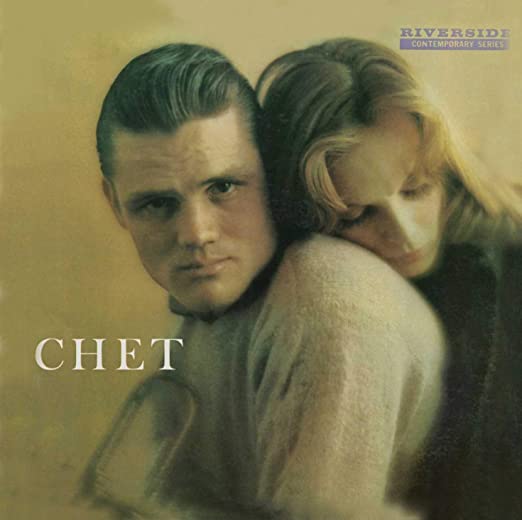
Chet: The Lyrical Trumpet of Chet Baker (1959)

1960s: Days of Rage's avatar1960s: Days of Rage


“… Despite all the grief Baker put record label executives (and club owners) through with his serial requests for cash, most of the people he dealt with had an abiding affection for him—partly because of his artistry, partly because of his charm and vulnerability. Riverside’s Orrin Keepnews, however, was an exception. He detested Baker. Baker was signed to Riverside by Keepnews’ business partner, Bill Grauer, who saw dollar signs when he heard Baker sing. In his liner notes for a posthumous reissue of Chet, Keepnews says he did not like Baker’s singing but felt obliged to go along with Grauer’s wishes. ‘Before long,’ Keepnews continued, ‘[Baker] had achieved the distinction of forcing me to switch my home phone to an unlisted number’ in order to avoid small-hours phone calls begging for immediate cash. Baker was one night caught trying to break into Riverside’s stockroom, from which he planned…

View original post 126 more words

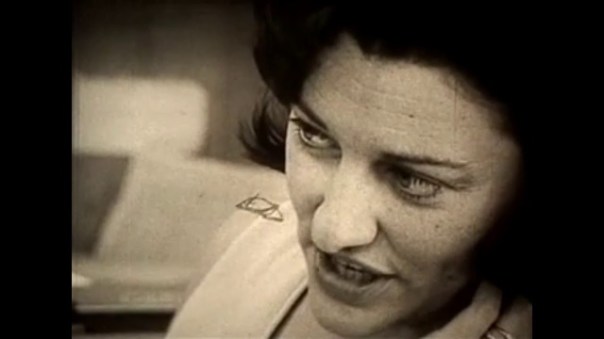
Richard O. Moore’s poésie-vérité documentaries

1960s: Days of Rage's avatar1960s: Days of Rage

Anne Sexton

“For scholars writing on the poet Frank O’Hara, one of the most fascinating documents is the National Educational Television outtakes from Richard O. Moore’s documentary series USA: Poetry (1966). The O’Hara film itself was broadcast in August 1966, shortly after Frank O’Hara’s death, offering the American public exceptional footage of the poet. In 2015, poet and essayist Garrett Caples wrote a series of essays on Moore, the first of which, ‘Work, or the Man Who Shot Frank O’Hara,’ celebrated the publication of Moore’s first volume of poems, Writing the Silences (University of California Press, 2010). With subsequent articles published in 2015, Caples paid homage to Moore’s seminal work in the field of American letters: not only did Moore contribute to making American poetry better known to the general public from the mid-1960s onwards, but the poets he chose to shoot were, for the most part, far from…

View original post 188 more words

Jesse Hagopian: We Will Not Teach Lies

dianeravitch's avatarDiane Ravitch's blog

Jesse Hagopian is an activist teacher in the Seattle Public Schools, a leader in Black Lives Matter at School and editor of the book More Than a Score: The New Uprising Against High-Stakes Testing. This article appeared in the Seattle Times:

State Republican Rep. Jim Walsh recently introduced HB 1807 and Republican Rep. Brad Klippert introduced HB 1886 for this legislative session — two bills designed to mandate educators lie to Washington’s students about structural racism and sexism.

This copycat legislation is lifted from a growing number of bills around the country that seek to ban an honest account of history in K-12 education, including many of the long struggles against oppression. These bills especially target the teaching of critical race theory (CRT), the 1619 Project, the Zinn Education Project and Black Lives Matter at School.

It’s fitting that Rep. Klippert’s bill is numbered “1886,” as that was…

View original post 432 more words

Jane Freilicher – Painter Among Poets

1960s: Days of Rage's avatar1960s: Days of Rage


“In August 1950, Jane Freilicher received a letter from John Ashbery in which he recommended she read Proust’s À la recherché du temps perdu. ‘One of Proust’s most exciting qualities,’ the twenty-three year old wrote to her, ‘is the way he demonstrates how circumstances of one’s life which seem casual and ephemeral can solidify for the rest of one’s life (i.e. Swann’s relation with Odette).’ His prescience is amusing. He had met Freilicher—as he put it, ‘a pretty and somewhat preoccupied dark-haired girl’—because she shared a kitchen in the same apartment building on Third Avenue and 16th Street with Kenneth Koch, a friend of Ashbery’s from Harvard. Koch, visiting his parents in Cincinnati for the summer, had sublet his apartment to Ashbery, and Freilicher let him into the building. The two were, as Koch put it in his later poem ‘A Time Zone,’ immediately ‘Afloat with ironies jokes sensitivities perceptions…

View original post 287 more words

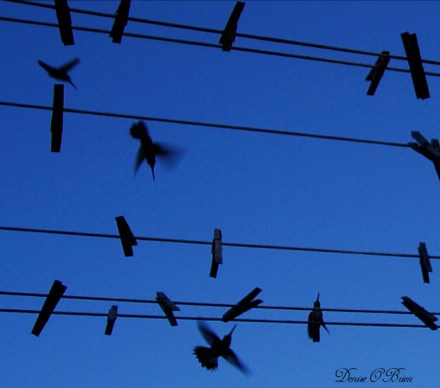
Clothespin Nightlife by Katrin Talbot (HOW TO HEAL THE EARTH Series)

silverbirchpress's avatarSilver Birch Press

D O'BRIENClothespin Nightlife
by Katrin Talbot

They hang like
ripe fruit,
waiting for a
twist, a
release, listening to
the owl song,
then back to
the morning’s joyful grip,
dancing, conserving
under the scallop of
goldfinch

PHOTO:Hummingbirds and Clothespins by Denise O’Brien (2007).

NOTE FROM THE AUTHOR: I’ve hung my laundry out for decades, composted since the 70s, and ridden my bike when I can, but I thought the clothesline might make the best poem!

katrin with chicken dress copyABOUT THE AUTHOR: Australian-born Katrin Talbot’s collection Wrong Number is forthcoming from Finishing Line Press, and she has six other chapbooks, including The Blind Lifeguard and Freeze-Dried Love from Finishing Line Press, Attached—Poetry of Suffix, The Little Red Poem and noun’d, verb, all from dancing girl press, and St. Cecilia’s Daze, published by Parallel Press. Her poetry has appeared in many journals, including Main Street Rag, Fresh Ink, Bramble, and Your Daily
View original post 18 more words

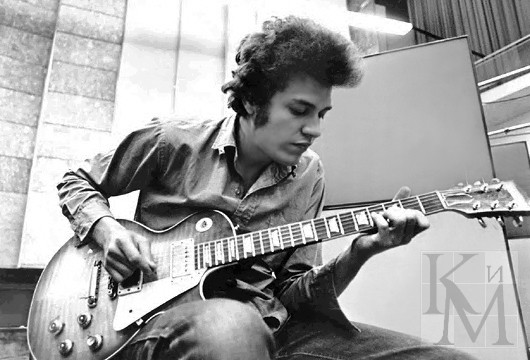
The sensational story of Mike Bloomfield: from prodigy to tragedy

1960s: Days of Rage's avatar1960s: Days of Rage


“Bob Dylan isn’t usually one for banter between songs, but tonight is an exception. It’s November 15, 1980 at San Francisco’s Warfield Theatre and he’s relating a story about a guitarist he first met in a Chicago blues club two decades previously: a skinny teenage hotshot with a towering stack of black curly hair and a dizzying arsenal of licks copped from Big Bill Broonzy and Sonny Boy Williamson. ‘He just played circles around anything I could play,’ marvels Dylan. ‘And I always remembered that.’ Dylan goes on to explain that, some years later, he was recording in New York and needed a guitar player. So he called him up. ‘Anyway,’ he concludes, ‘he played on Like A Rolling Stone and he’s here tonight. Give him a hand – Michael Bloomfield!’ The crowd roars its approval as Bloomfield, 37 years old, ambles on stage in his bedroom slippers and starts…

View original post 259 more words

Kimberlé Williams Crenshaw: Dr. King Understood “Critical Race Theory” Before It Had a Name

dianeravitch's avatarDiane Ravitch's blog

Kimberlé Williams Crenshaw is a professor of law at Columbia and UCLA and one of the leading figures in the field of critical race studies. She wrote the following article for the Los Angeles Times, where she demonstrates that the new laws banning the study of systemic racism simultaneously ban Dr. King’s views of America’s racial problems, which were not solved by passing civil rights laws. The furor over CRT shows that racism remains a powerful force today. Critics of CRT maintain illogically that teaching the history of racism is racist, that uncomfortable facts must not be taught at all, and that history must be scrubbed clean of divisive realities. As Crenshaw points out, King would have fought the current effort to cleanse U.S. history; his own words and works cannot be taught.

For the first time, we’re observing the Rev. Martin Luther King Jr. holiday under new laws in…

View original post 2,010 more words

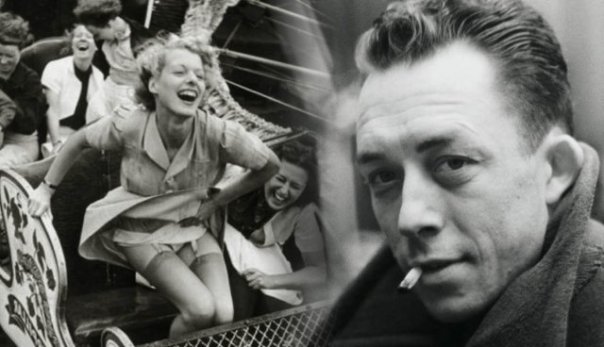
Life is Absurd! Exploring Albert Camus’ Rebellious Philosophy

1960s: Days of Rage's avatar1960s: Days of Rage


“What is the absurd? For Algerian French existential writer Albert Camus, our desire for meaning in a meaningless universe arises in the absurd. In this article, we explore Camus’ philosophy of the absurd through a re-envisioned account of the Greek myth of Sisyphus, as well as his ideas about rebellion and what it means to be an existential hero. Alternative accounts are discussed to inspire you to form your own philosophy of the absurd. … Taking inspiration from existential writers and philosophers of the likes of Friedrich Nietzsche, Albert Camus’ writing explored existential themes of disillusionment and alienation in a war-torn period in which people felt abandoned (by God) and without meaning. His major contribution to philosophy is his views on ‘the absurd,’ a nihilistic outlook on life which he explored in his essays, novels and plays. To understand what ‘the absurd’ is, we must first look at what…

View original post 241 more words