All posts by Dr. Dean Albert Ramser

Unknown's avatar

About Dr. Dean Albert Ramser

Slava Ukraine! Supporting student success in Ukraine. Retired educator (English / Education: GED2EdD; "Ми будемо поруч один з одним як члени людства в найкращому сенсі цього слова". (Горан Перссон) Слава Україна 🇺🇦 "We will be there for one another as fellow members of humanity, in the finest sense of the word." (Goran Persson) https://cal.berkeley.edu/DeanRamser

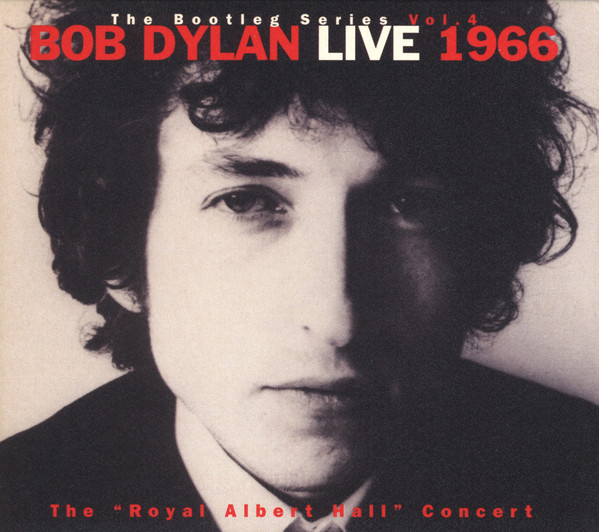
The Bootleg Series Vol. 4: Bob Dylan Live 1966, The “Royal Albert Hall” Concert

1960s: Days of Rage's avatar1960s: Days of Rage


Live 1966: The ‘Royal Albert Hall’ Concert is a two-disclive album by Bob Dylan, released in 1998. It is the second installment in the ongoing Bob Dylan Bootleg Series on Legacy Recordings, and has been certified a gold record by the RIAA. It was recorded at the ManchesterFree Trade Hall during Dylan’s world tour in 1966, though early bootlegs attributed the recording to the Royal Albert Hall so it became known as the Royal Albert Hall Concert. Extensively bootlegged for decades, it is an important document in the development of popular music during the 1960s. The set list consisted of two parts, with the first half of the concert being Dylan alone on stage performing an entirely acoustic set of songs, while the second half of the concert has Dylan playing an ‘electric’ set of songs alongside his band the Hawks. The…

View original post 268 more words
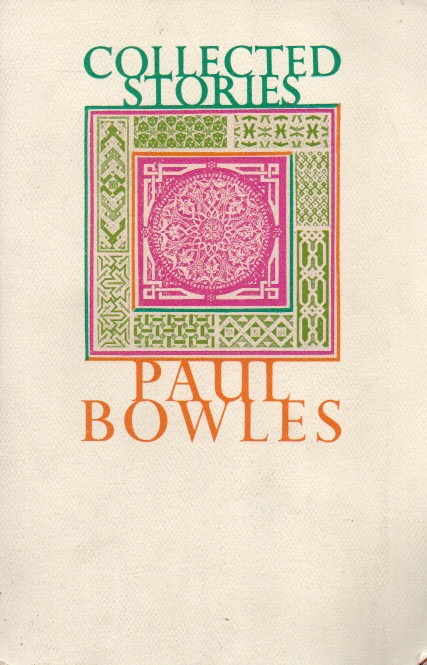
Collected Stories 1939-1976 – Paul Bowles

1960s: Days of Rage's avatar1960s: Days of Rage


“After an early false start as a poet and a substantial career as a composer, Paul Bowles began his career as a short story writer in his mid-thirties, when he was asked to edit an issue of a magazine on Central and South American culture and felt an urge to invent some myths of his own. He hoped to inhabit the primitive mind, and resolved to adopt ‘the old Surrealist method of abandoning conscious control and writing whatever words came from the pen.’ In ‘By the Water,’ for instance, a young man enters the baths of a strange and unfriendly town, and after following the long dark corridors to the pools, happens to run into the proprietor of the place: ‘The creature’s head was large; its body was small and it had no legs or arms. The lower part of the trunk ended in two flipper-like pieces of flesh. From…

View original post 232 more words

Camera Lucida – Roland Barthes (1980)

1960s: Days of Rage's avatar1960s: Days of Rage


Camera Lucida (French: La chambre claire) is a short book published in 1980 by the French literary theorist and philosopherRoland Barthes. It is simultaneously an inquiry into the nature and essence of photography and a eulogy to Barthes’ late mother. The book investigates the effects of photography on the spectator (as distinct from the photographer, and also from the object photographed, which Barthes calls the ‘spectrum’). In a deeply personal discussion of the lasting emotional effect of certain photographs, Barthes considers photography as asymbolic, irreducible to the codes of language or culture, acting on the body as much as on the mind. The book develops the twin concepts of studium and punctum: studium denoting the cultural, linguistic, and political interpretation of a photograph, punctum denoting the wounding, personally touching detail which establishes a direct relationship with the object or person within it. Camera…

View original post 177 more words

Ted Berrigan: Has Henry James Put Me in This Mood?

1960s: Days of Rage's avatar1960s: Days of Rage

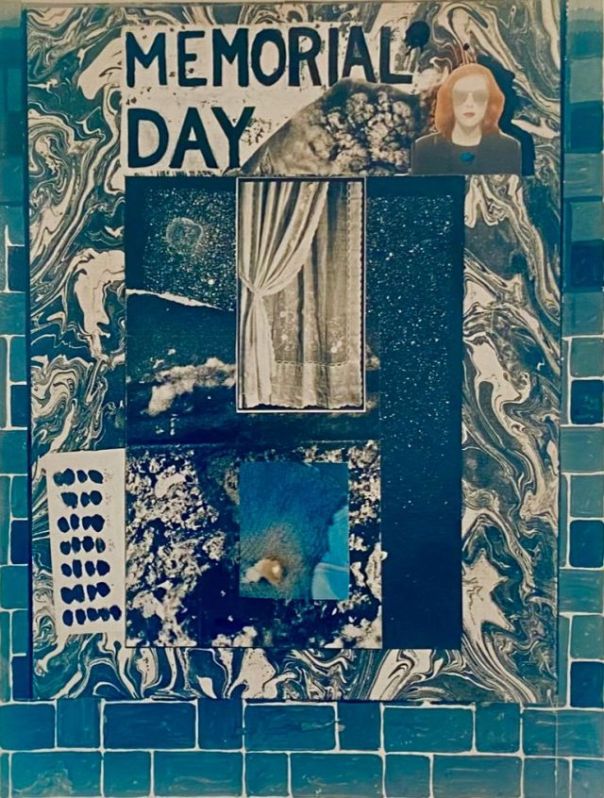
Collage made as a proposed cover for “Memorial Day,” a long poem by Anne Waldman and Ted Berrigan.
“Ted Berrigan was the first in the circle of poets around the Poetry Project at Saint Mark’s Church to ask me to design an announcement mailer for one of his readings. He encouraged others to do the same. In the late sixties, I designed a number of flyers and covers for mimeographed poetry books. These gave me the first public exposure for my work. Ted and I saw one another off and on for about five years. In the spring of 1970, we lived together on Saint Mark’s Place in the East Village, until June, when Ted went to teach a course in Buffalo. I moved into the artists Rudy Burckhardt and Yvonne Jacquette’s loft on East Fourteenth Street while they summered in Maine. Ted stayed with me for a number of…

View original post 231 more words

Roy Lichtenstein – “Ohhh… Alright…” (1964)

1960s: Days of Rage's avatar1960s: Days of Rage


Ohhh…Alright… is a 1964 pop art painting by Roy Lichtenstein. It formerly held the record for highest auction price for a Lichtenstein painting. In November 2010, Ohhh…Alright…, previously owned by Steve Martin and later by Steve Wynn, was sold at a record US $42.6 million (£26.7 million) at a sale at Christie’s in New York, which surpassed the 2005 $16.2 million Lichtenstein record set when In the Car sold. The hammer price was $38 million.[3] It was surpassed in the following year by I Can See the Whole Room…and There’s Nobody in It!, which sold for $43.2 million. Measuring 91.4 cm × 96.5 cm (36 in × 38 in), Ohhh…Alright… is derived from the June 1963 edition of Secret Hearts #88 by Arleigh Publishing Corp. (now part of D. C. Comics). After 1963, Lichtenstein’s comics-based women ‘…look hard, crisp, brittle, and uniformly modish in appearance…

View original post 174 more words

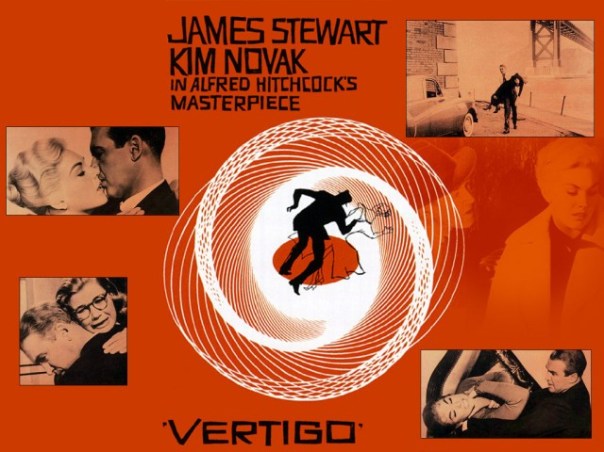
Hitchcock’s ‘Vertigo’: The Unrelenting Male Gaze that Blurs the Lines Between Possession and Obsession

1960s: Days of Rage's avatar1960s: Days of Rage


“It is no secret that the late Alfred Hitchcock was—and still is—not only one of the most revered filmmakers in the history of cinema, but also the ‘Master of Suspense.’ After having started his career as a silent film title designer and art director, the London-born auteur had his directorial debut with the 1925 (silent) movie The Pleasure Garden and subsequently went on to make a number of films that would, after a mere few shots, become instantly recognizable as his. Dramatic shadows, unpredictable visual revelations and odd camera angles were all part of his repertoire, with the narrative of wrongfully accused people becoming a pervasive one throughout his career. … One of them is, of course, the 1959 noir Vertigo (with the other three being Rear Window (1954), North by Northwest (1959) and Psycho (1960)). But the now-adored film was not always considered one of Hitchcock’s masterpieces, quite the…

View original post 197 more words

Abiodun Oyewole – One of the First Last Poets – Talks About Legacy, and Hip Hop

1960s: Days of Rage's avatar1960s: Days of Rage

The Last Poets in 1970; half a century later—and counting—Oyewole is keeping poetry in the moment.
“A founding member of the American music and spoken-word group The Last Poets, Abiodun Oyewole is also known as a founding father of hip hop. Public Enemy, A Tribe Called Quest, Wu-Tang Clan, Erykah Badu, and countless others cite The Last Poets as a major influence. ‘When The Revolution Comes,’ from the Last Poets’ eponymous 1970 debut album, has been sampled in ‘Party and Bullshit,’ by The Notorious B.I.G.; ‘Concerto in X Minor,’ by Brand Nubian; and ‘Prolly,’ by Sevyn Streeter, featuring Gucci Mane. Samples of ‘On the Subway,’ from the same album, have been used by Digable Planets. The list goes on. Oyewole was born Charles Davis, in Cincinnati, but grew up in Queens and regularly attended church in Harlem, a place of congregation, inspiration, and social measurement. His mother encouraged him to…

View original post 197 more words

Greensboro sit-ins

1960s: Days of Rage's avatar1960s: Days of Rage

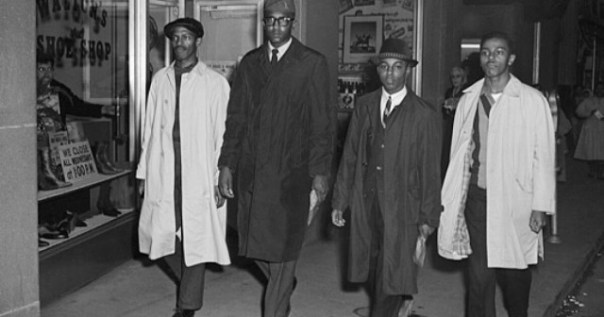
The Greensboro Four: (left to right) David Richmond, Franklin McCain, Ezell A. Blair, Jr., and Joseph McNeil.

“The Greensboro sit-ins were a series of nonviolent protests in February to July 1960, primarily in the Woolworth store—now the International Civil Rights Center and Museum—in Greensboro, North Carolina, which led to the F. W. Woolworth Company department store chain removing its policy of racial segregation in the Southern United States. While not the first sit-in of the civil rights movement, the Greensboro sit-ins were an instrumental action, and also the best-known sit-ins of the civil rights movement. They are considered a catalyst to the subsequent sit-in movement, in which 70,000 people participated. This sit-in was a contributing factor in the formation of the Student Nonviolent Coordinating Committee (SNCC). In August 1939, African-American attorney Samuel Wilbert Tucker organized the Alexandria Library sit-in in Virginia…

View original post 232 more words

Captain Haddock

1960s: Days of Rage's avatar1960s: Days of Rage


Captain Archibald Haddock … is a fictional character in The Adventures of Tintin, the comics series by Belgian cartoonist Hergé. He is one of Tintin’s best friends, a seafaring pipe-smoking Merchant MarineCaptain. Haddock is initially depicted as a weak and alcoholic character under the control of his treacherous first mate Allan, who keeps him drunk and runs his freighter. He regains his command and his dignity, even rising to president of the Society of Sober Sailors (The Shooting Star), but never gives up his love for rum and whisky, especially Loch Lomond, until the final Tintin adventure, Tintin and the Picaros, when Professor Calculus ‘cures’ him of his taste for alcohol. In the adventure Secret of the Unicorn (and continuing in Red Rackham’s Treasure) he and Tintin travel to find a pirate’s treasure captured by his ancestor, Sir…

View original post 203 more words

These Are the Times That Try Men’s Souls

wordcloud9's avatarFlowers For Socrates

by Nona Blyth Cloud

“THESE are the times that try men’s souls. The summer soldier and the sunshine patriot will, in this crisis, shrink from the service of their country; but he that stands by it now, deserves the love and thanks of man and woman. Tyranny, like hell, is not easily conquered; yet we have this consolation with us, that the harder the conflict, the more glorious the triumph. What we obtain too cheap, we esteem too lightly: it is dearness only that gives every thing its value.”

― Thomas Paine, The Crisis

Thomas Paine was born in England on February 9, 1737. Paine emigrated to the British American colonies in 1774 with the help of Benjamin Franklin, arriving just in time to help spark the American Revolution. Virtually every rebel read (or listened to a reading of) his 47-page pamphlet Common Sense, proportionally the all-time best-selling American title, which catalysed…

View original post 248 more words