All posts by Dr. Dean Albert Ramser

Unknown's avatar

About Dr. Dean Albert Ramser

Slava Ukraine! Supporting student success in Ukraine. Retired educator (English / Education: GED2EdD; "Ми будемо поруч один з одним як члени людства в найкращому сенсі цього слова". (Горан Перссон) Слава Україна 🇺🇦 "We will be there for one another as fellow members of humanity, in the finest sense of the word." (Goran Persson) https://cal.berkeley.edu/DeanRamser

Nuyorican movement

1960s: Days of Rage's avatar1960s: Days of Rage

THE LIFE AND POETRY OF JULIA DE BURGOS, Directed by Jose Garcia Torres, 1979, 28 minutes

“The Nuyorican movement is a cultural and intellectual movement involving poets, writers, musicians and artists who are Puerto Rican or of Puerto Rican descent, who live in or near New York City, and either call themselves or are known as Nuyoricans. It originated in the late 1960s and early 1970s in neighborhoods such as Loisaida, East Harlem, Williamsburg, and the South Bronx as a means to validate Puerto Rican experience in the United States, particularly for poor and working-class people who suffered from marginalization, ostracism, and discrimination. The term Nuyorican was originally used as an insult until leading artists such as Miguel Algarín reclaimed it and transformed its meaning. Key cultural organizations such as the Nuyorican Poets Café and Charas/El Bohio in the Lower East Side

View original post 231 more words

The Foundations – “Baby, Now That I’ve Found You”, “Build Me Up Buttercup”

1960s: Days of Rage's avatar1960s: Days of Rage


The Foundations were a British soul band (m. 1967–1970). The group’s background was: West Indian, White British, and Sri Lankan. Their 1967 debut single ‘Baby Now That I’ve Found You‘ reached number one in the UK and Canada, and number eleven in the US, while their 1968 single ‘Build Me Up Buttercup‘ reached number two in the UK and number three on the US Billboard Hot 100. The group was the first multi-racial group to have a number one hit in the UK in the 1960s. … The Foundations attracted much interest and intrigue due to the size and structure of the group. Not only was there a diverse ethnic mix in the group, but there was also diversity in ages and musical backgrounds. The oldest member of the group, Mike Elliott, was 38 years old. The youngest was Tim Harris

View original post 224 more words

Harlan Ellison Dies at 84; Prolific, Irascible (Science) Fiction Writer

1960s: Days of Rage's avatar1960s: Days of Rage


“Harlan Ellison, a furiously prolific and cantankerous writer whose science fiction and fantasy stories reflected a personality so intense that they often read as if he were punching his manual typewriter keys with his fists, died on Wednesday at his home in Los Angeles. … Mr. Ellison looked at storytelling as a ‘holy chore,’ which he pursued zealously for more than 60 years. His output includes more than 1,700 short stories and articles, at least 100 books and dozens of screenplays and television scripts. And although he was ranked with eminent science fiction writers like Ray Bradbury and Isaac Asimov, he insisted that he wrote speculative fiction, or simply fiction. ‘Call me a science fiction writer,’ Mr. Ellison said on the Sci-Fi Channel (now SyFy) in the 1990s. ‘I’ll come to your house and I’ll nail your pet’s head to a coffee table. I’ll hit you so hard your ancestors…

View original post 191 more words

Timothy Snyder: The Coming Power Struggle in Russia

dianeravitch's avatarDiane Ravitch's blog

Timothy Snyder is a political scientist at Yale who has written incisive books about fascism. In this essay, he describes a scenario that will bring Russia’s invasion of Ukraine to an end.

He does not believe that Putin will deploy nuclear weapons. He believes that the humiliating retreat of Russian soldiers on the battlefield will produce power struggles in Russia. The mercenaries that Putin has relied on from Chechnya and the Wagner Group (a neo-fascist militia) are unlikely to put their best troops at risk when the Russian military is retreating. The consequences will not be favorable for Putin.

View original post

The Urban Lens: From Bob Dylan to Jack Kerouac, see rare photos of the Village’s Beat Generation

1960s: Days of Rage's avatar1960s: Days of Rage

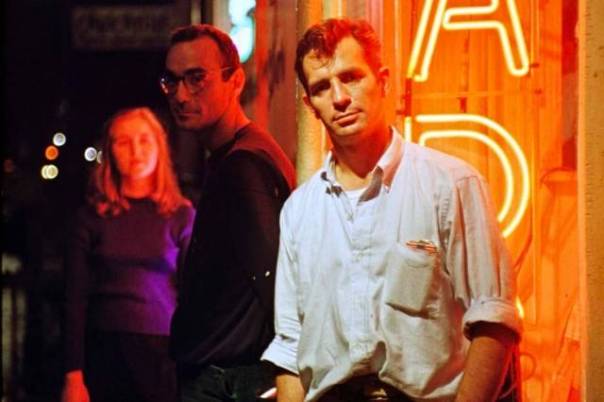
Dutch American artist Willem de Kooning (1904 – 1997) (center, with light hair) speaks with an unidentified couple at the top of a stoop next door to the Tanager Gallery (the storefront above the ‘Bar’ sign) on 10th Street, New York, New York, April 5, 1959.

“Perhaps no single photographer could be said to have captured the energy, the cultural ferment, the reverberating social change emanating from New York City in the second half of the 20th century as vividly as Fred W. McDarrah. McDarrah got his start covering the downtown beat of the Village Voice in the 1950s and ’60s, as that publication was defining a newly-emerged breed of independent journalism. McDarrah penetrated the lofts and coffeehouses of Lower Manhattan to shed light upon a new movement known as ‘The Beats’ and went on to capture on film the New York artists, activists, politicians, and poets who changed the…

View original post 232 more words

Belted, Booted and Buckled: B-Movie Title Design of the 1960s

1960s: Days of Rage's avatar1960s: Days of Rage


The Golden Age of the American B-Movie Title Sequence – Part 2: The End of the Production Code. “The ’60s were a time of change, not only in politics and social norms, but also the arts, and cinema in particular. Hitchcock’s Psycho, released in 1960, became the first box office blockbuster to be distributed without official approval from the Motion Pictures Distributors Association of America (MPDAA), which set rigid guidelines for sex and violence in American film. … Thus began a decade-long game of chicken between Hollywood and its patrons, each prodding the other to their limits. The censorship goalposts were pushed so far back as to be lost in the fog of America’s ongoing free speech debate. The censors became so marginalized by this cinematic machismo, and so overwhelmed by the explosion of art house films and venues, that they could simply no longer hold the line. In…

View original post 192 more words

TCS: A Hundred Years Hence

wordcloud9's avatarFlowers For Socrates

  Good Morning!

______________________________

Welcome to The Coffee Shop, just for you early risers
on Monday mornings. This is an Open Thread forum,
so if you have an off-topic opinion burning a hole in
your brainpan, feel free to add a comment.

______________________________

“I always wondered why somebody doesn’t do something
about that. Then I realized I was somebody.”
– Lily Tomlin

“The essence of optimism is that it takes no account
of the present, but it is a source of inspiration, of
vitality and hope where others have resigned; it

enables a man to hold his head high, to claim the
future for himself and not to abandon it to his enemy.” 

– Dietrich Bonhoeffer, German theologian
and anti-Nazi dissent

View original post 3,478 more words

Charles Olson: Quicks and Strings by Robin Blaser

1960s: Days of Rage's avatar1960s: Days of Rage

#8 (June 1995), with 15 letters from Olson to Robin Blaser. “Charles Olson and I first met — head to head — in 1957, at The Tavern, which was, then, a white, weatherboarded, frame building with rooms, a bar-restaurant, and a swimming pool on the beach in Gloucester. The pool has since been filled, Tarmac’d and reformed into a parking lot. Don Allen, who had previously met Olson in New York, picked me up in Boston to take the train there — on a shining, early summer day. I’d come east of Chicago for the first time to Boston / Cambridge in July, 1955, hired from Berkeley as a librarian in the Widener Library. This move east was, it seemed to me, a reasonable response to an unanswered dream — out of my childhood reading of Hawthorne, I’d wanted to go to Bowdoin College. Since my desert west didn’t…

View original post 233 more words

Albert Ayler – Holy Ghost: Rare & Unissued Recordings (1962–70)

1960s: Days of Rage's avatar1960s: Days of Rage


“Albert Ayler was a mysterious figure. His recording career was relatively brief, beginning in 1962 and ending in 1970, with several of the entries live performances released many years after his passing. His demise itself was a bizarre circumstance. Revenant Records, by all accounts the most ambitious and thorough of all box-set minded labels, has now released a nine+ CD set of Ayler whose mystery has rubbed off a little on the project. Its coming was announced by a series of all black ads with little on them but what has become the set’s slogan: ‘Trane was the Father…Pharoah was the son…I am the Holy Ghost.’ The result? Most probably the highwater mark in the often underwhelming realm of box sets. It is as if Ayler’s body had washed up on the banks of the East River dressed in a natty Armani suit. The box itself, though black plastic, was…

View original post 207 more words

Frantz Fanon unveiled

1960s: Days of Rage's avatar1960s: Days of Rage


“As a child in the 1960s, my mother would routinely pass a secondary school on her way home in downtown Algiers named Lycée Frantz Fanon. To her, the name was quite peculiar, since all the other schools had newly Arabic names, alluding to different figures within the independence movement and Algerian history more broadly. She was perplexed as to why this school kept this seemingly white French name, only to learn much later in life—from her son, a particularly angsty postcolonial teen—that it was named for a black man from the Caribbean and that he had made contributions to Algeria’s independence movement. This story differs quite radically from today’s nostalgic renderings of Algerian independence from budding, self-proclaimed revolutionaries—both in the academy and activist circles in the West—that place Fanon and his works at the center of the struggle. The two have become so inseparable that I feel the need to…

View original post 186 more words