Kilgore Trout

1960s: Days of Rage's avatar1960s: Days of Rage


“Kilgore Trout is a fictional character created by author Kurt Vonnegut. In Vonnegut’s work, Trout is a notably unsuccessful author of paperback science fiction novels. ‘Trout’ was inspired by the name of the author Theodore Sturgeon (Vonnegut’s colleague in the genre of science fiction—Vonnegut was amused by the notion of a person with the name of a fish, Sturgeon, hence Trout), although Trout’s consistent presence in Vonnegut’s works has also led critics to view him as the author’s own alter ego. In a homage to Vonnegut, Kilgore Trout is also the titular author of the novel Venus on the Half-Shell (1975), written pseudonymously by Philip José Farmer. In 1957, Theodore Sturgeon moved to Truro, Massachusetts, where he befriended Vonnegut, then working as a salesman in a Saab dealership. At the time, both were writing in the genre of science fiction; Vonnegut…

View original post 173 more words

Kenneth Rexroth and Barcelona by the Bay

1960s: Days of Rage's avatar1960s: Days of Rage


“By the time 22-year-old Kenneth Rexroth arrived in San Francisco in 1927, he had already developed a career as a professional bohemian and radical. Orphaned at a young age, he’d been living happily among the seedier elements of Chicago’s underground as a modernist painter, stage performer and poet, and using his natural born oratorical skills to soapbox for the Industrial Workers of the World (IWW). Rexroth and his new wife, Andree, had arrived in San Francisco penniless and with no contacts whatsoever. … Rexroth’s home at 250 Scott Street, above Jack’s Record Cellar, became a magnet for this rapidly spreading mood of disaffection from American society, as all sorts of poets, artists, radicals, and notably conscientious objectors began to find each other and develop a common language and lifestyle in the Bay Area. … Eventually, Rexroth came to be regarded as something of a San Francisco institution. Out of the…

View original post 206 more words

Politico Was Bought by German Billionaire Who Prayed for Trump’s Re-Election

dianeravitch's avatarDiane Ravitch's blog

The Washington Post reported a new development in the media world. The influential and respected new site Politico was bought by a German billionaire who claims to be nonpartisan. But…

BERLIN — Months after his company bought Politico, Mathias Döpfner stood atop Axel Springer’s 19-story headquarters, gazing out at the double row of cobblestones that mark the outline of the demolished Berlin Wall, and explained his global ambitions. “We want to be the leading digital publisher in democracies around the world,” he said.


A newcomer to the community of billionaire media moguls, Döpfner is given to bold pronouncements and visionary prescriptions. He’s concerned that the American press has become too polarized — legacy brands like the New York Times and The Washington Post drifting to the left, in his view, while conservative media falls under the sway of Trumpian “alternative facts.” So in Politico, the fast-growing Beltway political journal, he…

View original post 133 more words

Jean-Luc Godard, Daring Director Who Shaped the French New Wave, Dies at 91

1960s: Days of Rage's avatar1960s: Days of Rage


“Jean-Luc Godard, the daringly innovative director and provocateur whose unconventional camera work, disjointed narrative style and penchant for radical politics changed the course of filmmaking in the 1960s, leaving a lasting influence on it, died on Tuesday at his home in the district of Rolle, Switzerland. He was 91. His longtime legal adviser, Patrick Jeanneret, said Mr. Godard died by assisted suicide, having suffered from ‘multiple disabling pathologies.’ … A master of epigrams as well as of movies, Mr. Godard once observed, ‘A film consists of a beginning, a middle and an end, though not necessarily in that order.’ In practice he seldom scrambled the timeline of his films, preferring instead to leap forward through his narratives by means of the elliptical ‘jump cut,’ which he did much to make into a widely accepted tool. But he never tired of taking apart established forms and reassembling them in ways that…

View original post 250 more words

Hair Color by Nancy Lubarsky (ONE GOOD MEMORY Series)

silverbirchpress's avatarSilver Birch Press

women-with-red-hair-amedeo-modigliani.jpg!LargeHair Color
by Nancy Lubarsky

I never knew my father dyed my mother’s
hair. It happened at night, after I went to sleep.
Onetime their muffled voices woke me. They
didn’t know I was there. I sat in our small

apartment’s dark living room, peered around
the corner. They were in the kitchen, her back
to him, covered with old sheets, a few more
spread underneath. At first, I wasn’t sure—

there was just a sour smell. She leaned back
against his chest, her eyes closed, his thick
arms above her head. He rubbed her temples,
then one plastic-gloved hand picked up the

narrow brush, dipped it in the mixture. Slowly,
he parted her hair, dabbed at the white roots.
There was a swish sound as he stroked back
and forth, lifting layer after layer of hair. They

hardly spoke except when he whispered, tilt
your head. I saw him…

View original post 264 more words

Stony Brook – George Quasha

1960s: Days of Rage's avatar1960s: Days of Rage


George Quasha: “I began Stony Brook, ‘a journal of poetry, poetics and translation,’ in 1968 at Stony Brook University (SUNY), where, since 1966, I’d been teaching full time in the English Department while doing graduate work at NYU. I was inspired both by the poetry energy of downtown New York and the great variety of international poets who came through Stony Brook. A special opportunity to launch the journal arose at the June 1968 Stony Brook international poetry festival, organized by faculty poets Jim Harrison and Louis Simpson, who invited some twelve foreign poets—including Francis Ponge, Zbigniew Herbert, Czesław Miłosz, Eugène Guillevic, Nicanor Parra, and Kofi Awoonor—and some seventy American poets to listen to those twelve, but not themselves give readings—including Robert Duncan, Jackson Mac Low, Allen Ginsberg, Clayton Eshleman, Jerome Rothenberg, Anselm Hollo, Denise Levertov, Gary Snyder, Ed Sanders, Joel Oppenheimer, Milton Kessler, Bill Corbett, Charles Simic, George…

View original post 167 more words

The Screens – Jean Genet (1961)

1960s: Days of Rage's avatar1960s: Days of Rage


“The Screens (French: Les Paravents) is a play by the French dramatist Jean Genet. Its first few productions all used abridged versions, beginning with its world premiere under Hans Lietzau‘s direction in Berlin in May 1961. Its first complete performance was staged in Stockholm in 1964, two years before Roger Blin directed its French premiere in Paris. Genet was writing the piece as a war of independence was being conducted in French colonial Algeria. The work has no narrative structure, but comprises a series of 17 individual scenes depicting Arab insurrection against a stupid and blundering colonial power. Although the occupying army is not identified as specifically French (nor is the action intended to depict only the then-current insurgence—the French conquest of Algeria in the 1840s is also referenced), when the play was first performed in France, at the eminent Odéon theatre

View original post 174 more words

A Poem by H.D. on Her Birthday

wordcloud9's avatarFlowers For Socrates

September 10, 1886 – Hilda Dolittle born, pen name H.D., American poet and novelist, known for avant-garde poetry, literary editor of  The Egoist journal during WWI, frequently used Greek mythology and insights from psychoanalysis in her work; H.D.’s work was on its way to being forgotten when the Second Wave of Feminism launched Women’s Studies and Arts and History programs, and new-made women scholars re-discovered her.

To read H.D.’s poem “The Walls DoNot Fall, XIV” click:

View original post 179 more words

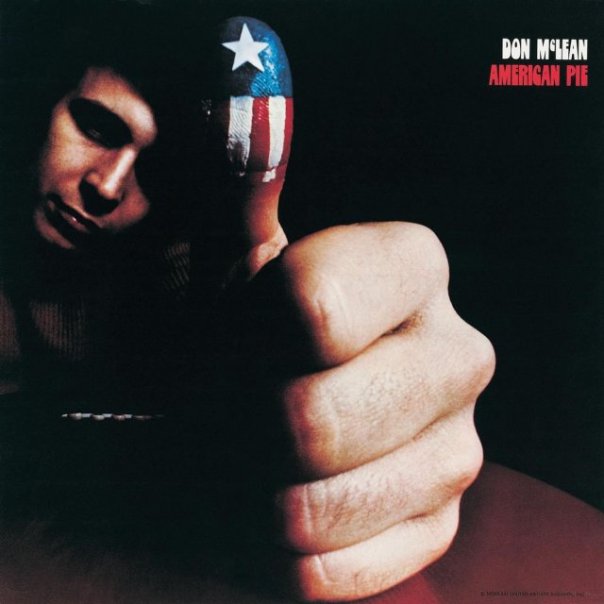
“American Pie” – Don McLean (1971)

1960s: Days of Rage's avatar1960s: Days of Rage


“‘American Pie’ is a song by American singer and songwriter Don McLean. … The repeated phrase ‘the day the music died‘ refers to a plane crash in 1959 that killed early rock and roll stars Buddy Holly, The Big Bopper, and Ritchie Valens, ending the era of early rock and roll; this became the popular nickname for that crash. The theme of the song goes beyond mourning McLean’s childhood music heroes, reflecting the deep cultural changes and profound disillusion and loss of innocence of his generation – the early rock and roll generation – that took place between the 1959 plane crash and either late 1969 or late 1970. The meaning of the other lyrics, which cryptically allude to many of the jarring events and social changes experienced during that period, have been debated for decades.  … Some commentators have identified…

View original post 282 more words

White Supremacy

wordcloud9's avatarFlowers For Socrates

by IRENE FOWLER, Contributor

___________________________

“You have to get over the fear of facing the worst in yourself. You should instead
fear unexamined racism. Fear the thought that right now, you could be contributing
tothe oppression of others and you don’t know it. But do not fear those who bring
thatoppression to light. Do not fear the opportunity to do better.”– Ijeoma Oluo

___________________________

“The world does not need white people to civilize others.
The real White People’s Burden is to civilize ourselves.”– Robert Jensen

___________________________

“When you have only ever experienced privilege,
equality feels like oppression.”– Adam Rutherford

___________________________

To read Irene’s new poem “White Supremacy” click:

View original post 208 more words