Katherine Ann Power: Weather Underground

1960s: Days of Rage's avatar1960s: Days of Rage


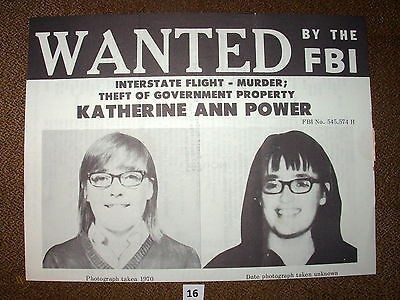
Katherine Ann Power (born January 25, 1949), also known under the aliasesMae Kelly and Alice Louise Metzinger, is an American ex-convict and long-time fugitive, who, along with her fellow student and accomplice Susan Edith Saxe, was placed on the FBI‘s Most Wanted Fugitives list in 1970. The two participated in robberies at a Massachusetts National Guardarmory and a bank in Brighton, Massachusetts, where Boston police officer Walter Schroeder was shot and killed. Power remained at large for twenty-three years. A native of Colorado, Power turned herself over to authorities in 1993 after starting a new life in Oregon. She pleaded guilty and was imprisoned in Massachusetts for six years before being released on fourteen years’ probation. While in prison, Power completed her bachelor’s degree, and after her release, earned a master’s degree at Oregon State University

View original post 177 more words

Indiana: Anti-CRT Forces Underperform in School Board Races

dianeravitch's avatarDiane Ravitch's blog

Steve Hinnefeld reports that the voters of Indiana did not buy the anti-CRT baloney in important school board races. Indiana is a solid red state where Republicans swept every statewide race. But parents mostly like their school boards.

He begins:

School board elections are the quintessential local elections. In most states, including Indiana, they are nonpartisan. Voters make their choices based on the pros and cons of candidates, not parties. Issues matter, but candidates with strong networks of friends and supporters are likely to do well.

That makes it hard to draw conclusions from the school board elections that took place across the state last week. But it appears that conservative culture warriors didn’t do as well as they had hoped.

In some school districts, candidates vowed to take on “critical race theory” and “wokeness” in the schools. Those folks won and now have a majorityin Hamilton Southeastern, an…

View original post 186 more words

Timothy Snyder: Help Stop Genocide in Ukraine

dianeravitch's avatarDiane Ravitch's blog

Timothy Snyder, historian at Yale and expert on European history, invites you to contribute to a very important fund that he created.

He writes:

Sometimes things are very simple. If you can easily do something to halt a genocide, then you should.

As I have been arguing here in “Thinking about…”, the Russian intention in Ukraine has been genocidal from the beginning.

The notion that Ukraine does not exist, that its state is artificial and its national consciousness a confusion — this Putinist rhetoric was genocidal. Moscow’s claims that Ukrainians are all Nazis or gays or Jews or Satanists (the current line) is nothing more than a fascist politics of us-and-them: the enemy is defined via hate speech as subhuman, as beyond any ethical concern, existing only to be destroyed.

The standard Russian occupation practices of kidnapping children, raping women, and executing local leaders are genocidal. Everywhere that Russia has…

View original post 589 more words

Why We Still Don’t Have the JFK Assassination Files

1960s: Days of Rage's avatar1960s: Days of Rage

President John F. Kennedy is seen riding in motorcade approximately one minute before he was shot in Dallas, Tx., on Nov. 22, 1963. In the car riding with Kennedy are Mrs. Jacqueline Kennedy, right, Nellie Connally, left, and her husband, Gov. John Connally of Texas.
“Almost exactly 59 years after those rifle shots rang out in Dealey Plaza, left a president mortally wounded and changed the course of history, there are still secrets that the government admits it is determined to keep about the November 1963 assassination of President John F. Kennedy. More than 14,000 classified documents somehow related to the president’s murder remain locked away, in part or in full, at the National Archives in clear violation of the spirit of a landmark 1992 transparency law that was supposed to force the release of virtually all of them years ago. The fact that anything about the assassination is still…

View original post 313 more words

Virginia: Governor Youngkin Directs Whitewashing of History Standards

dianeravitch's avatarDiane Ravitch's blog

Educators, parents, and civil rights groups in Virginia are outraged because Governor Glen Youngkin has directed the rewriting of the state’s history standards. The Youngkin standards eliminate anything that extremists and rightwingers find objectionable. The Youngkin team initially deleted all mention of Dr. Martin Luther King Jr. from the elementary curriculum. Presumably any discussion of Dr. King’s life and legacy might be interpreted as “critical race theory” by the Governor’s allies.

At the same time, Youngkin’s cultural warriors expanded coverage of Ancient Greece and Rome, expecting children in the early elementary years to learn about major figures in those civilizations for whom they have no context or understanding.

In the rewrite of the standards by the Youngkin team,, a startling amount of material about African Americans was deleted. The curriculum and standards were literally whitewashed.

And as you will notice, the Youngkin draft refers to Native Americans and indigenous peoples…

View original post 1,833 more words

Shoe-banging incident

1960s: Days of Rage's avatar1960s: Days of Rage

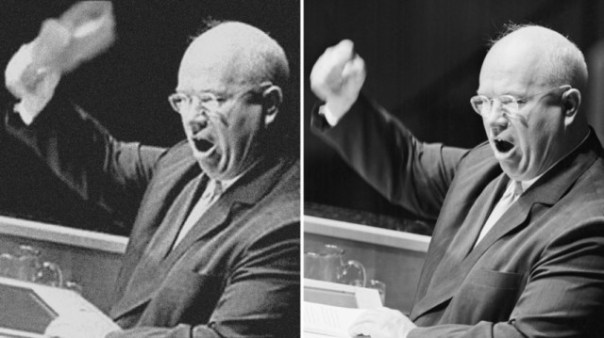
The often used fake image of Khrushchev waving a shoe (above), and the original photo taken at the United Nations General Assembly, 10 October 1960.
“The shoe-banging incident occurred when Nikita Khrushchev, First Secretary of the Communist Party of the Soviet Union, pounded his shoe on his delegate-desk in protest at a speech by Philippine delegate Lorenzo Sumulong during the 902nd Plenary Meeting of the United Nations General Assembly held in New York City on 12 October 1960. In 2003, American scholar William Taubman reported that he had interviewed some eyewitnesses who said that Khrushchev had brandished his shoe but not banged it. He also reported that no photographic or video records of the shoe-banging had been found. However, in his biography of Khrushchev, he wrote that he accepted that the shoe-banging had occurred. There is at least one fake photograph, where a shoe was added into…

View original post 246 more words

“The Handsomest Drowned Man In The World” – Gabriel García Márquez (Gregory Rabassa, Translator)

1960s: Days of Rage's avatar1960s: Days of Rage


“The first children  who saw the dark and slinky bulge approaching through the sea let themselves think it was an enemy ship. Then they saw it had no flags or masts and they thought it was a whale. But when it washed up on the beach, they removed the clumps of seaweed, the jellyfish tentacles, and the remains of fish and flotsam, and only then did they see that it was a drowned man. They had been playing with him all afternoon, burying him in the sand and digging him up again, when someone chanced to see them and spread the alarm in the village. The men who carried him to the nearest house noticed that he weighed more than any dead man they had ever known, almost as much as a horse, and they said to each other that maybe he’d been floating too long and the water had…

View original post 228 more words

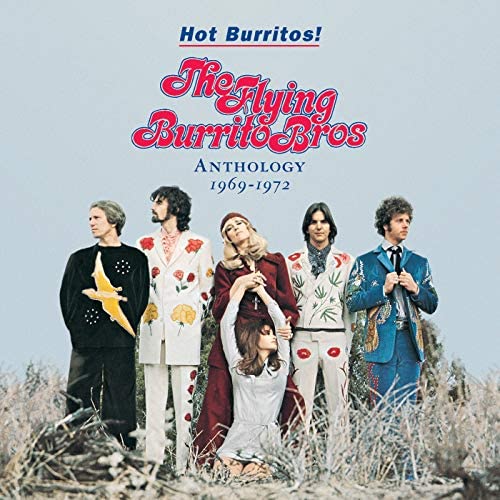
Hot Burritos! The Flying Burrito Brothers Anthology (1969 – 1972)

1960s: Days of Rage's avatar1960s: Days of Rage


“Gram Parsons was overrated. Listen closely and you can hear the howls of outrage, but think about it for a minute: His voice was gentle and clear, but not particularly strong; he was no guitar whiz, playing mainly acoustic rhythm; and songwriting was his forte more than actual performance, which places him right in line with many modern singer-songwriters. Parsons’ reputation is predicated mainly on the Burritos and the Byrds’ seminal Sweetheart of the Rodeo album, as well as his untimely death and the untapped potential that went with him when he died of a drug overdose in 1973. … On the other hand, the band helped break ground for today’s crop of alternative/insurgent country bands. That said, the Burritos were best at playing their own take on country music, country music for dope-smoking, beer-guzzling types stuck somewhere between patchouli-and-granola hippie culture and beer-joint sensibilities. … At their best, the…

View original post 164 more words

Travel Italy through the work of Federico Fellini

1960s: Days of Rage's avatar1960s: Days of Rage


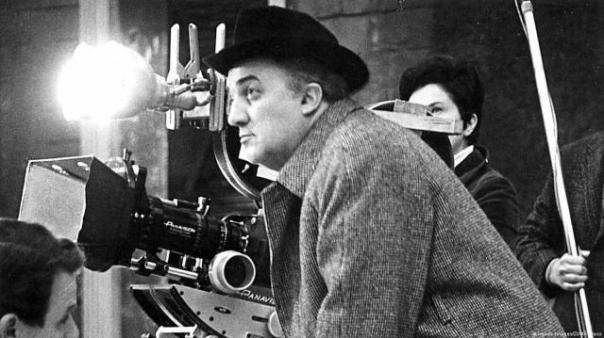
“Born in 1920, Federico Fellini is recognised as one of the greatest filmmakers of all time. Throughout the 1940s, the young filmmaker amassed many writing credits, most notably co-writing the screenplay for Rome, Open City, directed by Roberto Rossellini. This, famously, led Fellini to receive his first Oscar nomination. By 1950, Fellini had co-produced and co-directed his first feature film, Variety Lights, with Alberto Lattuada. Despite the film’s disastrous reception, Fellini continued making movies, and his 1953 effort, I Vitelloni, was recieved well and won the Silver Lion Award in Venice. Over the next few decades, Fellini created countless influential and breathtaking features with a distinctive style that cemented him as an auteur. Greatly inspired by his own childhood, dreams, and personal experiences, Fellini injected his films with warmth and humanity. He once declared: ‘Even if I set out to make a film about a fillet of sole, it would…

View original post 255 more words

The French Lieutenant’s Woman

Jeanne's avatarNecromancy Never Pays

After I wrote about my list of favorites, someone asked me why The French Lieutenant’s Woman was on it, and I said that it was because novels by John Fowles were trendy in literary circles when I was in college in the 1980s and I’d read and liked them all, but thought that The French Lieutenant’s Woman was the one to begin with, if you want to read Fowles. Then, of course, I had to reread The French Lieutenant’s Woman to remember why I’d liked it so much. I remembered that it wasn’t so much the tale as the way it was told, and that turned out to be absolutely correct. It’s a Victorian love story, but the narrator is constantly putting a modern perspective on it, musing about Victorianism and how the story might have turned out differently in another age (in fact, the novel has more than…

View original post 1,453 more words