
by IRENE FOWLER, Contributor
Donald Trump is an equal opportunity racist, whose hateful, divisive and disingenouous rhetoric is cynically designed to whip up rage, in damaged, grudge-filled individuals.
View original post 424 more words
Donald Trump is an equal opportunity racist, whose hateful, divisive and disingenouous rhetoric is cynically designed to whip up rage, in damaged, grudge-filled individuals.
View original post 424 more words
Recently, the power lines in Moore County, North Carolina, went down, damaged by gunfire, and officials suspect they were intentionally sabotaged, leaving 40,000 or so people without power. Some suspect that the power was shut down to prevent a drag show from happening.
Crooks&Liars points to domestic terrorism and mentions an activist who had loudly denounced the drag show. The activist, a former Army officer, had previously been questioned about her participation in the January 6 insurrection. She posted on Facebook that she knew why the power went out.
The Washington Post reported that the FBI is investigating.
At Sunrise Theater on Saturday night, drag queen Naomi Dix was about to introduce an act when the lights went out. Dix said that participants immediately suspected that the power outage might be connected to those opposed to the performance (Dix spoke to The Post on the condition that she be identified…
View original post 669 more words

“Noam Chomsky (born December 7, 1928) is an intellectual, political activist, and critic of the foreign policy of the United States and other governments. Noam Chomsky describes himself as an anarcho-syndicalist and libertarian socialist, and is considered to be a key intellectual figure within the left wing of politics of the United States. Chomsky is often described as one of the best-known figures of the American Left, although he doesn’t agree with the usage of the term. … He identifies with the labor-oriented anarcho-syndicalist current of anarchism in particular cases, and is a member of the Industrial Workers of the World. He also exhibits some favor for the libertarian socialist vision of participatory economics, himself being a member of the Interim Committee for the International Organization for a Participatory Society. He believes that libertarian socialist values exemplify the rational and morally consistent extension of…
View original post 216 more words
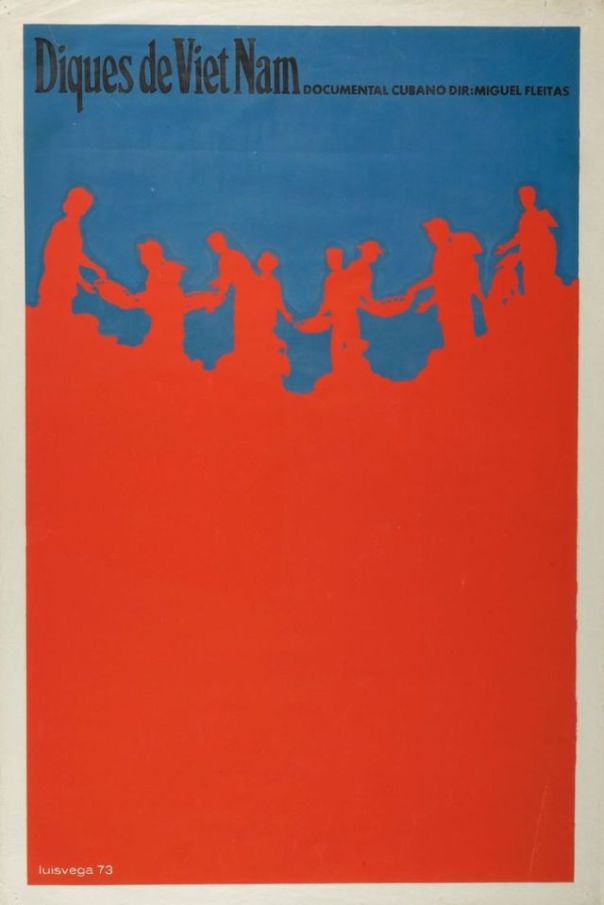 Luis Vega De Castro (b. 1944), Diques de Viet Nam, 1973. Silkscreen poster.
“During a period of profound and rapid social and political changes, the Cuban poster boldly documented and embodied the spirit and ideals of the Cuban revolution. ‘Thanks to those daring, inspired artists, an important part of the visual memory of Cubans is indelibly imprinted in their bold graphic designs,’ writes Leonardo Padura Fuentes in Mira Cuba: The Cuban Poster Art from 1959 (2014). ‘It had a dignity and an aesthetic standing that turned the utilitarian poster into a milestone of Cuban cultural history in the second half of the twentieth century.’ Offered as a single lot in our Latin American Art Online sale (18-30 May), the 38 posters — or carteles — in this collection were created between 1965 and 1973 by a handful of the genre’s most talented and innovative graphic artists, mostly to promote…
View original post 201 more words
 Poets at Le Metro 19 (December 1964).
“During the 1950s, East Tenth Street between Third and Fourth Avenues housed a number of art galleries exhibiting the most advanced art in America on a street that until then had been occupied by pawnshops, pool rooms, and sheet metal shops. During that decade, the area became a primary stomping ground for the young Abstract Expressionist painters and their attendant theorists/promoters, Harold Rosenberg and Clement Greenberg. Here, also, poet Frank O’Hara served as an important link between artists and poets in the East Village. Art openings became mandatory for ‘networking,’ and several of the galleries along Tenth Street also offered poetry readings and jazz. The Tenth Street Coffee House, owned by Micky Ruskin, was the scene from 1960 until 1962 of the first poetry readings in the area (organized by Chester Anderson, Howard Ant, and Ree Dragonette, and including Carol Bergé…
View original post 241 more words
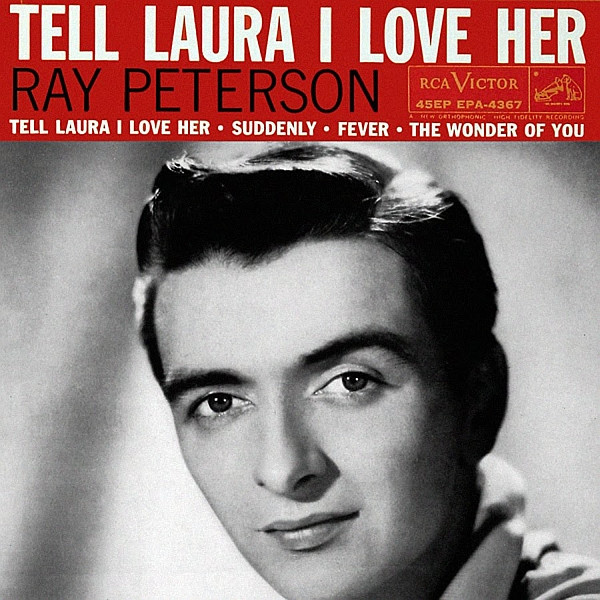
“A teenage tragedy song is a style of ballad in popular music that peaked in popularity in the late 1950s and early 1960s. Examples of the style are also known as ‘tear jerkers’, ‘death discs’ or ‘splatter platters’, among other colorful sobriquets coined by DJs that then passed into vernacular as the songs became popular. Often lamenting teenage death scenarios in melodramatic fashion, these songs were usually sung from the viewpoint of the dead person’s sweetheart, as in ‘Last Kiss‘ (1961), or another witness to the tragedy, or the dead (or dying) person. Other examples include ‘Teen Angel’ by Mark Dinning (1959), ‘Tell Laura I Love Her‘ by Ray Peterson (1960), ‘Ebony Eyes‘ by the Everly Brothers (1961), ‘Dead Man’s Curve‘ by Jan and Dean (1964), and ‘Leader of the Pack‘ by the Shangri-Las
View original post 223 more words

That first sentence. Your first thought. An opening gambit. Setting the scene. Attracting the reader. Aaargh. Starting a new piece of writing can be daunting. It’s no wonder that so many writers worry about how to begin.
But academic writers are comparatively lucky when it comes to starting off. Unlike fiction writers who must pull a brilliant beginning from the void, academic writers have something to fall back on. An established genre which they can use, if they wish.
What is this “established genre” I hear you ask? Well. Many academic texts begin with some contextual scene-setting. Papers, books, proposals often start with context. Then, once the scene is set, the writer goes on to say exactly what this particular text will be about.
Contextual scene setting can be comparatively slight in word terms, but a few sentences can do a lot of work. Scene-setting accomplishes five key things.
View original post 1,154 more words
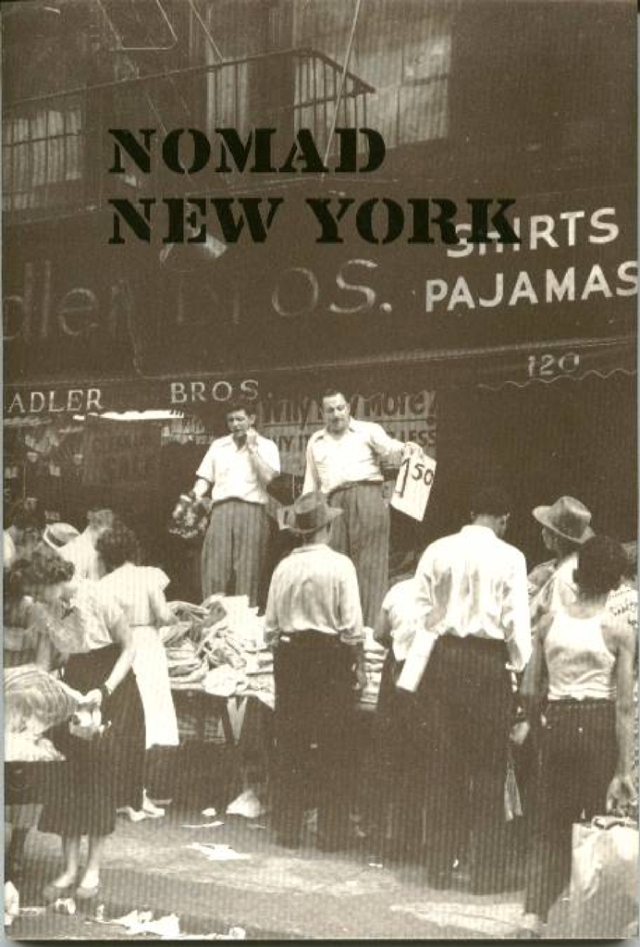
“In the summer of 1963, poet Paul Blackburn wrote an essay in Kulchur 10 entitled ‘The Grinding Down,’ which mapped the contemporary landscape of the Mimeo Revolution and lamented for those beloved days of yore when Robert Creeley’s editorial vision surveyed the literary fringe from the lofty heights of Black Mountain Review (which itself rose from the broad shoulders and bushy brow of the 6 foot 7 inch Charles Olson). As Graham Rae would say, I am chuckling here. Let’s be honest, this is a dubious nostalgia. Black Mountain Review only folded six years earlier, a mere blip in terms of literary history. Although the beginnings of the Mimeo Revolution can be traced back to Waldport during World War II, things really only heated up when Black Mountain Review went down in flames in late 1957, along with the Howl Trial, the San Francisco Scene of Evergreen Review, and…
View original post 199 more words
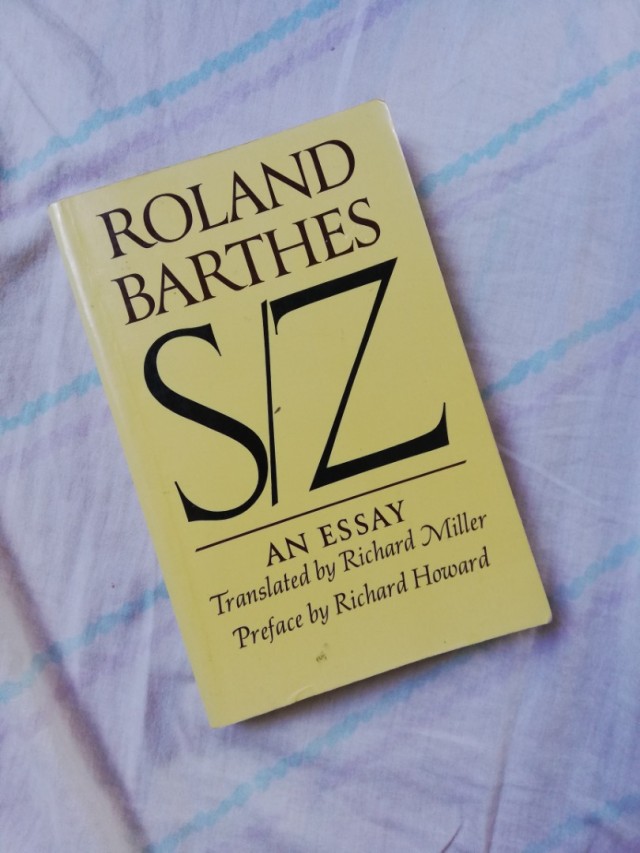
“S/Z, published in 1970, is Roland Barthes‘ structural analysis of ‘Sarrasine‘, the short story by Honoré de Balzac. Barthes methodically moves through the text of the story, denoting where and how different codes of meaning function. Barthes’ study made a major impact on literary criticism and is historically located at the crossroads of structuralism and post-structuralism. Barthes’s analysis is influenced by the structuralist linguistics of Ferdinand de Saussure; both Barthes and Saussure aim to explore and demystify the link between a sign and its meaning. But Barthes moves beyond structuralism in that he criticises the propensity of narratology to establish the overall system out of which all individual narratives are created, which makes the text lose its specificity (différance) (I). Barthes uses five specific ‘codes’ that thematically, semiotically/semiologically, and otherwise make a literary text reflect structures that are interwoven, but…
View original post 200 more words


