Clarence Carter – “Back Door Santa” (1968)

1960s: Days of Rage's avatar1960s: Days of Rage


“A slice of greasy blues soul that draws from the Willie Dixon classic ‘Back Door Man,’ Clarence Carter’s ‘Back Door Santa,’ co-written with Marcus Daniel for the 1968 compilation Soul Christmas, adds a touch of raunch to the holiday celebrations. ‘I ain’t like old Saint Nick,’ Carter barks over a bleating horn section and chopping funk guitar, ‘he don’t come but once a year. I come runnin’ with my presents every time you call me dear.’ By 1968, Clarence Carter was no stranger to the cheating oeuvre, having scored a Top 6 pop hit in 1967 with the breathtaking ‘Slip Away‘ – two impeccably crafted minutes of Muscle Shoals soul that masterfully balances regret, longing and lust on the rough edge of Carter’s pleading, powerful voice. … Wilson Pickett, Aretha Franklin, Joe Tex, Arthur Alexander, Percy Sledge and countless others recorded signature, career-defining songs there…

View original post 231 more words

0 to 9: Bernadette Mayer and Vito Hannibal Acconci

1960s: Days of Rage's avatar1960s: Days of Rage


“‘What is a body artist? Someone who is his own test tube,’ quips painter David Salle about performance artist, filmmaker, and writer Vito Hannibal Acconci, probably the prime example of an artist who experiments on himself and his own life, using his body and its movements as his materia artistica. Born in New York City in 1940, Acconci returned to the Lower East Side in 1964 to teach at Brooklyn College and the School of Visual Arts after graduating from Holy Cross College and the Iowa Writers’ Workshop. Acconci was first a writer, and with his sister-in-law, Bernadette Mayer, edited one of the most experimental of all the early mimeo magazines. 0 to 9 included works by a phalanx of literary experimentalists, including the minimalist works of Aram Saroyan and Clark Coolidge, along with the graphic works of artists Sol LeWitt, Michael Heizer, and Robert Smithson, and performance-oriented work…

View original post 201 more words

Blow-Up and other Stories – Julio Cortazar

1960s: Days of Rage's avatar1960s: Days of Rage


“A tiger stalking the house a young girl is holidaying in; middle-aged siblings who experience an enforced segregation in their home; a young man who cannot stop vomiting baby rabbits; a disaffected and drug-addled jazz musician via the eyes of his morose biographer-this is the rich tapestry from which Cortazar weaves his short stories, whether it be the lachrymose streets of Paris or the sultry neighbourhoods of Buenos Aires, the constant theme which runs through Cortazar’s novel is the limitless wonders of story-telling; at times playful and at others meditative, Cortazar’s range is varied but brilliant. The title story, on which Antonioni’s famous film is based, in one of the stand out stories in the collection. In it the narrator believes he witnesses-and prevents-an attempted murder via the lens of his camera. Subjectivity is a central theme in Cortazar’s novels; the reader is at the behest of the narrator, whose…

View original post 173 more words

Heather Cox Richardson on the $1.7 Trillion Budget Bill…And More

dianeravitch's avatarDiane Ravitch's blog

In a remarkable bipartisan move, Congress passed a budget bill to finance the federal government until September 2023. Heather Cox Richardson describes the political maneuvering behind its passage. Republicans in the House wanted to wait until the new Congress is seated. They hold a slim majority. With Kevin McCarthy courting the MAGA caucus, who knows if the House would ever agree on a budget.

Jim Jordan—the Trump lackey from Ohio who seldom wears a jacket— keeps tweeting snide comments about the budget. But he never mentions that half the budget—$850 billion—is defense spending. I enjoy tweeting that fact to him.

Heather Cox Richardson wrote yesterday:

Today, by a vote of 225 to 201, the House passed the 4,155-page omnibus spending bill necessary to fund the government through September 30, 2023. The Senate passed it yesterday by a bipartisan vote of 68–29, and President Joe Biden has said he will…

View original post 551 more words

New York: 1962-1964

1960s: Days of Rage's avatar1960s: Days of Rage


“A historical exhibition aims to show us past life, but sometimes the retrospective becomes reflective, a two-way mirror seeing through to the present. So it is with New York 1962–1964 at The Jewish Museum, certainly at the moment our fair city’s most enveloping visual and aural museum experience. With more than 150 works spanning vanguard fine art, outré fashion, cult film, political periodicals, and documentary videos of radical dance and news, the real stars of the show are its wranglers. Selldorf Architects’s contextualized installation design is thrilling. At the entry, the stage is set: we are invited to imagine ourselves within a mural photograph of office workers attired in fitted suits and dresses at the lunch counter—its rear sign announcing a bank of phone booths—then, at a lurid juke box in front of it, to punch in the number of our favorite tune of the era, no coin required. That’s…

View original post 240 more words

The Young Insurgent’s Commonplace-Book: Adrienne Rich’s “Snapshots of a Daughter-in-Law”

1960s: Days of Rage's avatar1960s: Days of Rage


“I wish I could remember when I first read ‘Snapshots of a Daughter-in-Law.’ It could have been in 1963, when the eponymous book appeared, but if it had, it would have been a revelation (which I did not have for some years) that other women poets were grappling with the issues I was at twenty, that there might be dialogue and exchange, if not in conversations and letters, in the way a poem in a book calls another poet back to notebook and pen. Like Rich herself at twenty, my literary dialogues on and off the page were largely with men: on one hand, Auden, Lowell, Berryman, on the other, the acolytes of the ‘San Francisco Renaissance‘ talking of and reading the work of Jack Spicer and Robert Duncan to their East Coast juniors. I read Ariel in 1963, and like other women poets of…

View original post 163 more words

Starting From Scratch: Cornelius Cardew and the Orchestra as Insurgency

1960s: Days of Rage's avatar1960s: Days of Rage


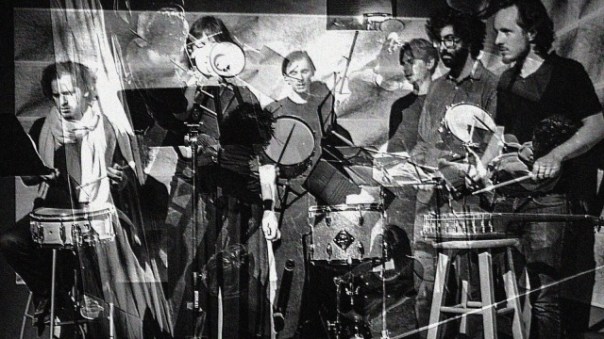
“… A newspaper ad appealing for witnesses even misidentified the victim. The deceased was a member of the Central Committee of the Revolutionary Communist Party of Britain (Marxist-Leninist). Over the preceding years he had clashed numerous times with far-right political groups in East London. Just six weeks before his death he had been arrested at the House of Commons for scattering leaflets and shouting, ‘This house stinks of racism!’ during a speech by the Ulster Unionist MP (and former Conservative Health Minister) Enoch Powell. In the coded communications of his Party, the dead man had been known as Ernest. But he was born Cornelius Cardew, in Winchcombe, Gloucestershire, in 1936, and he was one of the most fascinating composers of the 20th century. Michael Nyman had first spoken of musical ‘minimalism’ in a review of one of his works; Brian Eno was a fan. So was Robert Wyatt, who called…

View original post 201 more words

The Revolution of Everyday Life – Raoul Vaneigem (1967)

1960s: Days of Rage's avatar1960s: Days of Rage


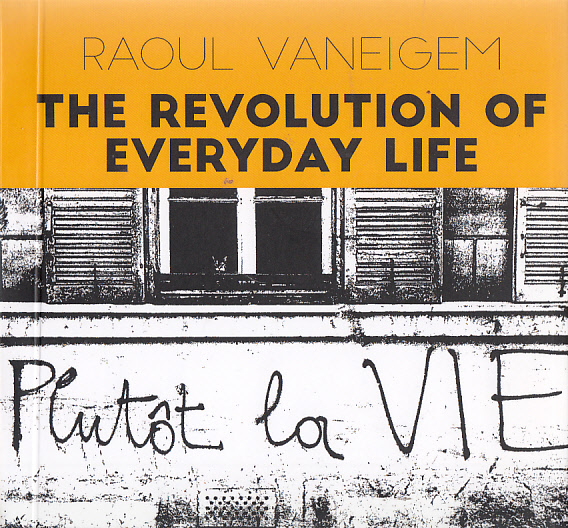
“The Belgian-born writer, scholar and theorist Raoul Vaneigem (b. 1934) is best known as the author of the 1967 essay The Revolution of Everyday Life, a wide-ranging inquiry into the alienation of the individual under capitalism and an animated call for a post-capitalist society, grounded in radical self-management and non-hierarchical social relations. He wrote the book during his prolific involvement in the notorious and influential Situationist International (SI, 1957-1972). Born out of various surrealist avant-gardes of inter- and postwar Europe, the Situationists were a diverse, conspicuously small, but always strident transnational group of Marxian-inspired artists and writers, whose initial pursuit was to suspend the separation of art from the lived everyday. They consciously constructed ‘situations’ that were intended to subvert the bourgeois mundane of consumer capitalism, an order they described as spectacular society — a concept later fully elaborated by Guy Debord — that precluded authentic living and inevitably…

View original post 183 more words

Repertory Movie Theaters of New York City: Havens for Revivals, Indies and the Avant-Garde, 1960-1994

1960s: Days of Rage's avatar1960s: Days of Rage


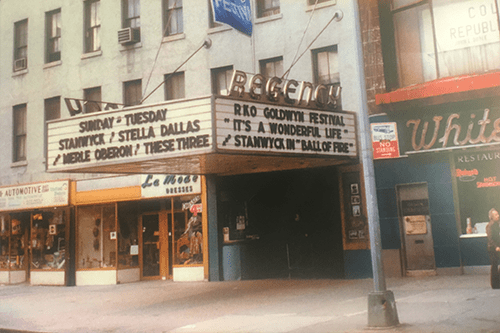
“Ben Davis’ excellent new book thoroughly explores the history, culture and importance of the repertory movie theaters that influenced the art film scene in New York City from the 1960s into the 1990s. In this well organized and impressively researched monograph, the author explains and analyzes the ways that the major repertory film theaters contributed to the film scene and to the creation of a cinephilic community – both casual and extreme- among a diverse group of filmgoers in New York City. Part One focuses on the First Wave of Repertory Theaters that took place in New York City during the 1960s. Davis begins this section with a clear explanation of the historical and cultural context in which these theaters emerged. He examines the larger art scene and the demographic changes taking place in New York and across the nation as part of a significant cultural revolution. He clearly defines…

View original post 219 more words

Mississippi: Ethics Commission Rules that State Legislature Is Not a “Public Body”

dianeravitch's avatarDiane Ravitch's blog

Imagine a crusading news site in Mississippi, one of the poorest and most corrupt states in the nation. That news site is the Mississippi Free Press. It recently filed a complaint with the state ethics commission after it was excluded from a meeting of the GOP caucus, which is so large that it constitutes a quorum.

The ethics commission ruled that the state legislature is not a “public body.”

The Mississippi Ethics Commission held its likely final discussion on the Mississippi Free Press’ complaint against the State House of Representatives today, restating their disagreements over the commission’s decision to declare the Mississippi Legislature not a public body under the Open Meetings Act. The Zoom stream of today’s meeting had high attendance of up to 70 viewers at one time, including representatives of multiple media outlets.

The Mississippi Free Press first filed a complaint in April 2022, after this reporter was…

View original post 365 more words