story and academic writing – the question of pace

pat thomson's avatarpatter

Stories typically contain a mixture of action and commentary. The writer combines action and commentary in order to keep the reader informed – they know what is going on – and engaged – they want to keep reading.

Writers deliberately play around with pacing. They might select fast pacing – lots of action coming in rapid succession – in order to make the reader feel excited, worried or nervous. Think detective novels and thrillers. Think how events speed up as you reach the climax. On the other hand, writers may deliberately slow down the action in order to either hold the reader in suspense or to convey something important about characters, quality of life, atmosphere, nature of interactions and so on.

Academic writing is also about pacing. Like fiction writers, academic writers also manage the balance of action and commentary. Yes of course writing a journal article is not the…

View original post 697 more words

The Complete Robot – Isaac Asimov (1982)

1960s: Days of Rage's avatar1960s: Days of Rage

Why Isn’t There An Audiobook Of The Complete Robot by Isaac Asimov?: “… I love to listen to science fiction, so I was disappointed that the first book wasn’t on audio. However, there are three audiobooks available of Asimov’s short stories, I, Robot, Robot Dreams, and Robot Visions. I’m still going to have to read twelve short stories and the essays out of The Complete Robot, but it’s nice to know I can listen to 18 of them. Plus, Robot Dreams (1986) and Robot Visions (1990) have a handful of robot stories not in The Complete Robot (1982). Robot Dreams and Robot Visions have misleading titles. You’d think they’d be two collections all about robots, but they’re really collections of some of Asimov’s more popular stories and essays that feature a handful of robot stories. … What has started as an idle whim thinking about…
View original post 219 more words

Editing pan-Africanism

1960s: Days of Rage's avatar1960s: Days of Rage


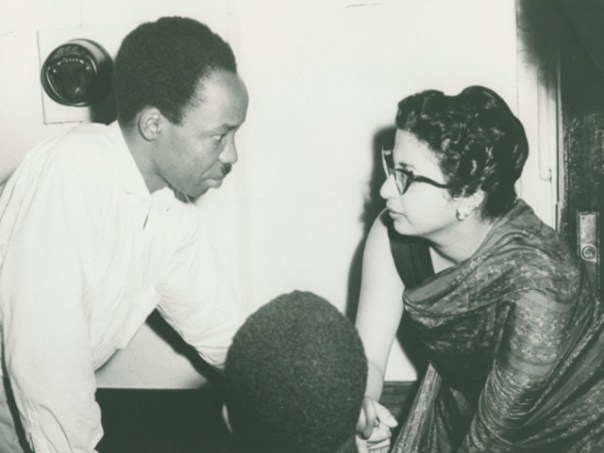
Frene Ginwala. Author supplied image.

“On April 12, 1960, a few weeks after the Sharpeville Massacre, the South African lawyer and journalist Frene Noshir Ginwala arrived in Dar es Salaam, the capital of Tanganyika. In that year, British-ruled Tanganyika was already transitioning towards independence with internal self-government. This transition provided the country’s subjects with more opportunities for political activities than most other countries in Southern and East Africa could provide. Ginwala’s important role in the anti-apartheid movement is well-known. Many obituaries written after her death on January 12, 2023, mention that she paved the way for Oliver Tambo and other South Africans to set up the ANC’s external mission after the apartheid regime banned the organization. Later on, she became the first speaker of South Africa’s first post-apartheid parliament. What is less known is that Dar es Salaam in the early 1960s was a launching pad for Ginwala’s monthly newspaper…

View original post 197 more words

Thrillers and Mysteries Had Homogenous Histories

Dave Astor's avatarDave Astor on Literature

I’ve written about diversity in literature before, but this time I’m going to be a bit more specific. As in the welcome increased diversity in thrillers and mysteries during the past few decades.

Many right-wing Republicans would find that “woke,” but they’re welcome to fall asleep listening to Ron DeSantis speeches.

There was of course some diversity in long-ago mysteries and thrillers, but old novels in those genres often featured white male detectives in lead roles and mostly “conventional” women in supporting roles. If there were rare inclusions of people of color, those characters were usually depicted in cringe stereotypical fashion.

Famous white male detectives of the 19th century and the first decades of the 20th century included Edgar Allan Poe’s C. Auguste Dupin (in three short stories rather than any novels), Charles Dickens’ Inspector Bucket, Wilkie Collins’ Sergeant Cuff, Arthur Conan Doyle’s Sherlock Holmes, Agatha Christie’s Hercule Poirot, Dorothy…

View original post 586 more words

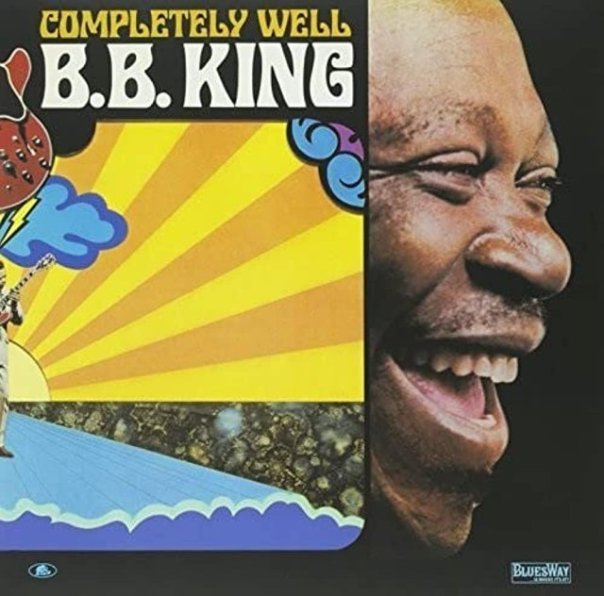
Completely Well – B. B. King (1969)

1960s: Days of Rage's avatar1960s: Days of Rage


“… 1. The Thrill Is Gone: King’s signature song was a hit for Roy Hawkins, its co-writer, in 1951, but BB’s ground-up reworking of it reached No. 15 on the Billboard Hot 100 in 1970 and took his popularity to a new audience, and a new level. Its dramatic arrangment – immersing King’s angst-ridden vocals and laconic, reverb-shrouded stabs of guitar in a sea of heartbreak made up of pensive strings and atmospheric Wurlitzer, provided the established bluesman with an entirely fresh sonic setting. The song was masterminded by Bill Szymczyk, an up-and-coming staff producer at ABC Records who had lobbied hard to allow executives to pair him up with King in the studio. The result of their first collaboration was 1969’s Live & Well album: a half-live, half-studio test exercise. For its follow-up, Completely Well, Szymczyk recruited session players Herbie Lovell on drums, bassist Gerry Jemmott, keys…

View original post 167 more words

Frank Stella

1960s: Days of Rage's avatar1960s: Days of Rage

Hyena Stomp,1962

“There is no question that Frank Stella is one of the seminal figures of American art. One need only look at his rigorously controlled, almost confrontationally flat, gridded, design-oriented paintings of the late ’50s and ’60s to see how he was reacting against the theatrical, highly psychologized work of abstract expressionists, and how, alongside fellow New York painters Jasper Johns and Robert Rauschenberg, he was reinventing abstraction for a new generation. His infamous 1964 quote about his own work—’What you see is what you see’—became something of an instant minimalist maxim. And suddenly, as much as Stella seemed to be resisting certain painterly dramatics, new shapes and possibilities were unleashed. The shaped paintings of Stella’s early career are as coded and straightforward as ancient runes or corporate logos, teetering between the industrial and the painstakingly handmade. They’re like flags of new orders—or new divisions. But perhaps what…

View original post 222 more words

Without Marx or Jesus: the New American Revolution Has Begun. – Jean-François Revel (1972)

1960s: Days of Rage's avatar1960s: Days of Rage


“To judge a book by a Frenchman that has ‘America’ in its title by comparing it with Democracy in America is unfair. Tocqueville’s pair of books enjoy their reputation; Revel’s best-seller, little more than an extended pamphlet, will not be read or known in 2109—a date as distant in the future as the first publication of Democracy in America is in the past. In spite of this, the comparison ought to be made, not so Revel can be blamed for failing to measure up, but because it reveals some stubborn similarities in what the U.S. may mean for certain foreigners, especially certain Frenchmen. Also, Without Marx or Jesus is not a worthless book; the comparison helps to determine what it is good for. Tocqueville (like Revel) came to America to confirm his prejudices. Early notes and letters show he had largely decided, before he came, what America—or rather, democracy in…

View original post 216 more words

Should America Be Like Florida? NO! Says Miami Herald Editorial Board

dianeravitch's avatarDiane Ravitch's blog

Ron DeSantis wants to make America just like Florida, where the maximum leader (Ron DeSantis) has a docile legislature that lets him decide what everyone else is allowed to do and punishes those bold enough to ignore his orders.

That’s why he is running for President. He thinks the whole nation needs and wants a maximum leader with a reactionary view of behavior and morality.

Florida is where you are free to do whatever Ron DeSantis tells you to do and free to think what he believes. If you disagree, you are no longer free.

The Miami Herald editorial board says DeSantis has turned Florida into a mean state. No, you don’t want to make America Florida.

Florida, under Gov. Ron DeSantis and Republican Legislature, is increasingly hard to recognize. It’s an intolerant and repressive place that bears scant resemblance to the Sunshine State of just a few years…

View original post 169 more words

Baseball And Writing By Marianne Moore

1960s: Days of Rage's avatar1960s: Days of Rage

The baseball fan redux. “Baseball is a language, and, for the fanatic, it is language. It is the baseball fan who continues to make language baseball’s lingua franca.Baseball is a language, and, for the fanatic, it is language. It is the baseball fan who continues to make language baseball’s lingua franca. No more attentive fan of the Brooklyn Dodgers than the poet Marianne Moore ever attended games at Ebbetts Field or read accounts of their ultimate failures in the New York Times the next morning, and the evidence of that strange attention is of course in the poems. Her Dodgers finally won a World Series in 1955, and she combed through New York Times sports-page coverage, pulling phrases that specified her exultation, and made ‘Hometown Piece for Mssrs. Alston and Reese’ something of a collage. From its rhymed title on, the poem seems to poeticize the unpoetical and thus create…

View original post 179 more words

Heather Cox Richardson: Biden Is a Clever Negotiator

dianeravitch's avatarDiane Ravitch's blog

Heather Cox Richardson writes about Biden’s deliberately low-key description of the deal he made with Kevin McCarthy. McCarthy is on television, Biden is not. McCarthy claims victory, Biden is quiet. What gives? (Interesting comment at the end of the post: Tara Reade, the woman who accused Joe Biden of sexually assaulting her has moved to Russia “for her safety.”)

She writes:

“[O]ne of the things that I hear some of you guys saying is, ‘Why doesn’t Biden say what a good deal it is?’” President Joe Biden said to reporters yesterday afternoon before leaving the White House on the Marine One helicopter. “Why would Biden say what a good deal it is before the vote? You think that’s going to help me get it passed? No. That’s why you guys don’t bargain very well.”

Biden’s unusually revealing comment about the budget negotiations was actually a statement about his presidency. Unlike…

View original post 1,312 more words