The Storyteller of Tangier – Mohammed Mrabet / Paul Bowles

1960s: Days of Rage's avatar1960s: Days of Rage


“Like many readers, I suspect, I first came across the name Mohammed Mrabet in relation to Paul Bowles. Throughout the sixties, seventies, and eighties, everyone from Life magazine to Rolling Stone sent writers and photographers to Tangier—where Bowles had been living since 1947—to interview the famous American expat, author of the cult classic The Sheltering Sky. … In fact, he kept open house for one and all, whether they be curious tourists, his famous friends—Tennessee Williams, William S. Burroughs, and Allen Ginsberg among them—or the crowd of Moroccan storytellers and artists he’d befriended over the years. And of these, one man in particular stands out: Mohammed Mrabet. Bowles and Mrabet met in the early sixties, and they remained close until Bowles’s death four decades later in 1999. Mrabet worked for Bowles in various capacities: as a driver, a cook, general handyman, and sometime traveling companion. But theirs was much…

View original post 278 more words

How to Look at the Sea in Winter by Massimo Soranzio (HOW TO Series)

silverbirchpress's avatarSilver Birch Press

hdrHow to Look at the Sea in Winter
by Massimo Soranzio

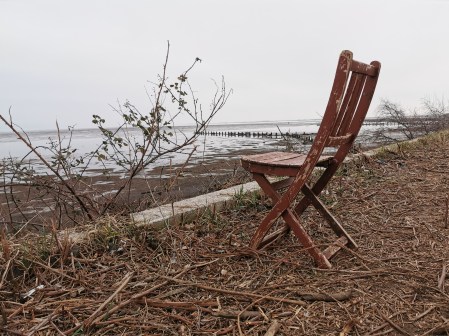
How do you look at the sea
when there is nothing to see
but a colourless expanse,
a flat and dull reflection
of a blinding sunless sky?

Will you just sit down and wait
for anything to happen
or anything to appear,
immersing yourself in thoughts
shallow or deep? Will you sleep?

Will you count the infinite
shades of grey, brown, palish green?
Will you close your eyes, content
with feeling a bracing breeze
from the sea, brackish and cold?

Will you imagine the lands
beyond that line you can’t see,
the places you have been to
and more you might have seen
had life not kept you ashore?

Will you choose to sit and look
without actually looking,
combining all your senses,
scanning colours, smells, and sounds,
to find a makeshift summer?

Or will you like what you…

View original post 193 more words

How To Deal With An Intruder by Suzanne O’Connell (HOW TO Series)

silverbirchpress's avatarSilver Birch Press

magnolia-and-irises-1908aHow To Deal With An Intruder
by Suzanne O’Connell

The sound woke me up.
Thump drag, thump drag, thump drag.
It was coming from the attic.
Maybe a feral cat, I thought.
But if so, it was a really big cat.

I got the ladder, climbed barefoot,
opened the crawl space.
In the darkness, I saw an old lady,
shuffling with the help of a walker.
She was bent over, looking at her big slippers.
She wore a stretched cardigan.
Her gray hair was greasy.
“You can’t be here,” I said.
“It’s too soon.
You have to get out!”

The leaves on the magnolia tree are rusty.
Soon they will fall,
the rain will soak them.
In spring, green knobs
of new growth will appear,
then dazzling pink flowers.

I want to be like the tree.
I want a hundred new haircuts,
a thousand midnights,
a few thousand chicken dinners,

View original post 46 more words

The Hitchhiker’s Guide to Second-Wave Feminism

1960s: Days of Rage's avatar1960s: Days of Rage


“For all of its attention-sucking, data-mining downsides, the internet has held true to at least one of its original promises: connecting disparate groups of people. There’s hardly a better reminder of this than a global health crisis and a national wave of protests. Online, informal support networks have flourished; people are coordinating services for their neighbors and other communities, sending micropayments to strangers, and adding book and media recommendations to immaculately organized Google Docs. They are also, sometimes, simply passing PDFs from friend to friend. This was how I first encountered ‘The New Woman’s Survival Catalog,’ a zinelike 1970s compendium of feminist publishers, bookstores, health clinics, divorce co-ops and rape crisis centers across the country. It is the culmination of a six-month, 12,000-mile road trip in which the authors attempted to document a nationwide network of feminist alternative culture and resources. Reading it now feels nostalgic, voyeuristic even…

View original post 261 more words

How to Handle a Migraine by Dakota Donovan (HOW TO Series)

silverbirchpress's avatarSilver Birch Press

portrait-of-francoise-gilot-digital-remastered-edition-pablo-picassoHow to Handle a Migraine
by Dakota Donovan

Recognize the early warning signs:
sensitivity to smells,
tunnel vision,
seeing zigzags,
nausea,
runny nose,
yawning,
stomach pains.
Take OTC meds,
Excedrin works best.
If full-blown attack ensues:
Drink caffeinated beverages,
put icepack on affected
side of the head,
place cold, wet washcloth
over eyes
and affected side of the head.
Eat saltine crackers or dry toast.
Eat popsicles.
Pray to St. Gemma, the
patron saint of headaches.
If you’re lucky, you will fall asleep
and wake up without a headache.
After the attack,
you may experience
acute visual phenomena such
as outlines around objects.
You may also experience a giddy
euphoria, something to enjoy
while you can.
You’ve lived
Through another attack.

IMAGE: Portrait of Françoise Gilot by Pablo Picasso (1948).

NOTE FROM THE AUTHOR: After decades of suffering from migraine headaches, I’ve learned a few things about the condition. Migraines…

View original post 209 more words

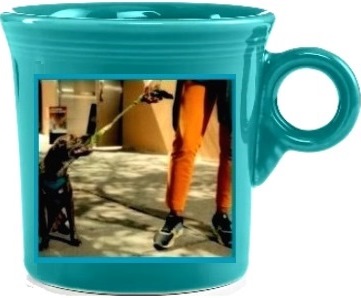
TCS: Connected By Love and A Leash

There was a dog

Who wagged its tail,

Walking on a log

As though a sail.

wordcloud9's avatarFlowers For Socrates

Good Morning!

______________________________

Welcome toTheCoffeeShop, just for you early risers
on Monday mornings. This is an Open Thread forum,
so if you have an off-topic opinion burning a hole in
your brainpan, feel free to add a comment.

______________________________

“I care not for a man’s religion whose
dog and cat are not better for it.”

– Abraham Lincoln

View original post 490 more words

National Education Policy Center Criticizes RAND for Overstating Results of Study of Online Learning

dianeravitch's avatarDiane Ravitch's blog

The National Education Policy Center frequently engages researchers to review studies, reports, and evaluations. NEPC recently released a review of a RAND study that looks at online learning and whether it deserves federal funding. The title of the RAND report is “Remote Learning is Here to Stay,” but the body of the report does not support that conclusion, according to reviewer David R. Garcia of Arizona State University.

Garcia summarizes his review:

The RAND Corporation recently released a report based on a national survey of school district superintendents and charter management organization (CMO) directors (or their designees) about their experiences navigating the COVID-19 pandemic. The survey asks non-biased questions about how school districts and charter schools have responded to the pandemic and about their greatest educational needs. But some issues arise with the report’s reporting of results and with one of its two recommendations. The report is curiously titled,Remote Learning…

View original post 233 more words

Two Views of the Celestial Spheres

wordcloud9's avatarFlowers For Socrates

This engraving by an unknown artist is called Empedocles Breaks through the Crystal Spheres. It first appeared in 1888 in a book by Camille Flammarion with the caption: “A missionary of the Middle Ages tells that he had found the point where the sky and the Earth touch …”

_________________________________

On February 19, 1473, Nicolaus Copernicus was born, the Polish mathematician and astronomer who formulated a model of the universe with the Sun instead of the Earth at the center. His book, De revolutionibus orbium coelestium (On the Revolutions of the Celestial Spheres), triggered the Copernican Revolution which culminated with Isaac Newton’s laws of motion and universal gravitation.

George Santayana (1863-1952) born as Jorge Agustín Nicolás Ruiz de Santayana y Borrás in Madrid, Spain; philosopher, essayist, poet, and novelist. A lifelong Spanish citizen, Santayana was raised and educated in the United States. He wrote in English and is generally considered…

View original post 210 more words

A Poem for Pluto Day

wordcloud9's avatarFlowers For Socrates

Pluto is as far across as Manhattan to Miami,
but its atmosphere is bigger than the Earth’s. 

– Alan Stern, American planetary scientist


On February 18, 1930, the planet Pluto was discovered by Clyde Tombaugh, at Lowell Observatory in Flagstaff Arizona, and then it was named by Venetia Burney, who was 11-years-old at the time.

In 2006, a controversial vote at the International Astronomical Union downgraded Pluto to a dwarf planet, which means it’s still a planet of a sort.

Should size really matter so much?


Maggie Dietz was born and raised in Green Bay, Wisconsin. She is a poet and editor. In 1999, she won the Grolier Poetry Prize, and her poetry collection, Perennial Fall, won the 2007 Jane Kenyon Award. She was assistant poetry editor for Slate magazine (2004-2012), and she also served as director of the Favorite Poem Project, started by Robert Pinsky during his terms as…

View original post 171 more words

A Quora Response Re: Covid-19

Nan's avatarNan's Notebook

This post is primarily for those who are convinced that COVID-19 is no worse than the flu … and only affects “old people.”

Is the coronavirus more dangerous than the flu? 

(The following response was submitted by Caroline Sim on January 25, 2021.)

I am currently recovering from Covid-19. My partner and I caught it at the same time, despite both of us working from home, rarely going out, and always wearing masks when we did. His symptoms were very mild and cleared up quickly, while mine, according to the physician who was treating me, were “classic.” Except that instead of lasting 2 weeks, my symptoms lasted 2 months (and counting).

Most people are aware of the relatively high death rates from Covid-19. And many have heard about the “long Covid” sufferers, who continue to be sick or have permanent tissue damage, as well as those who’ve experienced “cytokine storms”…

View original post 503 more words