Climate Change by Ed Meek (THOUGHTS ABOUT THE EARTH Series)

silverbirchpress's avatarSilver Birch Press

purple finch 1Climate Change
by Ed Meek

You woke me up to talk again
about the need to move
when our cat, Isis,
proud as a peacock,
presented us
with a purple finch
she must’ve caught
outside the window
of our cottage on the coast.

She leapt onto the bed
and dropped her gift
between the white silk sheets.
The bird was as stiff
as a homeless drunk in winter.

Isis returned to her perch on the ledge
and purred with the satisfaction
of a job well done,
while the finch, to our delight,
popped up to its feet,
took to the air and flew out the window.

Was it stunned or playing possum? I wondered.
We have to talk, you said
as I rolled back over feigning sleep.

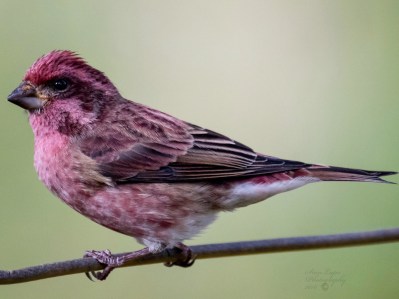
PHOTO:Male Purple Finch by Stan Lupo (Peace Valley Nature Center, Oct. 19, 2016).

NOTE FROM THE AUTHOR: Many people who…

View original post 102 more words

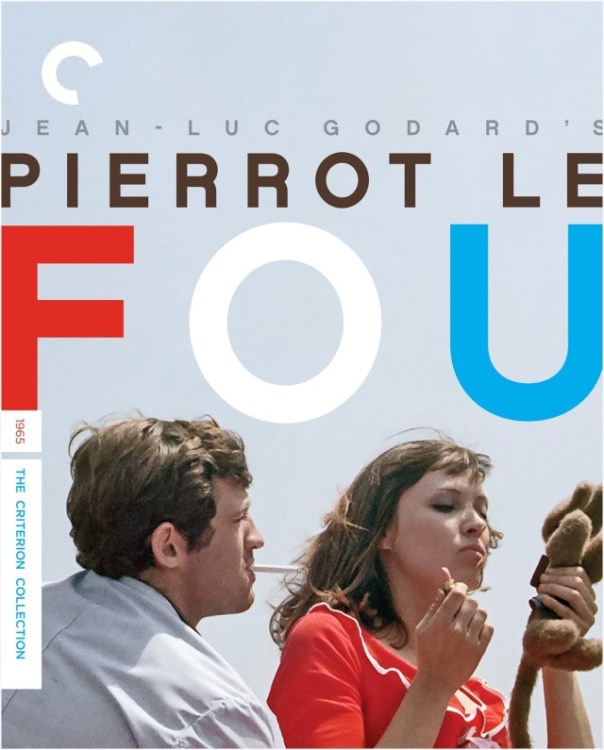
Pierrot le Fou – Jean-Luc Godard (1965)

1960s: Days of Rage's avatar1960s: Days of Rage


Pierrot le Fou (pronounced [pjɛʁo lə fu], French for ‘Crazy Pierrot’) is a 1965 French New Wave film directed by Jean-Luc Godard, starring Jean-Paul Belmondo and Anna Karina. The film is based on the 1962 novel Obsession by Lionel White. It was Godard’s tenth feature film, released between Alphaville and Masculin, féminin. The plot follows Ferdinand, an unhappily married man, as he escapes his boring society and travels from Paris to the Mediterranean Sea with Marianne, a girl chased by OAS hit-men from Algeria. … Ferdinand Griffon is unhappily married and has been recently fired from his job at a TV broadcasting company. After attending a mindless party full of shallow discussions in Paris, he feels a need to escape and decides to run away with ex-girlfriend Marianne Renoir, leaving his wife and children and bourgeois lifestyle. Following Marianne into her apartment and…

View original post 227 more words

Jack Spicer: Checklist

1960s: Days of Rage's avatar1960s: Days of Rage


“Although known primarily among a coterie of poets in the San Francisco Bay Area at the time of his death in 1965, Jack Spicer has slowly become a towering figure in American poetry. He was born in Los Angeles in 1925 to midwestern parents and raised in a Calvinist home. While attending college at the University of California-Berkeley, Spicer met fellow poets Robin Blaser and Robert Duncan. The friendship among these three poets would develop into what they referred to as ‘The Berkeley Renaissance,’ which would in turn become the San Francisco Renaissance after Spicer, Blaser and Duncan moved to San Francisco in the 1950s. At Berkeley, Spicer studied linguistics, finishing all but his dissertation for a PhD in Anglo-Saxon and Old Norse. In 1950 he lost his teaching assistantship after refusing to sign a ‘loyalty oath’ to the United States, which the University of California required of all…

View original post 264 more words

What Bob Dylan Does—Or Doesn’t—Know About the Assassination of JFK

1960s: Days of Rage's avatar1960s: Days of Rage

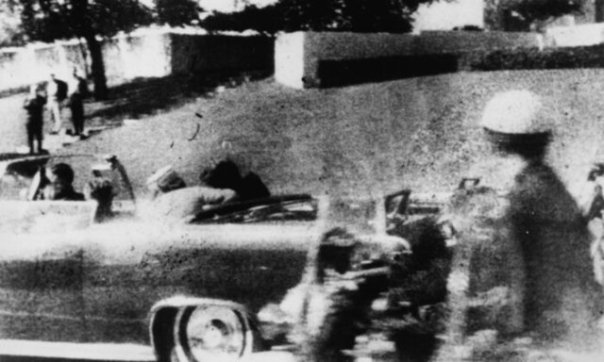
JFK’s murder was most foul, and that event paved the way, in Dylan’s mind, for the process of long decay, the rootlessness and suspicion, that we have lived since then.

“Not long after Covid-19 began its insidious spread, Bob Dylan struck. At nine minutes past midnight on March 27, 2020 the 78-year-old singer-songwriter released his first piece of original music in nearly eight years: ‘Murder Most Foul,’ a 17-minute long song-poem (it doesn’t really have a melody) about the assassination of President John F. Kennedy on November 22, 1963. It was counterintuitive marketing to say the least. For a world contemplating the imminent catastrophe of a global pandemic, Dylan offered a raspy rap about a distant catastrophe that redirected the course of history when most living Americans were unborn. A savvy promoter, Dylan saw ‘Murder Most Foul’ become his first No. 1 song on the Billboard charts. When I asked…

View original post 301 more words

Why Basketball’s Greatest Decade was the 1960s

1960s: Days of Rage's avatar1960s: Days of Rage

Lew Alcindor at Power Memorial, NYC

“The ’60s was clearly the best era. Why? Only 9 teams in a nation of basketball players. If you drove thru every suburb, there was a hoop in EVERY driveway. Society put endless pressure on any kid who was over 6 feet tall. I know; I was 6’3 at 13 years old and was talked out of tennis. A game that sports three seven-footers in today’s ATP. The black players dominated playgrounds because they couldn’t get into the NBA. With the constant downward pressure of Jim Crow combined with the simple law of supply and demand because of only nine teams, this pressure contributed to forming the hardest diamonds ever made. Four black diamonds and two white diamonds. Russel, Wilt, Elgin, Oscar, Jerry, Pettit. This is why the Harlem Globetrotters were formed and why the Rucker and other talent-laden tournaments of that ilk popped…

View original post 288 more words

A Poem for International Day for the Abolition of Slavery

wordcloud9's avatarFlowers For Socrates

Modern slavery is defined as forced labour, debt bondage, forced marriage, and human trafficking. Essentially, it refers to situations of exploitation that a person cannot refuse or leave because of threats, violence, coercion, deception, and/or abuse of power.

It’s estimated that over 40 million adults are victims of modern slavery, and 150 million children are subject to child labor.

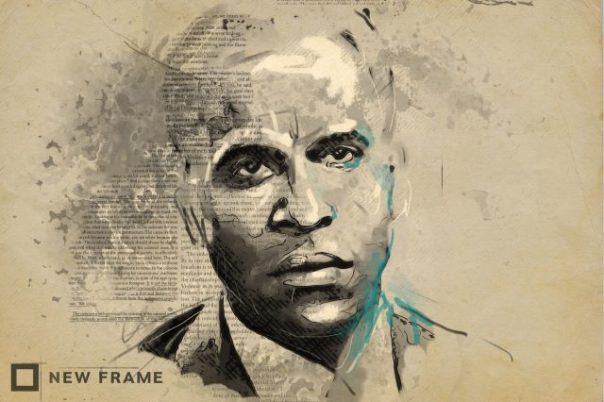
Langston Hughes (1902-1967) was born on the 37th anniversary of the day Abraham Lincoln signed the 13th Amendment: “Neither slavery nor involuntary servitude, except as a punishment for crime whereof the party shall have been duly convicted, shall exist within the United States, or any place subject to their jurisdiction.” Hughes became an American poet, novelist, short story writer, non-fiction writer, and playwright. He was a major figure of the Harlem Renaissance in New York.

To read “Remember” by Langston Hughes click:

View original post 128 more words

Franklin Rosemont

1960s: Days of Rage's avatar1960s: Days of Rage


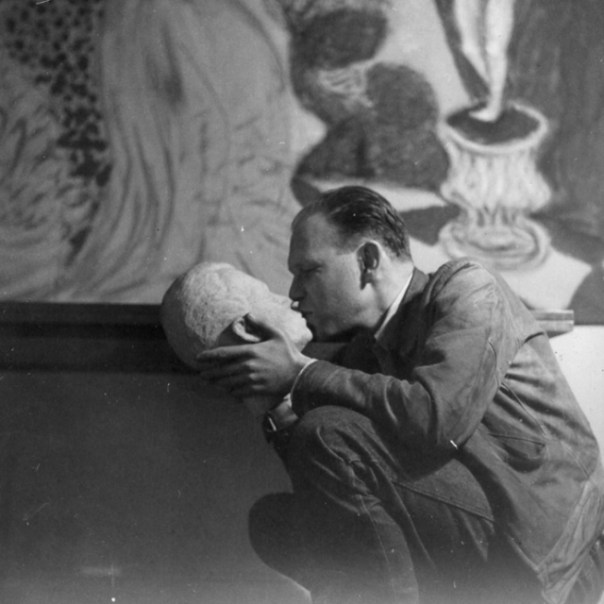
Franklin Rosemont (2 October 1943 – 12 April 2009) was an American poet, artist, historian, street speaker, and co-founder of the Chicago Surrealist Group. Over four decades, Franklin produced a body of work, of declarations, manifestos, poetry, collage, hidden histories, and other interventions intended to inspire a new generation of revolution, and became perhaps ‘the most productive scholar of labor and the left in the United States.’ … He was born in Chicago, Illinois, to Henry, a typographer and labor activist, and Sally, a jazz musician. In 1960, he dropped out of Proviso East High School, Maywood, Illinois, but was admitted to Roosevelt University in Chicago in 1962, studying under African-American scholar St. Clair Drake.He edited and wrote an introduction for What is Surrealism?: Selected Writings of André Breton, and edited Rebel Worker, Arsenal/Surrealist Subversion, The Rise & Fall of the DIL…

View original post 204 more words

Florida: Can Schools Wipe Out Racism by Banning Books about It?

dianeravitch's avatarDiane Ravitch's blog

The Orlando Sentinel editorial board published a statement denouncing the current zeal for censorship in schools and school libraries. (To learn about the history of book banning and censorship in American schools, read my book THe Language Police). The rising tide of book banning threatens freedom of thought, academic freedom, and common sense.

Banning and burning books is nothing new. What’s new are the targets: Books about race and racism.

In Tennessee, zealots want to get rid of a picture book by Ruby Bridges, who became the first Black student at an all-white New Orleans school when she was just 6 years old.

Among the supposedly objectionable material in “Ruby Bridges Goes to School: My True Story” are photos that show white people holding signs that say, “We want segragation (sic),” and, “We don’t want to Integrate,” as well as another showing a young boy with a sign that…

View original post 284 more words

Not Always 100% Narrative and Dialogue

Dave Astor's avatarDave Astor on Literature

Bel Kaufman with Sandy Dennis, who starred in the movie version of Ms. Kaufman’s novel Up the Down Staircase.

We admire the ingenuityof authors who include nontraditional elements in their novels, even as that sort of thing can get a bit annoying when overdone.

Most novels of course consist solely of narrative prose and dialogue. The exceptions are when authors throw in poems or songs or letters or emails or texts or newspaper clippings or memos or lists or recipes or drawings or…

All this can make a novel more interesting, but also less smooth to read. We might feel interrupted, thrown out of our page-turning zone. Especially if the non-prose, non-dialogue elements are long or frequent. It can be hard to leave the comfort of our usual reading habits.

I just read Bel Kaufman’s Up the Down Staircase. It’s quite good — hilariously, frenetically, and at times movingly…

View original post 320 more words

Stephen Sawchuk: What is Critical Race Theory and Why Is It Under Attack?

dianeravitch's avatarDiane Ravitch's blog

Stephen Sawchuk is a staff writer for Education Week. He wrote this article back in May, and I missed it. I think it’s one of the clearest, most balanced explanations of CRT that I have read.

Sawchuk writes:

Is “critical race theory” a way of understanding how American racism has shaped public policy, or a divisive discourse that pits people of color against white people? Liberals and conservatives are in sharp disagreement.

The topic has exploded in the public arena this spring—especially in K-12, where numerous state legislatures aredebating billsseeking to ban its use in the classroom.

In truth, the divides are not nearly as neat as they may seem. The events of the last decade have increased public awareness about things like housing segregation, the impacts of criminal justice policy in the 1990s, and the legacy of enslavement on Black Americans. But there is much less consensus on…

View original post 1,868 more words