The road well travelled: 100 years of Jack Kerouac

1960s: Days of Rage's avatar1960s: Days of Rage


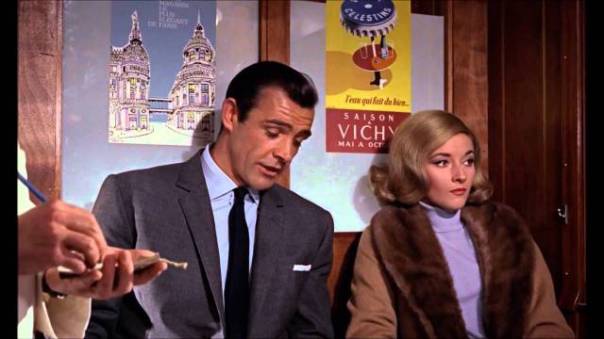
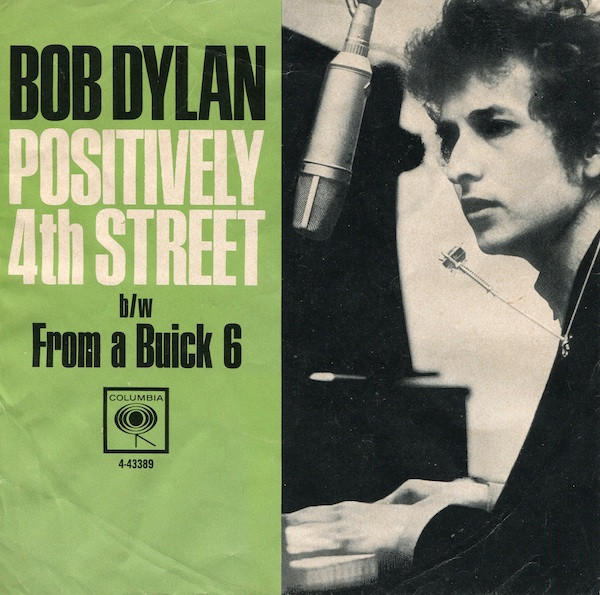
“Jack Kerouac – anti-establishment icon, revolutionary author of the American classic On the Road, pioneer of the Beat Generation and, perhaps most of all, enduring symbol of cool. If a dog-eared paperback of On the Road slung in your back pocket was once the ultimate avant-garde accessory, 100 years after his birth, a Kerouac namecheck has become something of a trope on dating apps. New analysis by OkCupid has shown that mentions of the Beat poets and On the Road in profiles (more often on those belonging to men) have increased more than threefold in the past five years. With their themes of travelling, male friendship and flight from the nine-to-five to explore a world of sex, drugs and art, it’s easy to see why men want to align themselves with Kerouac’s books. The anarchist ideals of On the Road characters Dean Moriarty and Sal Paradise are ones that ‘alternative’…

View original post 218 more words

Angela Davis on the power of protest: ‘We can’t do anything without optimism’

1960s: Days of Rage's avatar1960s: Days of Rage


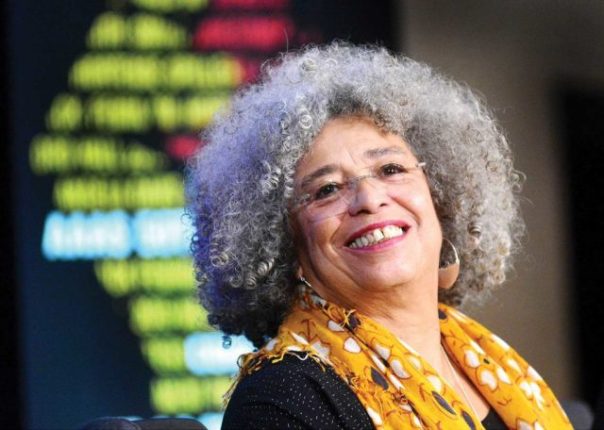
“The last time Angela Davis was in Birmingham, Alabama, she caught up with childhood friends and her Sunday school teacher. While many of us would reminisce about favourite classes and first kisses, they discussed bombs. ‘We talked about what it was like to grow up in a city where there were bombings all the time,’ she says. Most notoriously, in September 1963, the Ku Klux Klan bombed the 16th Street Baptist church, killing four girls. It wasn’t a one-off, says the legendary radical feminist, communist and former Black Panther. ‘People’s homes were bombed, synagogues were bombed, other churches were bombed. People think of that as a single event, but it was more indicative of the pervasive terror at that time in Birmingham.’ When the girls were killed, Davis was 19, a brilliant young scholar travelling through Europe. She read about the attack in newspapers. ‘It was one of the…

View original post 205 more words

Putin: The Bloody Tyrant

wordcloud9's avatarFlowers For Socrates

by IRENE FOWLER, Contributor

“Putin began a war against Ukraine, and against the entire democratic world. He wants to destroy our country, and everything we have been building. But we know the strength of the Ukrainian people.”

– Volodymyr Zelensky, President of Ukraine

“Let each of us if you’re able to stand, stand and send an unmistakable signal to Ukraine and to the world.”

– Joe Biden, U.S. President


To read Irene’s poem “Putin: The Bloody Tyrant” click:

View original post 231 more words

In the Beginning by Margaret Dornaus (HOW TO HEAL THE EARTH Series)

silverbirchpress's avatarSilver Birch Press

thanksgiving-g0c794d9db_1920 copyIn the Beginning
by Margaret Dornaus

Start with a prayer.
It might contain just one word.
Or many—

Length doesn’t matter so much
as intention. Rest assured
words can propagate

exponentially . . .
like the seeds you plant
in early spring

when the wind is still
at your back. When hope holds
scarcely long enough

to keep you and the future
together for at least another
season of growing

your own version of a victory
garden, filled with tomatoes
and eggplants and other humble

members of the nightshade
family. Without ever fearing
extinction. Without feeling even

the tiniest threat of devastation. Start
before the work commences—the hoeing,
the weeding, the careful cultivation of

sun and shade, the gentle
layering of compost and leaves,
the tender tamping down,

the turning of the earth in need
of additional nutrients and endless
watering. Start with a prayer,

then begin again.
And again—…

View original post 240 more words

Ukraine’s refugee crisis is a demographic crisis, too

Philip N. Cohen's avatarFamily Inequality

Putin’s war against Ukraine is a grotesque atrocity and a crime against humanity. This is one aspect of it.

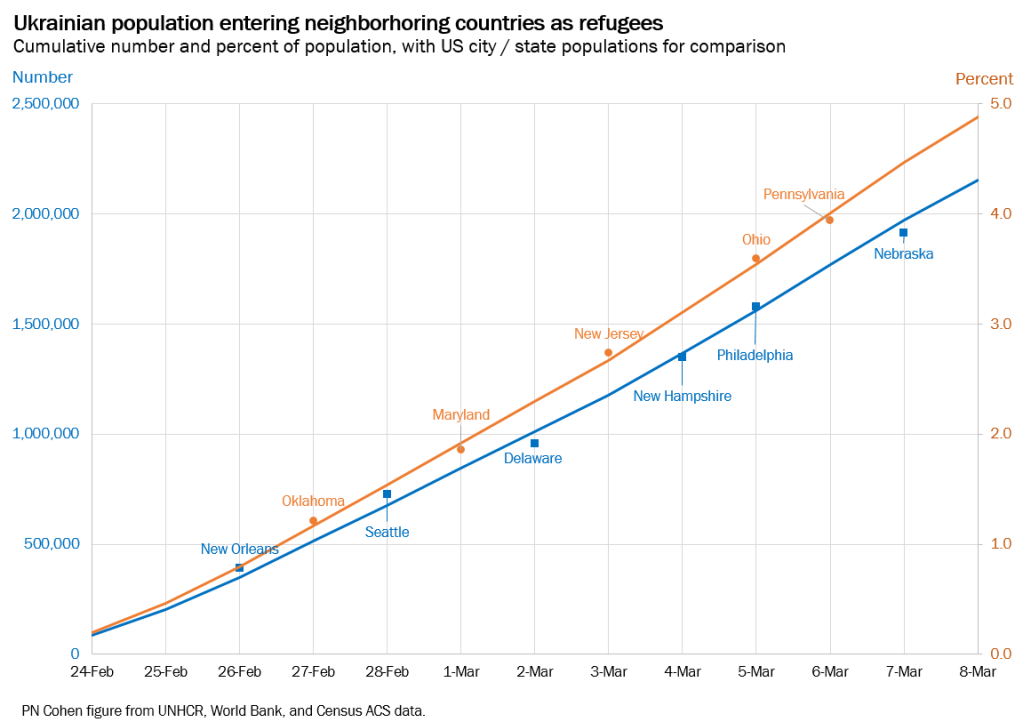
The rate at which people are fleeing Putin’s war in Ukraine is astounding. According to UN estimates, 2.2 million people entered neighboring countries in the first 14 days of the war. To help communicate the magnitude of this human tide, I made this figure, which shows the refugee population as a total number, and as a percentage of Ukraine’s prewar population. For comparison, I added some relevant data points from US cities and states. More people have fled Ukraine than live in Nebraska. In relative terms, it’s more than the population of Pennsylvania.

Of course, we have no idea how many of these refugees will return to Ukraine in the future, so the long term effect is unknowable. But I assume as more of the country they have left behind…

View original post 199 more words

Fiona Hill Explains Why Putin Invaded Ukraine

dianeravitch's avatarDiane Ravitch's blog

You may remember Fiona Hill. She was the nonpartisan Russia expert on the National Security Council who testified in Trump’s first impeachment trial. Politico interviewed her at length soon after Putin invaded Ukraine. Hill provides interesting political and historical insights into why Putin invaded Ukraine. She has been observing both Russia and Ukraine for many years, as well as Putin.

Hill says we are already in the midst of World War 3.

She warns:

Reynolds: The more we talk, the more we’re using World War II analogies. There are people who are saying we’re on the brink of a World War III.

Hill: We’re already in it. We have been for some time. We keep thinking of World War I, World War II as these huge great big set pieces, but World War II was a consequence of World War I. And we had an interwar period between them. And…

View original post 350 more words

The Lilac Bushes and the Forest-Tent Caterpillars by Martin Willitts Jr (THOUGHTS ABOUT THE EARTH Series)

silverbirchpress's avatarSilver Birch Press

lilacs 1The Lilac Bushes and the Forest-Tent Caterpillars
by Martin Willitts Jr

Lilacs grew on our boundary.
My window opened to a whiffed aroma of lilacs.
Light-purple light would wake me.

There was a thin spider-web nest of caterpillars.
In the weight of their nest squirmed black larvae,
begging for mercy. The larvae moved together single file.
Silken treads were laid down by leaders.
They knew they were going places
and they were destroying things in the way.
Buff-colored moths emerged about 10 days later.
They searched the solitude of streetlights.
The neighbors tried smoking the nest to kill it.

I could hear the caterpillars dying.

Everything is a by-product of disagreement.
Everything that was is gone.
Everything that will be is not possible anymore.

And in the end, nothing survived.
The neighbors passed on.
My father turned purple as a lilac, and died.
There are no more moths hovering on…

View original post 193 more words

Quicksilver Times

1960s: Days of Rage's avatar1960s: Days of Rage


Quicksilver Times was an antiwar, counterculture underground newspaper published in Washington, DC. Its first issue was dated June 16, 1969, with Terry Becker Jr., a former college newspaper editor and reporter for the Newhouse News Service, the main instigator in the founding group of antiwar activists. It ran for 3 years, with its final issue (vol. 4, no. 9) appearing in Aug. 1972. Publication was irregular and during the latter part of its run it was publishing once every 3 weeks. It was a member of the Liberation News Service and the Underground Press Syndicate. Quicksilver Times was one of several anti-government underground papers of the period now known to have been infiltrated by government informants. Along with opposition to the Vietnam War, the paper was outspoken in its support for the Black Panthers, feminism, gay rights, and other movements of the period…

View original post 120 more words

Waiting for Godot – Samuel Beckett (1955)

1960s: Days of Rage's avatar1960s: Days of Rage


Waiting for Godot (/ˈɡɒd/GOD-oh) is a play by Samuel Beckett in which two characters, Vladimir (Didi) and Estragon (Gogo), engage in a variety of discussions and encounters while awaiting the titular Godot, who never arrives. Waiting for Godot is Beckett’s translation of his own original French-language play, En attendant Godot, and is subtitled (in English only) ‘a tragicomedy in two acts’. The original French text was composed between 9 October 1948 and 29 January 1949. … Act I. The play opens with two men, Vladimir and Estragon, meeting by a leafless tree, whose species is later speculated to be that of willow. Estragon notifies Vladimir of his most recent troubles: he spent the previous night lying in a ditch and received a beating from a number of anonymous assailants. The duo discuss a variety of issues, none of any…

View original post 293 more words