Category Archives: Uncategorized

The dark legacy of Carlos Castaneda

1960s: Days of Rage's avatar1960s: Days of Rage


“For fans of the literary con, it’s been a great few years. Currently, we have Richard Gere starring as Clifford Irving in ‘The Hoax,’ a film about the ’70s novelist who penned a faux autobiography of Howard Hughes. … Much has been written about the slippery boundaries between fiction and nonfiction, the publishing industry’s responsibility for distinguishing between the two, and the potential damage to readers. There’s been, however, hardly a mention of the 20th century’s most successful literary trickster: Carlos Castaneda. If this name draws a blank for readers under 30, all they have to do is ask their parents. Deemed by Time magazine the ‘Godfather of the New Age,’ Castaneda was the literary embodiment of the Woodstock era. His 12 books, supposedly based on meetings with a mysterious Indian shaman, don Juan, made the author, a graduate student in anthropology, a worldwide celebrity. Admirers included John Lennon, William…

View original post 192 more words

Samuel Beckett: Film (1965), Notfilm (2015)

1960s: Days of Rage's avatar1960s: Days of Rage


“In 1964, the great playwright and novelist Samuel Beckett began his only venture into cinema. The twenty-two-minute Film, as it was eventually titled, was a collaborative effort of formidable talents. Directed by Alan Schneider, the premiere American interpreter of Beckett’s plays, it starred silent comedian Buster Keaton, was photographed by On the Waterfront (1954) cinematographer Boris Kaufman, and produced by Barney Rosset, legendary founder of Grove Press, the first US publisher of Beckett and such other figures of the European avant-garde as Genet and Ionesco. … Problems with conception and execution aside, the great comic himself is utterly out of his element—and I don’t mean that philosophically. The world of Film, its restless moving camera and play with point-of-view notwithstanding, is curiously static—in fact, not filmic, the only realm in which Keaton’s poker face and physical dynamics work. But if Film’s reputation has not improved with time…

View original post 201 more words

Jorge Amado’s Influence on Brazilian Culture

1960s: Days of Rage's avatar1960s: Days of Rage


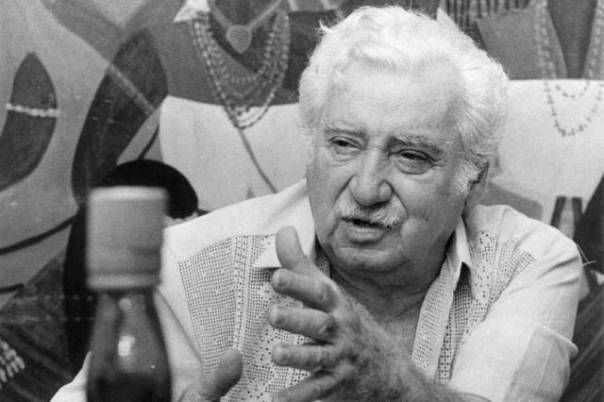
“When Jorge Amado died in 2001, people were already talking about him as Brazil’s cultural ambassador to the world. His novels, translated into nearly 50 languages, made many in the West suddenly familiar with the largest Latin American nation. … Amado’s emphasis on regional dialect, empowered female characters, anti-racism, folk culture, and the dignity of the worker offer a rich and politically-charged vision of Brazilian life. The author himself declared he had done more to introduce the world to Brazil than any institution, any government effort, did. Comparing himself to the Brazilian government isn’t entirely fair, however. In Amado’s time, the government wasn’t much of a constant or predictable institution. Born in 1912, Amado witnessed the Brazilian Revolution of 1930, marking the end of the Old Republic and initiating a dictatorship. This regime, called the Vargas Era, lasted until 1946, when a leader was once again elected to rule over…

View original post 195 more words

Introduction to Found Poetry

1960s: Days of Rage's avatar1960s: Days of Rage

A piece of blackout poetry, created by blocking out words from a found piece of newsprintW – Found poetry, W – Erasure (artform)

“Poetry is everywhere, and it hides in plain view. Everyday writing like catalogs and tax forms can contain the ingredients for a ‘found poem.’ Writers of found poetry pull words and phrases from various sources, including news articles, shopping lists, graffiti, historic documents, and even other works of literature. The original language is reformatted to create the found poem. … Instead, the poet engages with the text and offers a new context, a contrary view, a fresh insight, or lyrical and evocative writing. Just as plastic bottles can be recycled to make a chair, the source text is transformed into something completely different. Traditionally, a found poem uses only words from the original source. However, poets have developed many ways to work with found…

View original post 239 more words

The Moderns: An Anthology of New Writing in America edited by LeRoi Jones

1960s: Days of Rage's avatar1960s: Days of Rage


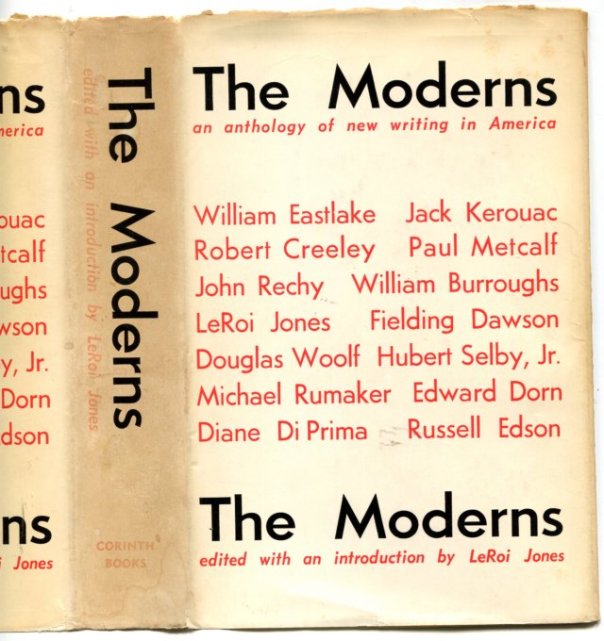
“An anthology called The Moderns had better, one thinks, be good. If it isn’t, it will be difficult for it to avoid appearing pretentious, which, I am afraid, is how Mr. Jones’s collection strikes me. His Introduction does not help me to feel otherwise. It has its perceptive moments, but on the whole it is too arcane for my understanding; and I wish he could have spelt out his assumptions and his principles of selection more simply and with expanded references. What he means by ‘modern’ seems clear enough: The possibility of a ‘new American poetry’ meant, of course, that there was equally to be sought out, a new or fresher American prose. The concerns that made the poetry seem so new were merely that the writers who were identified with this recent poetic renaissance were continuing the tradition of twentieth century modernism that had been initiated in the early…

View original post 201 more words

TCS: U.S. Poets Laureate of the 21st Century, Part THREE – ‘A Spark of Kindness’

wordcloud9's avatarFlowers For Socrates

Good Morning!

____________________________

Welcome to The Coffee Shop, just for you early risers
on Monday mornings. This is an Open Thread forum,
so if you have an off-topic opinion burning a hole in
your brainpan, feel free to add a comment.
____________________________

How many answers shall be found
in the developing world of my Poem?
I don’t know. Nevertheless I put my Poem,

which is my life, into your hands, where it will do the best it can.

– Gwendolyn Brooks (U.S. Poet Laureate, 1985-1986)

View original post 1,103 more words

Bob Shepherd: Hillsdale College’s 1776 Curriculum: Comic Book History

dianeravitch's avatarDiane Ravitch's blog

Bob Shepherd is a regular reader and commenter who has been an assessment developer, a textbook writer and editor, and a teacher, among other things.

In the following post, he reviews the Hillsdale College “1776 Curriculum,” which took its name from Donald Trump’s short-lived “1776 Commission.”

He writes:

According to the Nashville Tennessean, Governor Bill Lee, a proponent of charter schools, is planning a partnership with fundamentalist Christian Hillsdale College to open 50 new charter schools in the state. These would use the Hillsdale 1776 Curriculum. Hillsdale bills itself as promoting Classical education.

I’ve just been reading through this stuff from Hillsdale, which is supposed to be a combination American History and Civics curriculum. It’s basically a guide to fundamentalist, nationalist indoctrination.

The first thing to notice about this curriculum, in comparison to existing K-12 American History and Civics programs, is that it is quite short. You can read through…

View original post 1,103 more words

Van Morrison Is More Than ‘Astral Weeks’—and He Damn Well Knows It

1960s: Days of Rage's avatar1960s: Days of Rage


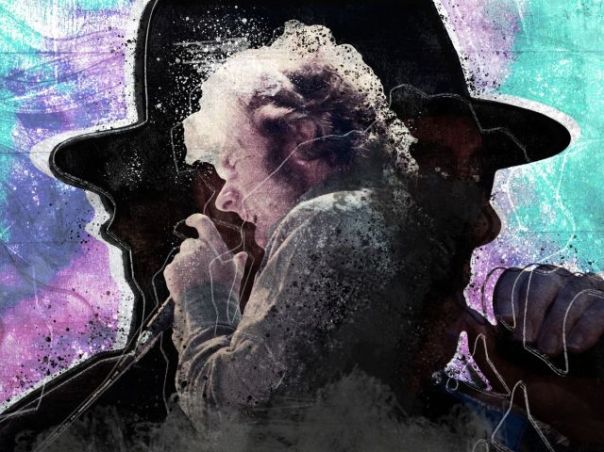
“Astral Weeks turns 50 this month. What a record. Lester Bangs, in perhaps the greatest piece of rock criticism ever written, poetically referred to the 1968 Van Morrison album as a ‘beacon, a light on the far shores of the murk.’ Greil Marcus, less poetically, called it ‘a profoundly intellectual album,’ and meant it as a compliment. Both would agree that Astral Weeks is one of the best 47-minute pieces of music ever created. A landmark in the fusion of rock and jazz. A masterpiece. But you’ve probably heard people talk about how great Astral Weeks is more than the album itself. Van Morrison’s next record, 1970’s Moondance, is far more popular; if you were sexually active in the late 20th century, Van Morrison likely howled ‘I wanna rock your Gypsy soul!’ at least once during an intimate moment. Given the album’s elevated position in the…

View original post 266 more words

New Journalism

1960s: Days of Rage's avatar1960s: Days of Rage

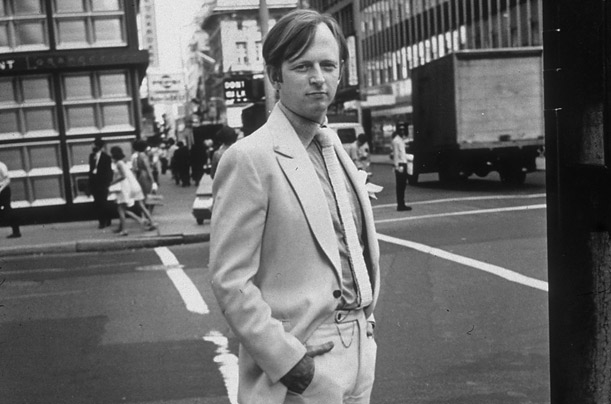
Tom Wolfe

“New Journalism is a style of news writing and journalism, developed in the 1960s and 1970s, that uses literary techniques unconventional at the time. It is characterized by a subjective perspective, a literary style reminiscent of long-form non-fiction. Using extensive imagery, reporters interpolate subjective language within facts whilst immersing themselves in the stories as they reported and wrote them. In traditional journalism, however, the journalist is ‘invisible’; facts are reported objectively. The term was codified with its current meaning by Tom Wolfe in a 1973 collection of journalism articles he published as The New Journalism, which included works by himself, Truman Capote, Hunter S. Thompson, Norman Mailer, Joan Didion, Terry Southern, Robert Christgau, Gay Talese and others. Articles in the New Journalism style tended not to be found in newspapers, but in magazines such as The Atlantic Monthly,

View original post 215 more words

Bitter Lemons – Lawrence Durrell (1957)

1960s: Days of Rage's avatar1960s: Days of Rage


“Bitter Lemons is an autobiographical work by writer Lawrence Durrell, describing the three years (1953–1956) he spent on the island of Cyprus. The book was awarded the Duff Cooper Prize for 1957, the second year the prize was awarded. Durrell moved to Cyprus in 1953, following several years spent working for the British Council in Argentina and the Foreign Office in Yugoslavia. Having relinquished government employment, Durrell wanted to plunge himself once more into writing, and wanted to return to the Mediterranean world he had experienced in Corfu and Rhodes. He had hoped that he would be able to purchase a house in an affordable location and write. Although Durrell experienced personal difficulties—his wife, Eve, was undergoing treatment for mental illness and had left him in charge of his young daughter, Sappho (born 1951) — the book does not mention these people or incidents, aside…

View original post 207 more words