All posts by Dr. Dean Albert Ramser

Unknown's avatar

About Dr. Dean Albert Ramser

Slava Ukraine! Supporting student success in Ukraine. Retired educator (English / Education: GED2EdD; "Ми будемо поруч один з одним як члени людства в найкращому сенсі цього слова". (Горан Перссон) Слава Україна 🇺🇦 "We will be there for one another as fellow members of humanity, in the finest sense of the word." (Goran Persson) https://cal.berkeley.edu/DeanRamser

Voice of the Body – a limited edition blanket by Andre Walker

pendletonwoolenmills's avatarPendleton Woolen Mills

Andre Walker

We are excited to once again work with renowned designer Andre Walker, as he brings his singular sense of style to the Pendleton looms for the very first time.
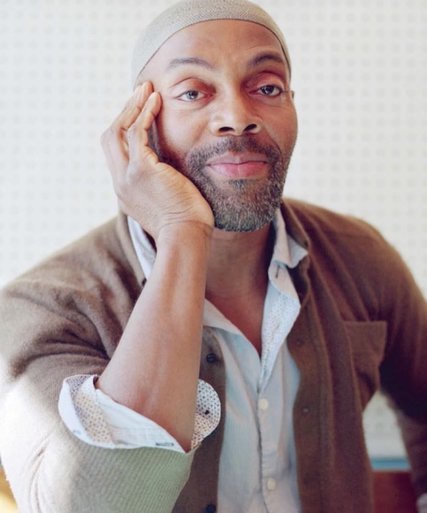
Designer Andre Walker, photo courtesy Andre Walker

Walker imagined, painted and designed “Voice of the Body” in his Brooklyn-based studio with the desire to have it tangibly come to life, and invited Pendleton to transform his artwork for the loom.

The limited edition blanket feature a striking set of deep brown eyes, vibrant pink lips in fellowship with a pictogram-like figure overlaying a cornflower blue, tan and yolk gradient.

Voice of the Body blanket by Pendleton Woolen Mills, designed by Andre Walker

Inspiration for the “Voice of the Body” painting and blanket came from Walker thinking about God and existence. “It’s about the spirit in the gut of our intuition as it remains hopeful in our expression of the voice of the body,” explained Walker. He views the painting and blanket as a muse for the singularity of humanity’s…

View original post 225 more words

Alain Robbe- Grillet: Six Films, 1963-1974

1960s: Days of Rage's avatar1960s: Days of Rage


L’Homme qui ment (1968)

“When a body of work is inherently made up of intricately layered themes and hidden caches of ideas, surmising the work as a whole can be extremely difficult.  This is never more prescient than in the BFI’s release of six films by French film writer and director, Alain Robbe-Grillet; a seemingly missing link in French cinema of the 1960s and 1970s.  His work is so ingrained within the era’s dismissal of formal ideas and overcoming paranoia over narrative conjecture that it’s surprising that his name is not bandied about in the same manner as Jean-Luc Godard, Agnès Varda, and Alain Resnais, but Robbe-Grillet’s work violently defies its role as a hyper-active pilot fish of the new wave. Robbe-Grillet may perhaps be best known for writing Resnais’ Last Year in Marienbad (1961) but his work as director begins to showcase the real ideas behind his role as…

View original post 206 more words

Laurence Tribe: The Supreme Court Has Become a Threat to Our Democracy

dianeravitch's avatarDiane Ravitch's blog

Harvard law professor Laurence Tribe was interviewed by the Washington Post about the Supreme Court. His answers were very informative. He refers to the current Court as “the Thomas court.”

Do you consider the Supreme Court to be in crisis now?


Yes. I have no doubt that the court is at a point that is far more dangerous and damaging to the country than at any other point, probably, since Dred Scott. And, in a way, because we even find Justice [Clarence] Thomas going back and citing Dred Scott favorably in his opinion on firearms, the court is dragging the country back into a terrible, terrible time. So I think that it’s never been in greater danger or more dangerous
….

You testified against [failed 1987 conservative Supreme Court nominee] Robert Bork a long time ago and alluded to the kind of vision that he would have brought had he…

View original post 890 more words

Robert Reich: Is DeSantis a Fascist?

dianeravitch's avatarDiane Ravitch's blog

Robert Reich wondered out loud what many people including me have been saying. He posed it as a question. Is Ron DeSantis a fascist? He didn’t even get into the damage that DeSantis has done to teachers, driving them out with low pay, gag orders, censorship, and replacing them with veterans and first responders without experience or knowledge of teaching. He also fired five elected officials and replaced them with cronies. Four were Broward County school board members who were criticized in a state report for the Parkland school shootings, the fifth was a county prosecutor who said he would not prosecute women who sought an abortion. He is on a roll, attacking teachers and anyone he considers WOKE (i.e., concerned about racism, injustice, etc.). He is rising by making hatred his brand.

Robert Reich writes:

I like to tweet. Not as much as I like to write here on…

View original post 972 more words

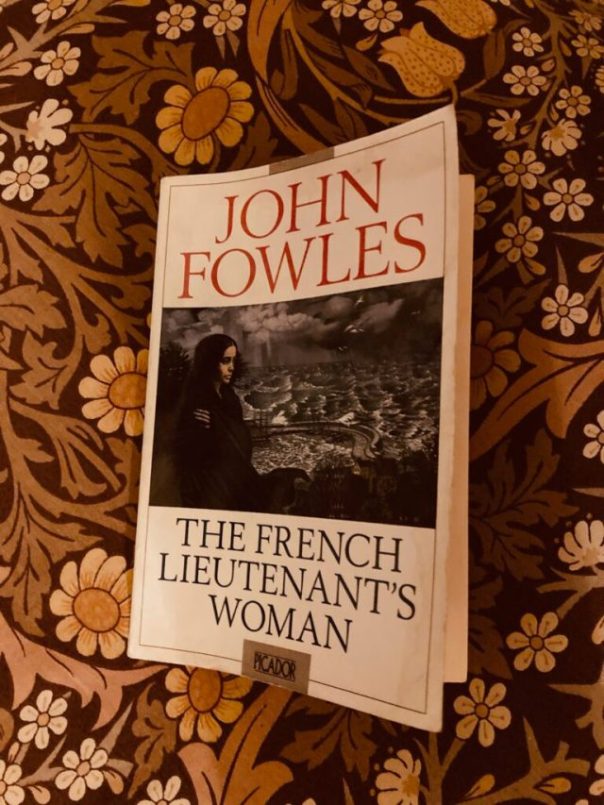
The French Lieutenant’s Woman – John Fowles (1969)

1960s: Days of Rage's avatar1960s: Days of Rage


The French Lieutenant’s Woman is a 1969 postmodernhistorical fiction novel by John Fowles. The plot explores the fraught relationship of gentleman and amateur naturalist Charles Smithson and Sarah Woodruff, the former governess and independent woman with whom he falls in love. The novel builds on Fowles’ authority in Victorian literature, both following and critiquing many of the conventions of period novels. … Part of the novel’s reputation concerns its postmodern literary qualities, with expressions of metafiction, historiography, metahistory, Marxist criticism, and feminism. Stylistically and thematically, the novel has been described as historiographic metafiction.[6] The contrast between the independent Sarah Woodruff and the more stereotypical male characters often earns the novel attention for its treatment of gender issues. … Set in the mid-nineteenth century, the narrator identifies the novel’s protagonist as Sarah Woodruff, the Woman of the title, also known as…

View original post 205 more words

Travesties – Tom Stoppard (1974)

1960s: Days of Rage's avatar1960s: Days of Rage


Travesties is a 1974 play by Tom Stoppard. The play centres on the figure of Henry Carr, an elderly man who reminisces about Zürich in 1917 during the First World War, and his interactions with James Joyce when he was writing Ulysses, Tristan Tzara during the rise of Dada, and Lenin leading up to the Russian Revolution, all of whom were living in Zürich at that time. The play is primarily set in Zürich, Switzerland during the First World War. At that time, three important personalities were living in Zürich: the modernist author James Joyce, the communist revolutionary Lenin, and Dada founder Tristan Tzara. The play centres on the less notable Henry Carr, a British consular official (also mentioned in Joyce’s novel Ulysses), as he recalls his perceptions and experiences with these influential figures. As he…

View original post 204 more words

Vladimir the Vicious

wordcloud9's avatarFlowers For Socrates

by IRENE FOWLER, Contributor

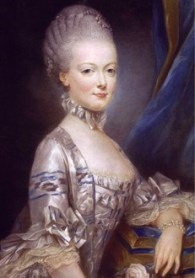
Upon being informed that her famished and desperate peasant compatriots could not afford their staple diet of bread, the Queen of France Marie-Antoinette (1755-1799) allegedly retorted – “let them eat cake.” The dire situation of looming mass-starvation was due to harsh, inclement weather and concomitant poor harvests from 1877-1899.


In essence, her callous and cruel message to her fellow citizens, who were being deprived of their daily sustenance through no fault of their own, is on par with Russian President Vladimir Putin’s cynical, heartless, response to Africa’s Russia-driven food shortages. In true megalomaniac fashion, he nonchalantly swatted away alarming concerns, by falsely blaming sanctions imposed on Russia for the portentous catastrophe. Thereby, Putin, made a mockery of the debacle and the continent of circa 1.4 billion people.

Putin’s illegal and unprovoked brutal war on Ukraine, now in its fifth dark month, is notable for the level of…

View original post 568 more words

Voting Rights Act of 1965

1960s: Days of Rage's avatar1960s: Days of Rage

In this Aug. 6, 1965, photo, President Lyndon Baines Johnson signs the Voting Rights Act of 1965 in a ceremony in the President’s Room near the Senate Chambers on Capitol Hill in Washington.
“The Voting Rights Act of 1965 is a landmark piece of federallegislation in the United States that prohibits racial discrimination in voting. It was signed into law by PresidentLyndon B. Johnson during the height of the civil rights movement on August 6, 1965, and Congress later amended the Act five times to expand its protections. Designed to enforce the voting rights guaranteed by the Fourteenth and Fifteenth Amendments to the United States Constitution, the Act sought to secure the right to vote for racial minorities throughout the country, especially in the South. According to the U.S. Department of Justice, the Act is considered to be the most effective piece of federal

View original post 211 more words

A Poem for Hiroshima Day

wordcloud9's avatarFlowers For Socrates

August 6, 1945, World War II – The U.S. B-29 Enola Gay dropped the “Little Boy” atomic bomb on Hiroshima, Japan. 70,000 people died instantly, thousands died from burns, and more died over the following years from radiation. The date is commemorated by the Hiroshima Peace Ceremony & Peace Message Lantern Floating in Japan, and as Hiroshima Day in the U.S. and UK.

SankichiTōge (1917 – 1953) was a Japanese poet, activist, and survivor of the atomic bombing of Hiroshima. His collection “Poems of the Atomic Bomb” was published in 1951. Karen Thornber is a recipient of the 2011 Sibley Prize from the University of Chicago for her translation of his collection.

To read the poem “August 6” by Sankichi Tōge click:

View original post 271 more words

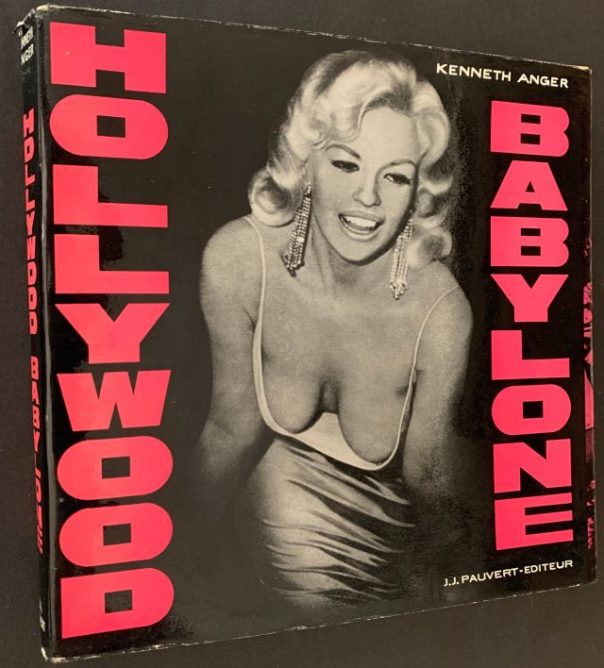
Hollywood Babylon – Kenneth Anger

1960s: Days of Rage's avatar1960s: Days of Rage


Hollywood Babylon is a book by avant-gardefilmmakerKenneth Anger which details the purported scandals of famous Hollywood denizens from the 1900s to the 1950s. The book was banned shortly after it was first published in the U.S. in 1965, and remained unavailable until reprinted ten years later. Upon its second release in 1975, The New York Times said of it, ‘If a book such as this can be said to have charm, it lies in the fact that here is a book without one single redeeming merit.’ The Daily Beast described Anger’s book as ‘essentially a work of fiction. There is no doubt that many—if not all—of the stories Anger shares in his slim bible have no merit.’ Film historian Kevin Brownlow repeatedly criticized the book, citing Anger as saying his research method was ‘mental telepathy, mostly’. … The book details alleged scandals of Hollywood stars from the

View original post 203 more words