All posts by Dr. Dean Albert Ramser

#13 – “I Fought the Law” – Bobby Fuller Four (1966), Palisades Park – Freddy Cannon (1962), Del Shannon – Runaway (1961), etc.

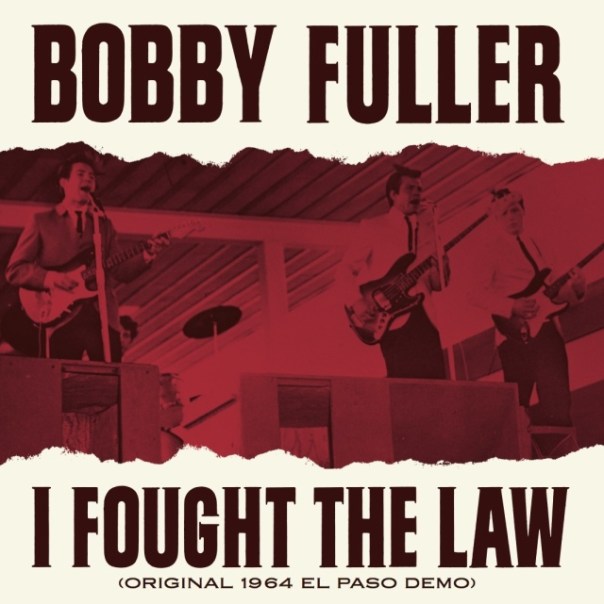
“The song ‘I Fought the Law’ was written in 1959 by singer-songwriter Sonny Curtis, who was with The Crickets. (Curtis played the guitar with The Crickets after Buddy Holly’s death). The song was on their 1960 album In Style with the Crickets and was released as a single, but it did not chart successfully. Others covered it, but the version by the Sixties rock music band Bobby Fuller Four was released in December of 1965 and in 1966 it went to #9 on the U.S. Billboard Hot 100 and #11 in Canada. They also released it on their 1966 album titled I Fought the Law. There have numerous covers of the song, including versions by The Clash, Hank Williams, Jr., Dead Kennedy’s, Sam Neely, Nitty Gritty Dirt Band, Dave Courtney, Mike Ness, John Cougar Mellencamp, Johnny Cash, Bruce Springsteen, Roy Orbison, Tom Petty, Green Day, Alvin and the Chipmunks…
View original post 212 more words

TCS Black Poetry Day – “This Freedom … This Beautiful and Terrible Thing”

Good Morning!
 ______________________________
Welcome toTheCoffeeShop, just for you early risers
on Monday mornings.This is an Open Thread forum,
so if you have an off-topic opinion burning a hole in
your brainpan, feel free to add a comment.
______________________________
“You’re allowed to miss the people who were bullets to you,
but you’re not allowed to let them shoot you again.”
– Reyna Biddy, spoken word poet, author of We Find Our Way
“What does it mean to be a poet in a country where more money
per minute is spent on armaments, when we are supposed to be at
peace, than is spent to feed the starving children …When the price
of one stealth bomber, already outmoded, is more than the entire
federal appropriation for all the arts in this country? What does it
mean that a Black, lesbian, feminist, warrior, poet, mother is…
View original post 2,984 more words
When Segregationists Offered One-Way Tickets to Black Southerners
 Reverse freedom riders on their way to New England boarded a bus in New Orleans in 1962.
“When two planeloads of asylum seekers were flown to Martha’s Vineyard last month, Peola Denham Jr. recognized an echo of his own experience from six decades ago — one nearly forgotten in the long history of Black Americans’ struggle for civil rights. ‘What really took me back,’ recalled Mr. Denham, 73, ‘is that when the people got to their destinations, they didn’t get what they were promised.’ The migrants on Martha’s Vineyard, who were primarily from Venezuela, found themselves repeating history, pawns in a political fight. The promise — as dozens of them would later recount to lawyers and journalists — was of jobs and resettlement help. Instead, they arrived with no warning to the community, which nevertheless scrambled to find them food and shelter. For Mr. Denham, in the spring of 1962…
View original post 212 more words
John Ashbery: The Instruction Manual

“John Ashbery wrote his first poem when he was 8. It rhymed and made sense (‘The tall haystacks are great sugar mounds/ These are the fairies’ camping grounds’) and the young writer—who had that touch of laziness that sometimes goes along with precocity—came to a realization: ‘I couldn’t go on from this pinnacle.’ He went on, instead, to write poems that mostly didn’t rhyme, and didn’t make sense, either. His aim, as he later put it, was ‘to produce a poem that the critic cannot even talk about.’ It worked. Early on, a frustrated detractor called him ‘the Doris Day of Modernism.’ Even today a critic like Helen Vendler confesses that she’s often ‘mistaken’ about what Ashbery is up to. You can see why: It simply may not be possible to render a sophisticated explication de texte of a poem that concludes ‘It was domestic thunder,/ The color of spinach…
View original post 215 more words
Nuyorican movement
 THE LIFE AND POETRY OF JULIA DE BURGOS, Directed by Jose Garcia Torres, 1979, 28 minutes
“The Nuyorican movement is a cultural and intellectual movement involving poets, writers, musicians and artists who are Puerto Rican or of Puerto Rican descent, who live in or near New York City, and either call themselves or are known as Nuyoricans. It originated in the late 1960s and early 1970s in neighborhoods such as Loisaida, East Harlem, Williamsburg, and the South Bronx as a means to validate Puerto Rican experience in the United States, particularly for poor and working-class people who suffered from marginalization, ostracism, and discrimination. The term Nuyorican was originally used as an insult until leading artists such as Miguel Algarín reclaimed it and transformed its meaning. Key cultural organizations such as the Nuyorican Poets Café and Charas/El Bohio in the Lower East Side…
View original post 231 more words
The Foundations – “Baby, Now That I’ve Found You”, “Build Me Up Buttercup”
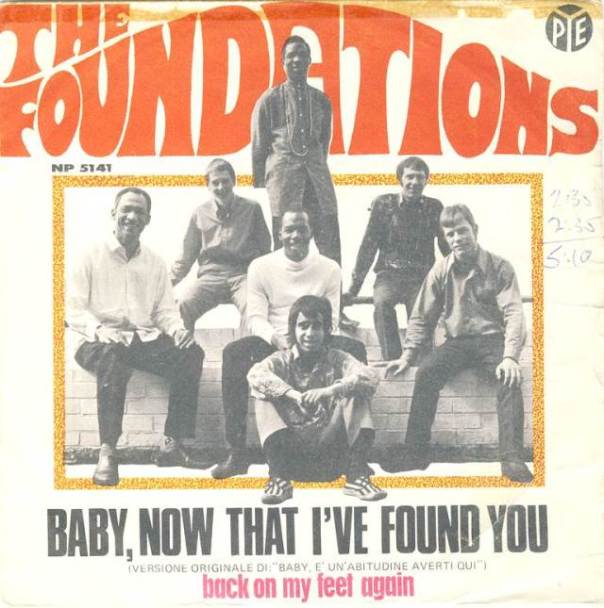
“The Foundations were a British soul band (m. 1967–1970). The group’s background was: West Indian, White British, and Sri Lankan. Their 1967 debut single ‘Baby Now That I’ve Found You‘ reached number one in the UK and Canada, and number eleven in the US, while their 1968 single ‘Build Me Up Buttercup‘ reached number two in the UK and number three on the US Billboard Hot 100. The group was the first multi-racial group to have a number one hit in the UK in the 1960s. … The Foundations attracted much interest and intrigue due to the size and structure of the group. Not only was there a diverse ethnic mix in the group, but there was also diversity in ages and musical backgrounds. The oldest member of the group, Mike Elliott, was 38 years old. The youngest was Tim Harris
View original post 224 more words
Harlan Ellison Dies at 84; Prolific, Irascible (Science) Fiction Writer
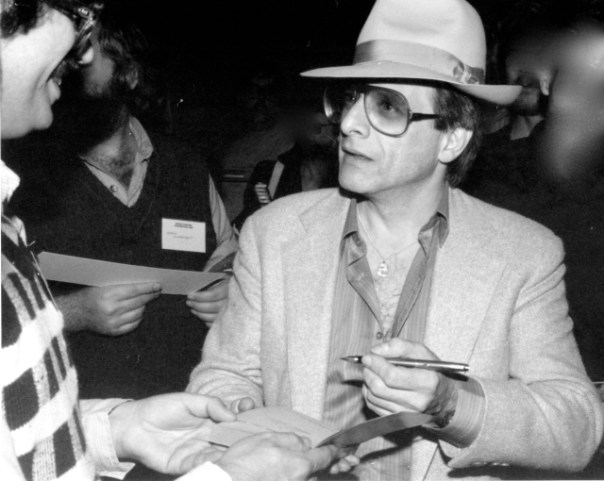
“Harlan Ellison, a furiously prolific and cantankerous writer whose science fiction and fantasy stories reflected a personality so intense that they often read as if he were punching his manual typewriter keys with his fists, died on Wednesday at his home in Los Angeles. … Mr. Ellison looked at storytelling as a ‘holy chore,’ which he pursued zealously for more than 60 years. His output includes more than 1,700 short stories and articles, at least 100 books and dozens of screenplays and television scripts. And although he was ranked with eminent science fiction writers like Ray Bradbury and Isaac Asimov, he insisted that he wrote speculative fiction, or simply fiction. ‘Call me a science fiction writer,’ Mr. Ellison said on the Sci-Fi Channel (now SyFy) in the 1990s. ‘I’ll come to your house and I’ll nail your pet’s head to a coffee table. I’ll hit you so hard your ancestors…
View original post 191 more words
Timothy Snyder: The Coming Power Struggle in Russia

Timothy Snyder is a political scientist at Yale who has written incisive books about fascism. In this essay, he describes a scenario that will bring Russia’s invasion of Ukraine to an end.
He does not believe that Putin will deploy nuclear weapons. He believes that the humiliating retreat of Russian soldiers on the battlefield will produce power struggles in Russia. The mercenaries that Putin has relied on from Chechnya and the Wagner Group (a neo-fascist militia) are unlikely to put their best troops at risk when the Russian military is retreating. The consequences will not be favorable for Putin.
The Urban Lens: From Bob Dylan to Jack Kerouac, see rare photos of the Village’s Beat Generation
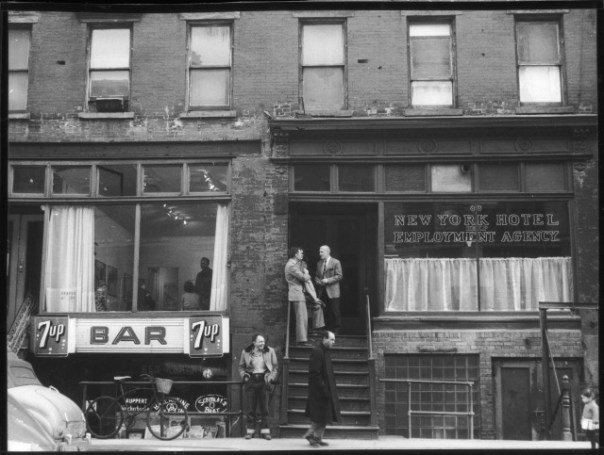 Dutch American artist Willem de Kooning (1904 – 1997) (center, with light hair) speaks with an unidentified couple at the top of a stoop next door to the Tanager Gallery (the storefront above the ‘Bar’ sign) on 10th Street, New York, New York, April 5, 1959.
“Perhaps no single photographer could be said to have captured the energy, the cultural ferment, the reverberating social change emanating from New York City in the second half of the 20th century as vividly as Fred W. McDarrah. McDarrah got his start covering the downtown beat of the Village Voice in the 1950s and ’60s, as that publication was defining a newly-emerged breed of independent journalism. McDarrah penetrated the lofts and coffeehouses of Lower Manhattan to shed light upon a new movement known as ‘The Beats’ and went on to capture on film the New York artists, activists, politicians, and poets who changed the…
View original post 232 more words
 dean ramser