All posts by Dr. Dean Albert Ramser

Unknown's avatar

About Dr. Dean Albert Ramser

Slava Ukraine! Supporting student success in Ukraine. Retired educator (English / Education: GED2EdD; "Ми будемо поруч один з одним як члени людства в найкращому сенсі цього слова". (Горан Перссон) Слава Україна 🇺🇦 "We will be there for one another as fellow members of humanity, in the finest sense of the word." (Goran Persson) https://cal.berkeley.edu/DeanRamser

Carolee Schneemann (October 12, 1939 – March 6, 2019)

1960s: Days of Rage's avatar1960s: Days of Rage

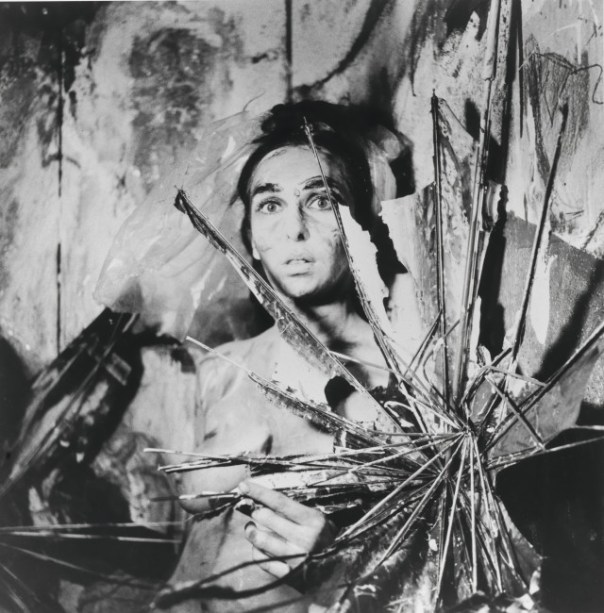
Eye Body # 24 from Eye Body: 36 Transformative Actions for Camera 1963

Carolee Schneemann (October 12, 1939 – March 6, 2019) was an American visual experimental artist, known for her multi-media works on the body, narrative, sexuality and gender. She received a B.A. in poetry and philosophy from Bard College and a Master of Fine Arts from the University of Illinois. Originally a painter in the Abstract Expressionist tradition, Schneeman was uninterested in the masculine heroism of New York painters of the time and turned to performance-based work, primarily characterized by research into visual traditions, taboos, and the body of the individual in relation to social bodies. Although renowned for her work in performance and other media, Schneemann began her career as a painter, stating, ‘I’m a painter. I’m still a painter and I will die a painter. Everything that I have developed has…

View original post 264 more words

The Surprising Non-Literary Jobs of Some Authors

Dave Astor's avatarDave Astor on Literature

Mark Twain

This is an updated, slightly edited rerun of a book piece I wrote back in 2012:

It’s not a big shock when novelists work as journalists or professors before, during, or after their book-producing years. But some famous writers have held rather unusual non-literary jobs.

On the positive side, stints of atypical-for-authors employment can inspire future books and/or give writers firsthand knowledge of the way non-writers live. On the negative side, need-the-money jobs can take away from precious prose-producing time.

My job is to now give examples of this multi-profession phenomenon, and I’ll start in the 19th century with the career arcs of a famous American literary trio: Mark Twain (born Samuel Clemens), Herman Melville, and Nathaniel Hawthorne.

Twain, from 1857 to 1861, worked as a riverboat pilot — a stint that inspired his pen name as well as the nonfiction book Life on the Mississippi and (to…

View original post 584 more words

Censoring “Persepolis”

dianeravitch's avatarDiane Ravitch's blog

Chicago Public Schools was first to ban the popular graphic novel Persepolis,” in 2013.

The book has sold millions of copies. The author, Marjane Satrapi, was born in Iran and used the book to tell her story. Chicago school officials decided to pull the book from classrooms and school libraries, after receiving complaints that the book was not “age-appropriate.” The officials saw two pages that circulated among them. There is no indication that any of them actually read the book. The Superintendent at the time was Barbara Byrd-Bennett, who was subsequently sent to prison for accepting bribes to buy services from vendors.

A graduate student asked for copies of internal emails about the decision to remove the book:

News of the ban broke on March 14, 2013, when a local education blogger got hold of anemailfrom the principal of Lane Tech College Prep High School which…

View original post 593 more words

In Honor of World Lizard Day

wordcloud9's avatarFlowers For Socrates

August 14th is World Lizard Day, so I am reposting  this report on the Gila Monster:

GILA MONSTER: His Myth is Worse than His Bite

“I have never been called to attend a case of Gila monster bite, and I don’t want to be. I think a man who is fool enough to get bitten by a Gila monster ought to die. The creature is so sluggish and slow of movement that the victim of its bite is compelled to help largely in order to get bitten.”

— Dr. Ward, Arizona Graphic, September 23, 1899

View original post 582 more words

Pale Fire

Jeanne's avatarNecromancy Never Pays

I read Pale Fire by Vladimir Nabokov recently with my son, Walker, who studies Russian Literature. It’s not a book that many people read just for fun, but they should. I started it at 3 am, during a bout of insomnia, and it took me no time at all to find out that the narrator is not only unreliable, he’s absurd, and the reader is meant to realize that at some point. The book is even funnier if you delve into the details.
We read the 1989 Vintage International paperback edition. Pale Fire was published in 1962, when Nabokov had been working on commentary and translation of the Russian classic Eugene Onegin for a decade (this was finally published in 1964). Writing Pale Fire was a break from his serious work, a parody, a way of making fun of himself for taking academic commentary so seriously.
Our purpose in discussing

View original post 2,309 more words

New York’s Finest: Busting Out All Over (May 2, 1968)

1960s: Days of Rage's avatar1960s: Days of Rage


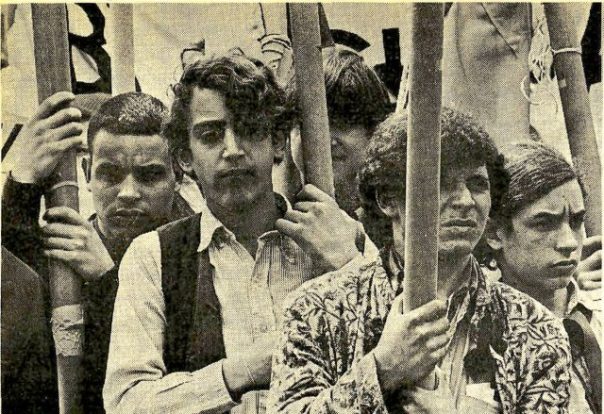
“WASHINGTON SQUARE — While the good John Lindsay praised the peace parade in Central Park, the bad John Lindsay had the peace parade busted in Washington Square Park. While the good Sanford Garelik passed out flyers of ‘principles to guide police officers at demon­strations,’ the bad chief inspect­or gave the order to attack the demonstrators. While the good William Booth looked on, the bad human rights commissioner looked away. While the good Jay Kriegel and the good Barry Got­tehrer privately deplored the police action, the bad mayoral aides publicly condoned it. Saturday was a fair, gray day. At 11 a. m. the Anti-Imperialist Feeder March began to form in Washington Square Park. Its marchers, some 400 strong, had split with the Fifth Avenue Viet­nam Parade Committee because, according to an ad, ‘the Parade Committee leadership arranged for strike-breaker Lindsay, whose police regularly attack the black and Puerto Rican commu­nities and…

View original post 197 more words

“Barbed Wire Sunday”

1960s: Days of Rage's avatar1960s: Days of Rage

On August 13, 1961, the National People’s Army of the German Democratic Republic began constructing the Berlin Wall

“At midnight on this day in 1961, units of the East German army began to close the border between East and West Berlin. Troops and workers tore up streets running alongside the border to make them impassable to most vehicles while installing barbed wire entanglements and fences along the 97 miles around the three western sectors — American, British and French — and the 27 miles that divided West and East Berlin. The date became widely referred to as ‘Barbed Wire Sunday’ in Germany. The chief purpose of the wall was to keep East Germans from fleeing to the West. It was guarded by soldiers under orders to shoot anyone trying to escape. During the 28 years that the wall stood, some 5,000 people attempted to escape, of whom an estimated 600…

View original post 244 more words

Jean-Luc Godard – Band of Outsiders (1964)

1960s: Days of Rage's avatar1960s: Days of Rage


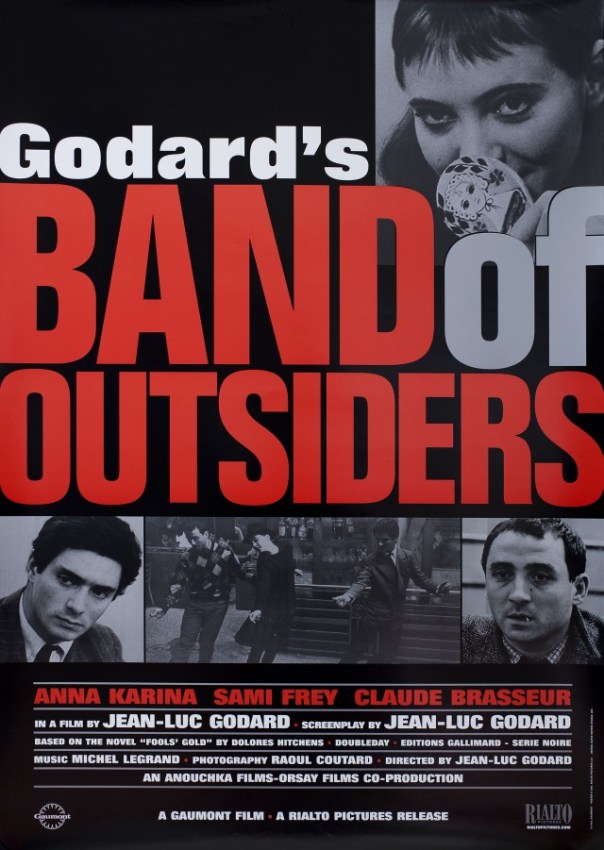
“Blame it on the Madison. Or blame it on Arthur, Franz, and Odile’s gleeful race through the Louvre in an attempt to break the world record (held by an American, of course) for the quickest visit ever. Blame it on the minute of silence; the way the director credits himself as ‘Jean-Luc Cinéma Godard’; the way our heroes pass under a stylish neon sign on the place de Clichy that reads ‘Nouvelle Vague.’ But most of all, blame it on the Madison dance sequence, later to be quoted by a parade of hip directors, that 1964’s Band of Outsiders at first seems a film of gestures rather than a singular, coherent drama. Utterly seductive in its digressions, limned with Parisian nostalgia and metafilmic quips, it’s a movie in which the flimsy caper plot risks seeming pure pretext. ‘Un plan?’ asks Odile, turning directly to the camera. ‘Pourquoi?’ Arrogantly sans souci…

View original post 257 more words

Meditations in an Emergency – Frank O’Hara (1957)

1960s: Days of Rage's avatar1960s: Days of Rage


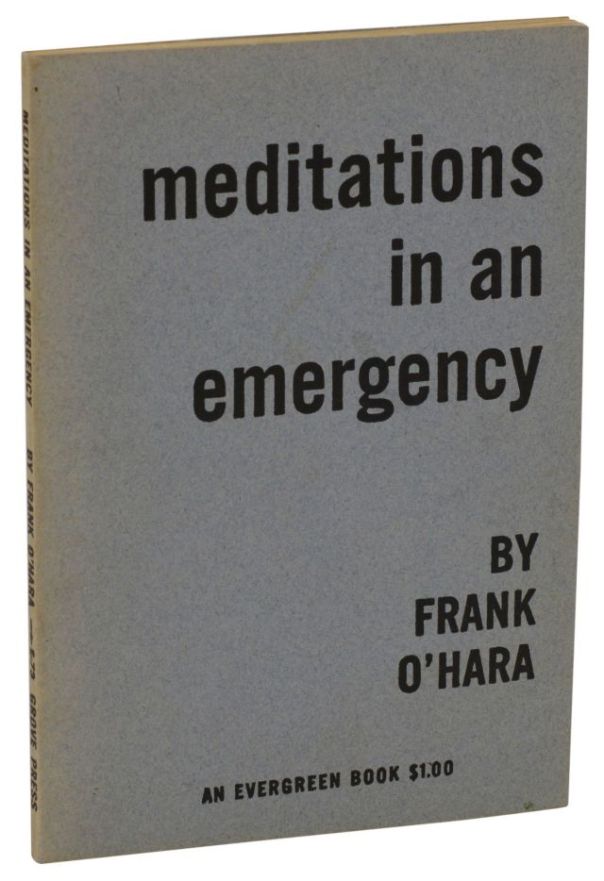
“The title poses an immediate challenge: in an emergency, common sense tells us, you call 911 or cry out for help. How can there be time for meditation? And indeed both Joan Mitchell and her great friend Frank O’Hara, for whose poem, reproduced in the memorial volume In Memory of My Feelings, this color lithograph was produced, were devoted to action painting — to gesture, immediacy, process, improvisation — rather than the more careful consideration that we associate 
with meditation. In the dozens of letters O’Hara wrote Mitchell 
between the mid-fifties and his tragic death in 1966 at the age of forty, it is the present that counts, the immediate moment. ‘Here 
I am,’ one of O’Hara’s early letters to Mitchell begins, ‘watching the slowly turning reflection of a record disc on the ceiling.’ And yet such moments trigger intense, if less than orderly, self-
reflection. One of O’Hara’s few prose poems, the…

View original post 265 more words

Deconstruction

1960s: Days of Rage's avatar1960s: Days of Rage


Deconstruction is an approach to understanding the relationship between text and meaning. It was originated by the philosopher Jacques Derrida (1930–2004), who defined the term variously throughout his career. In its simplest form it can be regarded as a criticism of Platonism and the idea of true forms, or essences, which take precedence over appearances. Deconstruction instead places the emphasis on appearance, or suggests, at least, that essence is to be found in appearance. Derrida would say that the difference is ‘undecidable’, in that it cannot be discerned in everyday experiences. Deconstruction argues that language, especially in ideal concepts such as truth and justice, is irreducibly complex, unstable, or impossible to determine. Many debates in continental philosophy surrounding ontology, epistemology, ethics, aesthetics, hermeneutics, and philosophy of language refer to Derrida’s beliefs. Since the 1980s, these beliefs have inspired a range of theoretical enterprises…

View original post 227 more words