All posts by Dr. Dean Albert Ramser

Unknown's avatar

About Dr. Dean Albert Ramser

Slava Ukraine! Supporting student success in Ukraine. Retired educator (English / Education: GED2EdD; "Ми будемо поруч один з одним як члени людства в найкращому сенсі цього слова". (Горан Перссон) Слава Україна 🇺🇦 "We will be there for one another as fellow members of humanity, in the finest sense of the word." (Goran Persson) https://cal.berkeley.edu/DeanRamser

Two Poems by Rita Dove on Her Birthday

wordcloud9's avatarFlowers For Socrates

Rita Dove was born August 28, 1952, in Akron, Ohio; American poet and essayist; winner of the 1987 Pulitzer Prize for Poetry for her book Thomas and Beulah; U.S. Library of Congress Poet Laureate Consultant in Poetry, 1993-1995, the first African-American (after the title change from Poetry Consultant to Poet Laureate), and at age 40, the youngest poet to be appointed Poet Laureate by the Librarian of Congress. Her poetry collections include The Yellow House on the Corner, Mother Love, On the Bus with Rosa Parks, and American Smooth.

To read Rita Dove’s poems “Adolescence I” and “Dawn Revisted” click:

View original post 204 more words

Point Blank – John Boorman (1967)

1960s: Days of Rage's avatar1960s: Days of Rage


Point Blank is a 1967 Americancrime film directed by John Boorman, starring Lee Marvin, co-starring Angie Dickinson, Keenan Wynn and Carroll O’Connor, and adapted from the 1963 crime noir pulp novel The Hunter by Donald E. Westlake, writing as Richard Stark. Boorman directed the film at Marvin’s request and Marvin played a central role in the film’s development. The film was not a box-office success in 1967, but has since gone on to become a cult classic, eliciting praise from such critics as film historian David Thomson. … Walker works with his friend Mal Reese to rob a major crime operation, ambushing the courier on deserted Alcatraz Island. After counting the money, Reese shoots Walker, leaving him for dead. Reese takes the money and Walker’s wife, Lynne. Walker recovers. With assistance from the mysterious Yost, Walker sets out to find…

View original post 244 more words

The Alexandria Quartet: ‘Love is every sort of conspiracy’

1960s: Days of Rage's avatar1960s: Days of Rage

Alexandria Castle, Egypt

“Lawrence Durrell claimed that the four books of The Alexandria Quartet were ‘an investigation of modern love’. It’s possible to take that idea at face value. Some have even used it as a stick with which to beat him. Notably, his Guardian obituarist (writing in 1990, at a time when Durrell’s reputation was possibly at its lowest ebb) said ‘a harsh judgment’ of his masterpiece might be that it was ‘a four-volume romantic novel written by a poet steeped in Freud and on nodding terms with Einstein’. I’m guessing from the warm response the books have had from this month’s Reading Group that most of you reading this will see that as an absurd rather than just a harsh judgment. Even if we accept that Durrell was only concerned with romantic love, that gives us endless scope for discussion – as Reading Group contributor Wheldrake has…

View original post 344 more words

“Back in the U.S.S.R.” – The Beatles (1968)

1960s: Days of Rage's avatar1960s: Days of Rage


“‘Back in the U.S.S.R.’ is a song by the English rock band the Beatles and the first track of the 1968 double album The Beatles (also known as the ‘White Album’). Written by Paul McCartney and credited to the Lennon–McCartney partnership, the song is a parody of Chuck Berry‘s ‘Back in the U.S.A.‘ and the Beach Boys‘ ‘California Girls‘. The lyrics subvert Berry’s patriotic sentiments about the United States, as the narrator expresses relief upon returning home to the Soviet Union, formally the Union of Soviet Socialist Republics (USSR). The Beatles recorded ‘Back in the U.S.S.R.’ as a three-piece after Ringo Starr temporarily left the group, in protest at McCartney’s criticism of his drumming and the tensions that typified the sessions for the White Album. Instead, the other Beatles created a composite drum track from numerous takes. McCartney’s singing was based on

View original post 261 more words

Unpublished Black History

1960s: Days of Rage's avatar1960s: Days of Rage

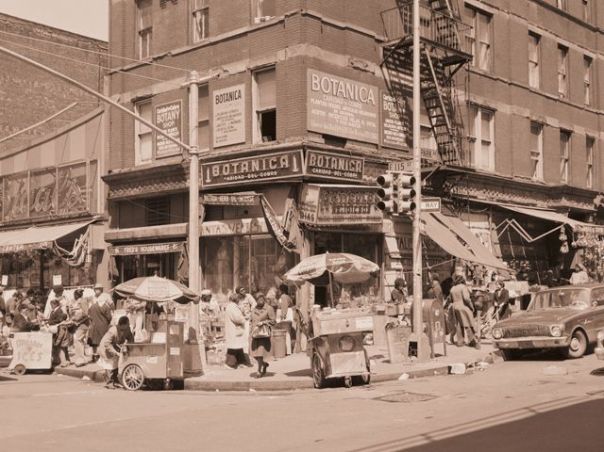
The Harlem of Don Hogan Charles

“… Hundreds of stunning images from black history, drawn from old negatives, have long been buried in the musty envelopes and crowded bins of the New York Times archives. None of them was published by The Times until now. Were the photos — or the people in them — not deemed newsworthy enough? Did the images not arrive in time for publication? Were they pushed aside by words here at an institution long known as the Gray Lady? As you scroll through the images, each will take you back: To the charred wreckage of Malcolm X’s house in Queens, just hours after it was bombed. To the Lincoln Memorial, where thousands of African-American protesters gathered, six years before the March on Washington. To Lena Horne’s elegant penthouse on the Upper West Side of Manhattan. To a city sidewalk where schoolgirls jumped rope, while the…

View original post 285 more words

Reader: Parents Do Not Have the “Right” to Opt Out of Public Health Measures

dianeravitch's avatarDiane Ravitch's blog

A reader of the blog posted the following comment, which I find to be sane and wise:

There is so much hypocrisy and ignorance in this politicization of mask wearing and vaccination. When everyone’s health and well-being is on the line, there can be no personal choice to forego what keeps everyone safer.

Why is it these people insist they can mandate what a woman does with her body or who can and cannot marry, but not that we all wear masks to keep everyone safer?

If one can’t wear a mask out in public for a health reason (which, for the life of me, I can’t think of), perhaps one shouldn’t be out. If you’re a professional athlete competing closely against others, you should be required to be vaccinated. If you are a spectator in the stands, you should be vaccinated. If you’re a teacher, a bus driver, a…

View original post 101 more words

The Pursuit of Freedom: The New Wave, Jazz and Modernism

1960s: Days of Rage's avatar1960s: Days of Rage

Jeanne Moreau and Miles Davis

“In the late 1950s and early 1960s, cinema and jazz were at the forefront of an artistic revolution – one of improvisation, immediacy and invention. Both were born around the turn of the century, came of age in the 1910s and 20s, and attained a ‘Golden Age’ of mass-popularity in the 1930s and 40s. The late 1950s and early 60s, however, saw a convergence of these two artforms that, for a moment in time, shared a common spirit. Both sought to challenge the prevailing orthodoxy, to express what was modern and true about the world, to invent new forms, to re-invent old ones, and to create a language of ‘the now’. For a brief moment, across the world, they stood together against the old guard. Here we’ll look at how they came together, what they stood for, and how they eventually went their separate ways…

View original post 236 more words

An Introduction to Chilean Poet Pablo Neruda: Romantic, Radical & Revolutionary

1960s: Days of Rage's avatar1960s: Days of Rage

The poet Pablo Neruda in 1952. He persuaded Chile’s president to offer asylum to some of the mistreated Spanish patriots rotting in French internment camps.

“Does politics belong in art? The question arouses heated debate about creative freedom and moral responsibility. Assumptions include the idea that politics cheapens film, music, or literature, or that political art should abandon traditional ideas about beauty and technique. As engaging as such discussions might be in the abstract, they mean little to nothing if they don’t account for artists who show us that choosing between politics and art can be as much a false dilemma as choosing between art and love. In the work of writers as varied as William Blake, Muriel Rukeyser, James Baldwin, and James Joyce, for example, themes of protest, power, privilege, and poverty are inseparable from the sublimely erotic—all of them essential aspects of human experience, and hence, of literature…

View original post 253 more words

A View From the Bridge – Directed by Sidney Lumet, Play by Arthur Miller (1962)

1960s: Days of Rage's avatar1960s: Days of Rage


A View from the Bridge (French: Vu du pont, Italian: Uno sguardo dal ponte) is a 1962 drama film directed by Sidney Lumet, based on the Arthur Millerplay of the same name. The film was an international co-production between French and Italian studios, with exteriors shot on-location in Brooklyn and interiors filmed in Paris, France. It was written for the screen by Norman Rosten and Jean Aurenche, and stars Raf Vallone as Eddie Carbone, Maureen Stapleton as Beatrice, Carol Lawrence as Catherine, Jean Sorel as Rodolpho, Raymond Pellegrin as Marco, and Morris Carnovsky as Alfieri. The Carbones are a working class Italian-American family living in the Red Hook neighborhood of Brooklyn – patriarch Eddie, his wife Beatrice, and their niece Catherine. Eddie is a longshoreman on the waterfront, and he and Beatrice have raised 18-year old Catherine from infancy…

View original post 357 more words

Paradise Now: The Living Theatre in Amerika, ’67-’68

1960s: Days of Rage's avatar1960s: Days of Rage


“In 1968 The Living Theatre, an anarcho-communalist troupe led by Julian Beck and Judith Malina, returned to America from years of self-imposed exile in Europe with what would become their best-known production: ‘Paradise Now,’ a post-Artaud play that sought to completely dissolve the boundaries of human interactions through a practice of live collective creation, forging a revolutionary harmony between actors and audience. ‘The purpose of the play is to lead to a state of being in which non-violent revolutionary action is possible,’ wrote Julian, and he meant it. What happened each night onstage-and offstage, and then out into the streets-was a series of purposefully provocative and interventionist actions, from marijuana smoking and full-body group nudity to screamed declarations, intense arguments, dance and (yes) orgies, sometimes involving audience members. They attracted the attention of the police, the derision of mainstream critics, and the devotion of many, including The Doors’ Jim Morrison…

View original post 163 more words