Albert Ayler – Holy Ghost: Rare & Unissued Recordings (1962–70)

1960s: Days of Rage's avatar1960s: Days of Rage


“Albert Ayler was a mysterious figure. His recording career was relatively brief, beginning in 1962 and ending in 1970, with several of the entries live performances released many years after his passing. His demise itself was a bizarre circumstance. Revenant Records, by all accounts the most ambitious and thorough of all box-set minded labels, has now released a nine+ CD set of Ayler whose mystery has rubbed off a little on the project. Its coming was announced by a series of all black ads with little on them but what has become the set’s slogan: ‘Trane was the Father…Pharoah was the son…I am the Holy Ghost.’ The result? Most probably the highwater mark in the often underwhelming realm of box sets. It is as if Ayler’s body had washed up on the banks of the East River dressed in a natty Armani suit. The box itself, though black plastic, was…

View original post 207 more words

Frantz Fanon unveiled

1960s: Days of Rage's avatar1960s: Days of Rage


“As a child in the 1960s, my mother would routinely pass a secondary school on her way home in downtown Algiers named Lycée Frantz Fanon. To her, the name was quite peculiar, since all the other schools had newly Arabic names, alluding to different figures within the independence movement and Algerian history more broadly. She was perplexed as to why this school kept this seemingly white French name, only to learn much later in life—from her son, a particularly angsty postcolonial teen—that it was named for a black man from the Caribbean and that he had made contributions to Algeria’s independence movement. This story differs quite radically from today’s nostalgic renderings of Algerian independence from budding, self-proclaimed revolutionaries—both in the academy and activist circles in the West—that place Fanon and his works at the center of the struggle. The two have become so inseparable that I feel the need to…

View original post 186 more words

Yvonne Rainer, a Giant of Choreography, Makes Her Last Dance

1960s: Days of Rage's avatar1960s: Days of Rage

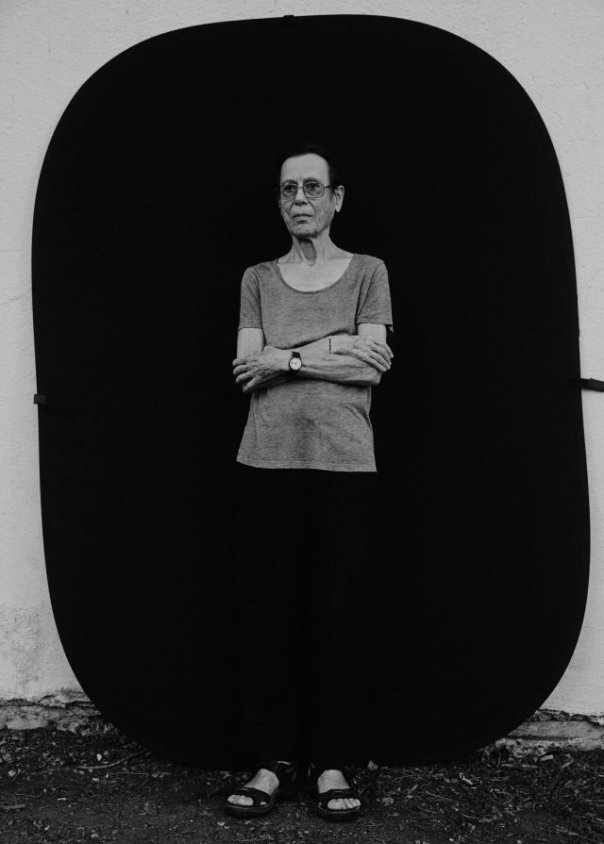
Yvonne Rainer, 87, photographed in Fort Tryon Park.

“In 1966, Yvonne Rainer presented ‘Trio A,’ her celebrated solo that emphasized movement over expression. By stripping dance of narrative, of emotion and even of the dancer’s gaze — there is no looking at the audience — the steps could shine. And those steps, delivered with the same temperament no matter how simple or difficult, were the dance. What did Rainer banish? Affectation. In another iteration of ‘Trio A,’ in 1970, the work expanded to six dancers, including Rainer, who performed nude with American flags tied around their necks like halter tops, at the People’s Flag Show at Judson Memorial Church in New York. The event was a response to the prosecution of the gallery owner Stephen Radich for showing work that desecrated the flag. Censorship, the Vietnam War — these were issues of the day. Now at 87, with 61 years…

View original post 221 more words

Texas: Abbott’s Voucher Plan is a “Terrible Idea”

dianeravitch's avatarDiane Ravitch's blog

David DeMatthews and David S. Knight wrote in the San Antonio Express-News that Governor Greg Abbott’s voucher plan is “a terrible idea,” and they explain why. (Since I don’t have a subscription to the San Antonio Express-News, I am copying their tweet.)

David DeMatthews is an associate professor of educational leadership and policy at The University of Texas at Austin.

David S. Knight is the associate director of the Center for Education Research and Policy Studies and an assistant professor of educational leadership at The University of Texas at El Paso.

To summarize:

1. The vouchers don’t cover the cost of most private schools.

2. The money spent on vouchers will hurt public schools, which most students attend.

3. Budget cuts will force public schools to cut popular programs, like dual language education, STEM programs, and vocational training. These cuts will hit low-income districts the hardest.

4. Private schools that…

View original post 120 more words

#7 – Jed Birmingham

1960s: Days of Rage's avatar1960s: Days of Rage


“It does not matter if you have five books or five thousand, one’s own book collection is inherently the most important and most interesting. These are the books that mean the most to you personally otherwise you would not have taken the trouble of collecting them. Book collecting is egotistical and narcissistic. Book collectors are also envious and competitive. … That said, with the publication of Soft Need #23, Martin (and Udo Breger) looks to have created one of the great Burroughs-related collectibles of the past decade. I also believe he supports museum and gallery exhibitions with his collection. I was going to say that Martin does this discreetly, but I am not sure that is correct. He does it in Europe, which may be why his activities are not more well known in the States. So, I am not merely egotistical and narcissistic; I am also nationalist and…

View original post 204 more words

Desolation Journal By Jack Kerouac

1960s: Days of Rage's avatar1960s: Days of Rage


“Read any biography of Jack Kerouac and here’s essentially what you’ll learn: that in the summer of 1956 he spent two months in a mountaintop shack as a firelookout for the US Forest Service in the North Cascades in Washington State, and nothing much happened. Mostly he was bored. Jack’s experience on Desolation Peak marked the climax of his involvement with Buddhism and of a decade of restless travel; it’s the high point of his journeying and spiritual seeking. A voracious reader, he nevertheless chose to go up the mountain without any books, only his personally typed copy of the Diamond Sutra, which he planned to read every day and transcribe yet again, this time in language more accessible to American readers, in order to achieve the enlightenment that he was certain would result. The extent of his solitude, thus, was acute. There were no radio stations from…

View original post 96 more words

How the Chicago Freedom Movement Made Way for the Fair Housing Act

1960s: Days of Rage's avatar1960s: Days of Rage

Chicago Freedom Movement march, South Kedzie Avenue, August 5, 1966
“History teaches us about important lessons, people, and events. It shapes a nation. It tells us who we are and where we came from. It tells us about our past evils and also about our good deeds. As we conclude Black History Month, I want to tell you an important part of history, a movement that took place in Chicago, in our own backyard, but that gets neglected and lost in history. I want to tell you about a movement that inspired many people and changed a city forever: the Chicago Freedom Movement. The Chicago Freedom Movement was a coalition led by radical Black organizers in the 1960s who raised awareness and pressured city officials to address racist housing discrimination. The seeds of why and how the movement came about can be traced back to the Great Migration, in which…

View original post 206 more words

The Bootleg Series Vol. 4: Bob Dylan Live 1966, The “Royal Albert Hall” Concert

1960s: Days of Rage's avatar1960s: Days of Rage


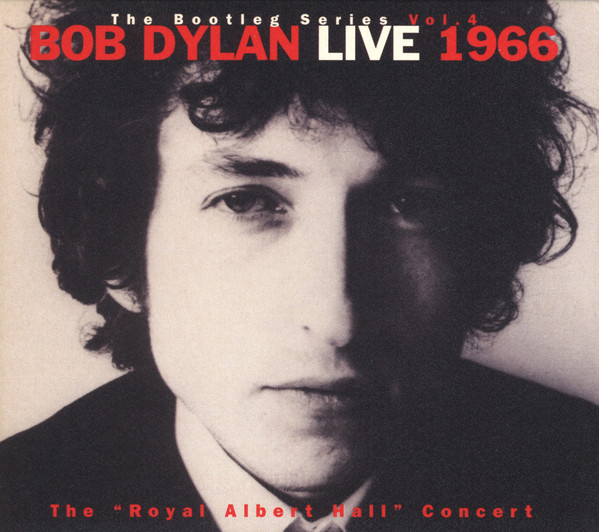
“Live 1966: The ‘Royal Albert Hall’ Concert is a two-disclive album by Bob Dylan, released in 1998. It is the second installment in the ongoing Bob Dylan Bootleg Series on Legacy Recordings, and has been certified a gold record by the RIAA. It was recorded at the ManchesterFree Trade Hall during Dylan’s world tour in 1966, though early bootlegs attributed the recording to the Royal Albert Hall so it became known as the Royal Albert Hall Concert. Extensively bootlegged for decades, it is an important document in the development of popular music during the 1960s. The set list consisted of two parts, with the first half of the concert being Dylan alone on stage performing an entirely acoustic set of songs, while the second half of the concert has Dylan playing an ‘electric’ set of songs alongside his band the Hawks. The…

View original post 268 more words

Collected Stories 1939-1976 – Paul Bowles

1960s: Days of Rage's avatar1960s: Days of Rage


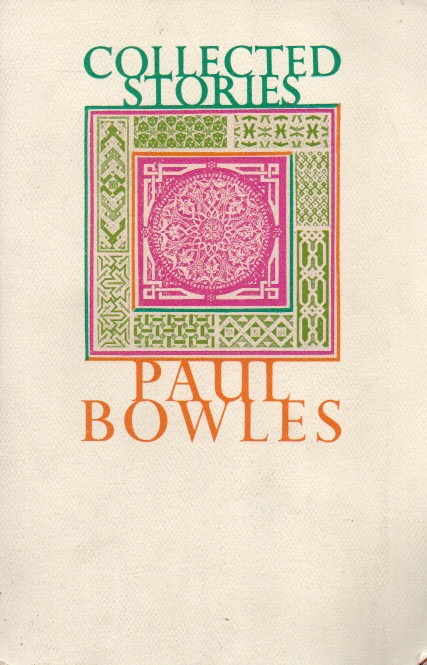
“After an early false start as a poet and a substantial career as a composer, Paul Bowles began his career as a short story writer in his mid-thirties, when he was asked to edit an issue of a magazine on Central and South American culture and felt an urge to invent some myths of his own. He hoped to inhabit the primitive mind, and resolved to adopt ‘the old Surrealist method of abandoning conscious control and writing whatever words came from the pen.’ In ‘By the Water,’ for instance, a young man enters the baths of a strange and unfriendly town, and after following the long dark corridors to the pools, happens to run into the proprietor of the place: ‘The creature’s head was large; its body was small and it had no legs or arms. The lower part of the trunk ended in two flipper-like pieces of flesh. From…

View original post 232 more words

Camera Lucida – Roland Barthes (1980)

1960s: Days of Rage's avatar1960s: Days of Rage


“Camera Lucida (French: La chambre claire) is a short book published in 1980 by the French literary theorist and philosopherRoland Barthes. It is simultaneously an inquiry into the nature and essence of photography and a eulogy to Barthes’ late mother. The book investigates the effects of photography on the spectator (as distinct from the photographer, and also from the object photographed, which Barthes calls the ‘spectrum’). In a deeply personal discussion of the lasting emotional effect of certain photographs, Barthes considers photography as asymbolic, irreducible to the codes of language or culture, acting on the body as much as on the mind. The book develops the twin concepts of studium and punctum: studium denoting the cultural, linguistic, and political interpretation of a photograph, punctum denoting the wounding, personally touching detail which establishes a direct relationship with the object or person within it. Camera…

View original post 177 more words