A Bronx Tale: The Story Of The Ghetto Brothers

1960s: Days of Rage's avatar1960s: Days of Rage


“Benjy Melendez bounds down a staircase at the entrance to the Prospect Avenue elevated subway station in the South Bronx, looks around at the buildings dotting the intersection and sweeps his left arm for emphasis as he declares, ‘This used to be paradise for The Ghetto Brothers!’ These days, the 60-year-old Melendez lives in Harlem, but as the 60s rolled over into the 70s, the South Bronx area he’s revisiting became the setting for a drama that saw a member of Melendez’s gang, The Ghetto Brothers, brutally bludgeoned and then stabbed to death – a loss that kick-started a peace-treaty between Bronx gangs and reinforced Melendez’s conviction to reposition his crew as a force for local good, shunting drug dealers out of the area and organising food and clothing drives. This broad redemption story also happened to play out against a curious musical backdrop of intermingling local Latin rhythms and…

View original post 217 more words

Against Completism: On Sylvia Plath’s New Short Story

1960s: Days of Rage's avatar1960s: Days of Rage


“When I heard that a previously unpublished Sylvia Plath short story would appear in January 2019, I requested an electronic galley and then let the file sit unopened in my inbox for several weeks. I felt apprehensive, even frightened of it. I love Plath’s poetry, but what if I didn’t like this story? I read The Bell Jar so long ago, when I was fourteen or so, that I couldn’t remember anything about it. But I read The Catcher in the Rye at around the same time, and I remember that book clearly. Had I only meant to read The Bell Jar, and never finished it? Oh God, I thought, what if none of Plath’s fiction is good? I decided to read The Bell Jar again before addressing the new old short story. … The Bell Jar is also not just autobiographical but meta, which may be the defining…

View original post 215 more words

Minimalism

1960s: Days of Rage's avatar1960s: Days of Rage

Frank Stella, Tahkt-I-Sulayman Variation II, 1969.

“In visual arts, music and other media, minimalism is an art movement that began in post–World War II in Western art, most strongly with American visual arts in the 1960s and early 1970s. Prominent artists associated with minimalism include Donald Judd, Agnes Martin, Dan Flavin, Carl Andre, Robert Morris, Anne Truitt and Frank Stella. The movement is often interpreted as a reaction against abstract expressionism and modernism; it anticipated contemporary postminimal art practices, which extend or reflect on minimalism’s original objectives. Minimalism in music often features repetition and gradual variation, such as the works of La Monte Young, Terry Riley, Steve Reich, Philip Glass, Julius Eastman and John Adams. The term minimalist often colloquially refers to anything or anyone that is spare or stripped to its essentials. It has…

View original post 208 more words

Isadora – Karel Reisz (1968)

1960s: Days of Rage's avatar1960s: Days of Rage


Isadora (also known as The Loves of Isadora) is a 1968 biographical drama film directed by Karel Reisz from a screenplay written by Melvyn Bragg, Margaret Drabble, and Clive Exton adapted from the books My Life by Isadora Duncan and Isadora, an Intimate Portrait by Sewell Stokes. The film follows the life of American pionering modern contemporary dance artist and choreographer Isodora Duncan, who performed to great acclaim throughout the US and Europe during the 19th century. A co-production between the United Kingdom and France, it stars Vanessa Redgrave as Duncan and also features James Fox, Jason Robards, and John Fraser in supporting roles. Isadora premiered at the 1968 Cannes Film Festival where it competed for the Palme d’Or with Redgrave winning the Best Actress Prize.[3] The film was theatrically released on 18 December 1968 by Universal Pictures to generally positive…

View original post 207 more words

The Best Dick Gregory Story

1960s: Days of Rage's avatar1960s: Days of Rage


“The best Dick Gregory story is the time in 1961 when he got up in front of a largely white audience and delivered the joke about the white waitress at a restaurant in the South telling him that they don’t serve colored people. The joke ends: ‘That’s all right. I don’t eat colored people. Bring me a whole fried chicken.’ It is hard to know now how many people laughed. Or maybe the best Dick Gregory story is the one where he ran for mayor of Chicago in 1967, a campaign during which he was arrested by United States Treasury agents for printing and handing out fake dollar bills with his picture on them as a part of his campaign literature. Or else the best Dick Gregory story is the one about how, in 1971, he went without solid food for over two years to protest the war in Vietnam—once

View original post 237 more words

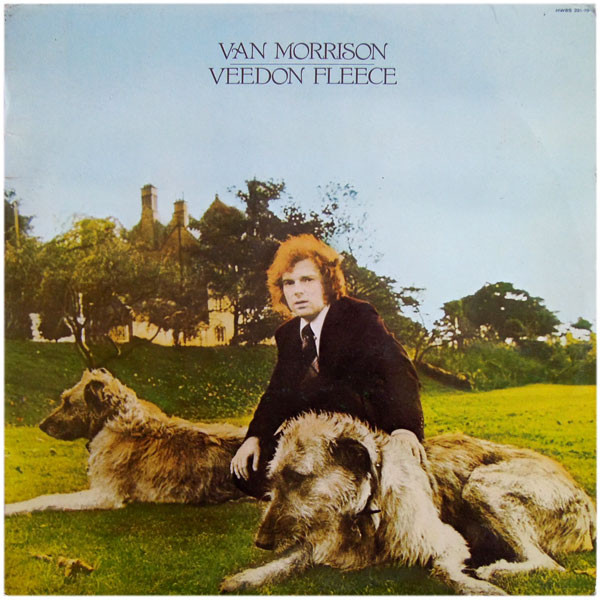
Veedon Fleece – Van Morrison (1974)

1960s: Days of Rage's avatar1960s: Days of Rage


Veedon Fleece is the eighth studio album by Northern Irish singer-songwriter Van Morrison, released on 5 October 1974. Morrison recorded the album shortly after his divorce from wife Janet (Planet) Rigsbee. With his broken marriage in the past, Morrison visited Ireland on holiday for new inspiration, arriving on 20 October 1973 (with his fiancée at the time, Carol Guida). While there he wrote, in less than three weeks, the songs included on the album (except ‘Bulbs‘,  ‘Country Fair’ and ‘Come Here My Love’). It has been compared to Astral Weeks (1968) with the same ‘stream of consciousness’ lyrics but musically it is more Celtic, acoustic and heavily influenced by Morrison’s Irish trip. It has been called a genuinely underground album that he seemed to disown quickly after recording and has been referred to as Morrison’s ‘forgotten masterpiece’. … In 1978, Morrison recalled that he recorded…

View original post 202 more words

The History of the East Village’s Cedar Tavern

1960s: Days of Rage's avatar1960s: Days of Rage

Jackson Pollock, Alchemy, 1947

“It was, in other words, the primary hangout for the avant-garde. Such was its reputation, that it formed the setting of Kurt Vonnegut’s 1987 novel Bluebeard, as the hub where his fictional hero Rabo Karebekian held court with his fellow painterly bohemians. The artist Elaine de Kooning, wife of Willem de Kooning, referred to it as the epicenter of a ‘decade-long bender’ and, as recorded in David Lehman’s history of the period The Last Avant-Garde: The Making of the New York School of Poets, artist Ad Reinhardt said, ‘We go there to meet the very people we hate most, other painters.’ Artist Franz Kline, along with Frank O’Hara and the de Koonings, were usually at the center of the hub and the cross-pollination between the worlds of poetry and art clearly played a part in the development of their early work…

View original post 241 more words

Pauline Kael – I Lost It at the Movies (1965)

1960s: Days of Rage's avatar1960s: Days of Rage


September 1993: “Nineteen-Sixty-Two was the year I found out there was more to movies than rooting for the good guys and cowering in your seat. I saw Bergman’s The Seventh Seal, Dreyer’s The Passion of Joan of Arc, and The Manchurian Candidate, probably the first American movie that could have carried Fassbinder’s title Fear Eats the Soul. But 1962 was also the year of a filmic incident I’ve recalled at least as often as I’ve thought of any of those classics: the night I saw The Pirates of Blood River. It was the last day of school. The theater was jammed with students, most of them graduating and most of them drunk. The air was thick with the tension oozing out of a thousand bodies. Up on screen, evil pirates, noble Huguenots, and a lot of piranha fish gave chase to a progressively incomprehensible story-line. The movie…

View original post 246 more words

Drag Queens vs. Fascist Boys & Girls

dianeravitch's avatarDiane Ravitch's blog

Recently, the power lines in Moore County, North Carolina, went down, damaged by gunfire, and officials suspect they were intentionally sabotaged, leaving 40,000 or so people without power. Some suspect that the power was shut down to prevent a drag show from happening.

Crooks&Liars points to domestic terrorism and mentions an activist who had loudly denounced the drag show. The activist, a former Army officer, had previously been questioned about her participation in the January 6 insurrection. She posted on Facebook that she knew why the power went out.

The Washington Post reported that the FBI is investigating.

At Sunrise Theater on Saturday night, drag queen Naomi Dix was about to introduce an act when the lights went out. Dix said that participants immediately suspected that the power outage might be connected to those opposed to the performance (Dix spoke to The Post on the condition that she be identified…

View original post 669 more words