DeFascist War on Drag Queens Frightens the Performing Arts in Florida

dianeravitch's avatarDiane Ravitch's blog

Ron DeSantis has taken national leadership in his effort to stamp out drag queens. I have never been to a drag queen brunch or a drag queen library story hour, but they seem to be popular in some places, especially in Florida. And DeSantis won’t have it! Apparently, parents bring their children to these events, but they don’t have the “parental right” to do it in DeSantisland.

Floridians in the performing arts are worried that DeSantis will send his morality police to close them down next, if they stage a play like “Mrs. Doubtfire.” As it happens, a drag musical called “Kinky Boots” recently opened in Orlando; it was a huge hit on Broadway. Will DeSantis close it down? Will he assign undercover agents to make sure that no parents bring children with them?

Amanda Rosa writes in the Miami Herald:

Before there was “RuPaul’s Drag Race” and drag brunch…

View original post 347 more words

Scrabble Day: Tense, Tenuous, and Tender

wordcloud9's avatarFlowers For Socrates

On April 13, 1899Alfred Butts was born. He was an American architect, and the inventor of the board game Scrabble.

On April 13, 1947Rae Armantrout was born. She is an American poet, the winner of the 2009 National Book Critics Circle Award, and of the 2010 Pulitzer Prize for Poetry for her collection Versed.

Aside from sharing a birthday, you might think these two had little in common. But here’s a poem by Rae Armantrout which could help your Scrabble game:

View original post 69 more words

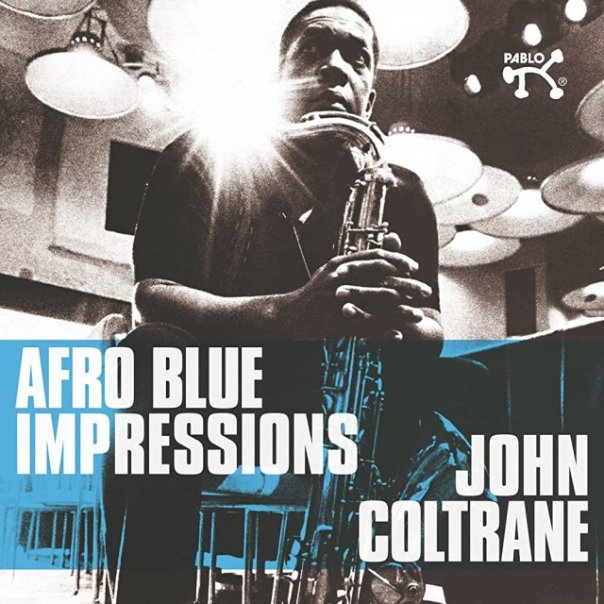
John Coltrane: Afro Blue Impressions

1960s: Days of Rage's avatar1960s: Days of Rage


“… In addition to straight remasters, Concord has brought together live recordings previously parceled out over several albums onto a single more cogent and representative release. The first of these is a double anniversary celebration when saxophonist John Coltrane’s Afro Blue Impressions turns 50, as Pablo reaches 40 years old. Originally released as a two-LP set, Afro Blue Impressions contained nine live performances recorded in Berlin in November, 1962 and Stockholm in October, 1963, recorded with his classic quartet featuring pianist McCoy Tyner, bassist Jimmy Garrison and drummer Elvin Jones. The newly remastered compilation contains an additional three performances from the Stockholm concert (‘Naima,’ ‘I Want To Talk About You’ and ‘My Favorite Things’) that were previously released on The European Tour (Pablo, 1980) and Live Trane: The European Tours (Pablo, 2001). How Granz came into possession of these Coltrane tapes at a time when the saxophonist was…

View original post 178 more words

Ruth Marcus: Gun Owners Have More Rights than Their Victims

dianeravitch's avatarDiane Ravitch's blog

Ruth Marcus is deputy editor of the Washington Post and is a consistent voice for sanity and reason. In this article, she describes one of the worst federal court decisions ever. If this decision is upheld by the Supreme Court, we will all need guns to protect ourselves. Good news for the gun industry, bad news for public safety. Marcus wrote this article before the latest school shooting in Nashville, where three adults and three children were murdered. The killer was armed with three weapons, including an AR-15, which has no purpose except as a killing machine. Hunters don’t use it because it destroys what it kills.

She writes:

When the Supreme Court ruled in 2008 that the Second Amendment protects individuals’ right to gun ownership, it emphasized the ability “of law-abiding, responsible citizens to use arms in defense of hearth and home.” When it expanded that decision last year…

View original post 926 more words

“School Choice” Will Destroy Public Schools

dianeravitch's avatarDiane Ravitch's blog

A reader who identifies as “Retired Teacher” sees the school choice juggernaut as a deliberate plan to destroy our common good: public schools. Thomas Jefferson proposed the first public schools. The Northwest Ordinances, written by the founding fathers, set aside a plot of land in every town for a public school.

The origin of the school choice movement was the backlash to the Brown Decision of 1954. Segregationists created publicly-funded academies (charters) for white flight and publicly-funded vouchers to escape desegregation.

What replaces public schools will not be better for students, and it will be far worse for our society.

So much reckless “choice” will make the public schools the schools of last resort for those that have nowhere else to go. Choice is a means to defund what should be our common good. How are the schools supposed to fund the neediest, most vulnerable and most expensive students when…

View original post 166 more words

Sunset Strip curfew riots

1960s: Days of Rage's avatar1960s: Days of Rage


“The Sunset Strip curfew riots, also known as the ‘hippie riots’, were a series of early counterculture-era clashes that took place between police and young people on the Sunset Strip in West Hollywood, California in 1966. … In 1966, the city council at the behest of business owners and residents implemented a handful of measures including nightly curfews to curtail the growing nuisance. They targeted the Strip’s most prominent rock club, the Whisky a Go Go, forcing its managers to change its name to the Whisk . Furthermore, annoyed residents and business owners in the district had encouraged the passage of strict (10 p.m.) curfew and loitering laws to reduce the traffic congestion resulting from crowds of young club patrons. This was perceived by young, local rock music fans as an infringement on their civil rights, and for weeks tensions and protests swelled. On Saturday, November 12…

View original post 270 more words

George Hitchcock – Kayak 1964-1984

1960s: Days of Rage's avatar1960s: Days of Rage


“Poet and editor George Hitchcock, who died August 27th in Eugene, Oregon at age 96, always seemed larger than life. As an editor of the literary magazine Kayak, and the poetry press of the same name, George Hitchcock changed American poetry. From 1964-1984, he edited and published sixty-four issues of Kayak. The magazine’s contributors included Anne Sexton, W. S. Merwin, Philip Levine, Nancy Willard, Louis Simpson, Robert Bly, Kathleen Fraser, Diane Wakoski, Margaret Atwood, and Michael McClure, among luminous others. For much of its life, Kayak was the magazine that poets wanted to be in. Produced at the beginning of an era in which small presses flourished, Kayak visually reflected the freewheeling spirit of its time with whimsical or surreal graphic accompaniment. Hitchcock invited open debate and controversy in the magazine and succeeded in creating what felt like a poetry salon…

View original post 214 more words

useless ideas

pat thomson's avatarpatter

Frida Kahlo diary-sketchbook

Sometimes I read a something that resonates. It doesn’t necessarily have an immediate application. The something is not useful. It just speaks to me. And I want to write out the useless reading-thing. As a quote. So I don’t lose it. So it will sit there as a reading-thing that seems to possibly be worth doing some more thinking about. Maybe.

I’m sure you do this too. In fact, we urge doctoral researchers to develop a noting-things-down habit. Even if the reason for choosing the quite or thought is not immediately obvious.

Academics are not alone in writing down apparently not useful but perhaps interesting fragments. Lots of people and professions do the writing-the-reading-thing down. Writing about reading not as organised notes that fit in a predetermined template or a set of questions. Simply making a note of something. A note by itself, of itself, for itself.

View original post 678 more words

The Essential Gabriel García Márquez

1960s: Days of Rage's avatar1960s: Days of Rage


“Gabito came into the world lathered in cod-liver oil, his parents claimed, with two brains and the memory of an elephant. He was born in Aracataca, Colombia, in 1927, though he often insisted on 1928, in a nod to Colombian history: That was the year of a notorious massacre of striking banana plantation workers on his beloved Caribbean coast. The episode was perhaps, he once said, his earliest memory. So begins the mythology of Gabriel García Márquez, the magus of magical realism, a Nobel laureate who blended truth and fiction to fit the outsize reality of Latin American life. The breadth of his work was just as capacious. His catalog — at least 24 books, including novels, novellas, story collections and works of nonfiction — runs the gamut from high-octane crime writing and romances to political commentary and historical fiction. If you have a heartbeat, there is something for…

View original post 256 more words

Fred Klonsky: Tennessee Legislature Revives Memories of the End of Reconstruction and the Birth of Jim Crow

dianeravitch's avatarDiane Ravitch's blog

Fred Klonsky is a retired teacher who blogs regularly about Chicago, Illinois, the nation, politics, and culture. In this post, he draws an interesting comparison between the recent expulsion of two Black legislators in Tennessee and events concurrent with the end of the Reconstruction era and the reign of Jim Crow. There is this difference: The two ousted members are very likely to be restored to their seats in the legislature by their local elected officials. The Tennessee Three are now national figures revealing the fascist hand in the iron glove of the Republican Party when it has the majority.

Robert Smalls, Congressman during Reconstruction.

The expulsion of Rep. Justin Jones and Rep. Justin Pearson from the Tennessee legislature has a direct historical link to the overthrow of real democracy and Reconstruction following the Civil War.

On May 13, 1862 an enslaved man named Robert Smalls, who labored on a…

View original post 428 more words