Salon: The Christian Right Is Coming for the “Enemies of God”—Like You and Me

dianeravitch's avatarDiane Ravitch's blog

The theocrats are on the march, and they won’t rest until they have overthrown the Founding Fathers’ vision of a secular republic. We used to call them “Fundamentalists,” but now they are known as “Christian nationalists” or Dominionists. Different name. Same game. Make America a Christian nation, but their kind of Christian.

The Founding Fathers had studied history. They knew that Europe had been torn apart by religious wars and religious persecution. They wanted their new nation to be free of sectarian strife. Their Constitution foot the action protected free exercise of religion while assuring that government neither favored nor disfavored any religion.

Frederick Clarkson wrote a frightening article for Salon about the determination of the evangelical right to conquer the nation for their religious views.

Their target right now, he writes, is Pennsylvania, but they are active in every state. This is ironic because Pennsylvania was founded by…

View original post 434 more words

What Is A Spaghetti Western: The Essential Guide To Spaghetti Westerns

1960s: Days of Rage's avatar1960s: Days of Rage

“… A spaghetti western is a subgenre of the Western film. They were most common in the 1960s and 1970s. Spaghetti westerns are typically Italian-made Western films that emerged in the mid-1960s. There is no precise definition of a spaghetti western, and it is difficult to clearly define the term as it encompasses a wide variety of approaches, themes, and tones. Spaghetti westerns are further defined by the period they were produced, usually the late 1960s to the mid-1970s. Films of this era were released, among the most notable films, The Good, the Bad, and the Ugly (1966) and Once Upon a Time in America (1984). The majority of these films were produced in Italy by directors such as Sergio Leone and Sergio Corbucci. Still, there were also significant numbers of them made in Spain, Germany, and France. The Eurospy genre also falls within these parameters and refers to European…
View original post 211 more words

Daniel Ellsberg, Who Leaked the Pentagon Papers, Is Dead at 92

1960s: Days of Rage's avatar1960s: Days of Rage

Daniel Ellsberg, who leaked the Pentagon Papers to the press, surrenders at the U.S. Courthouse in Boston on June 28, 1971, accompanied by his wife at the time, Patricia.

“Daniel Ellsberg, a military analyst who after experiencing a sobbing antiwar epiphany on a bathroom floor made the momentous decision in 1971 to disclose a secret history of American lies and deceit in Vietnam, what came to be known as the Pentagon Papers, died on Friday at his home in Kensington, Calif., in the Bay Area. He was 92. … The disclosure of the Pentagon Papers — 7,000 government pages of damning revelations about deceptions by successive presidents who exceeded their authority, bypassed Congress and misled the American people — plunged a nation that was already wounded and divided by the war deeper into angry controversy. It led to illegal countermeasures by the White House to discredit Mr. Ellsberg, halt leaks…

View original post 266 more words

Heather Cox Richardson: The GOP Wants to Turn Back the Clock to 1931

dianeravitch's avatarDiane Ravitch's blog

Historian Heather Cox Richardson brilliantly contrasts the views of Republicans and Democrats on the role of government. Republicans want it to be as minimal as possible. Democrats want it to use its powers and resources to improve people’s lives. Understanding this difference helps illuminate why Republicans want to get rid of public schools and why billionaires like Charles Koch and Betsy DeVos support vouchers and libertarianism in a society where everyone is on their own.

Yesterday, the Republican Study Committee, a 175-member group of far-right House members, released their 2024 “Blueprint to Save America” budget plan. It calls for slashing the federal budget by raising the age at which retirees can start claiming Social Security benefits from 67 to 69, privatizing Medicare, and enacting dramatic tax cuts that will starve the federal government.

I’m actually not going to rehash the 122-page plan. Let’s take a look at the larger picture.

View original post 903 more words

College Board Refuses Florida Demand to Remove Gender Identity and LGBT Content from AP Psychology Course

dianeravitch's avatarDiane Ravitch's blog

Florida education officials demanded that the College Board remove questions about gender identity and LGBT content from its AP Psychology course, because state law bans teaching these subjects. The College Board refused to comply because these topics are included in college-level psychology courses.

Governor Ron DeSantis, a candidate for the Republican nomination for President in 2024, opposes any teaching about these issues. At DeSantis’ behest, the Florida legislature passed a law widely known as “Don’t Say Gay.” Originally intended for K-3, its application has been extended by the State Board of Education to apply to all grades.

Ironically, Florida has one of the nation’s most vibrant gay populations, centered in South Florida, in Miami, Key West, Fort Lauderdale, and also Orlando, which just memorialized the June 12, 2016, massacre of 49 people at a gay nightclub called The Pulse. DeSantis wants everyone to pretend that gays don’t exist.

Thought control…

View original post 415 more words

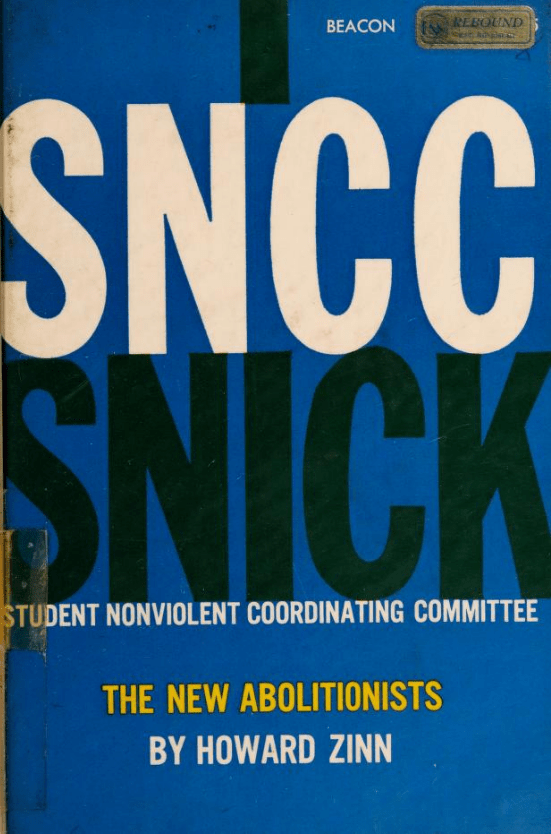
SNCC: The New Abolitionists – Howard Zinn (1964)

1960s: Days of Rage's avatar1960s: Days of Rage


SNCC: The New Abolitionists is a book by Howard Zinn that describes the early years of the Student Nonviolent Coordinating Committee (SNCC) and their registering of voters in the rural south. This book describes the SNCC, focusing especially on the early years. Zinn details in particular the voting registration efforts by black activists in the most recalcitrant areas of the South, as well as the federal government’s failure to support their efforts. Zinn highlighted the role of civil disobedience as a countermeasure to state repression. Martin Duberman describes this book and its reception in his biography Howard Zinn: A Life on the Left. Duberman notes that Zinn received largely positive reviews at time of publication, and he describes the book as among Zinn’s best. Duberman writes that the book is passionately argued, intense, and persuasive, though it has a few peripheral problems. Duberman critiques the non-chronological structure of…

View original post 165 more words

The People’s Wall

1960s: Days of Rage's avatar1960s: Days of Rage


“At a critical time in the 1960s Seattle civil rights movement, the Seattle chapter Black Panther Party (SCBPP) was an active participant in the fight for equity and justice. The chapter was founded in 1968 and was the first chapter to be located outside of Oakland, California. The first SCBPP headquarters was a storefront in the Central Area’s Madrona Neighborhood on 34th Avenue. Nearby was the home of SCBPP captain and co-captain Aaron and Elmer Dixon. When this space became too small and the national headquarters insisted that they move to a location that could be fortified, a duplex in the Squire Park neighborhood at the corner of 20th Avenue and Spruce Street became the SCBPP’s second home. The SCBPP occupied both levels of the duplex, and they made modifications to the building that allowed for more protection if necessary. The need to barricade and sandbag this location was deemed…

View original post 179 more words

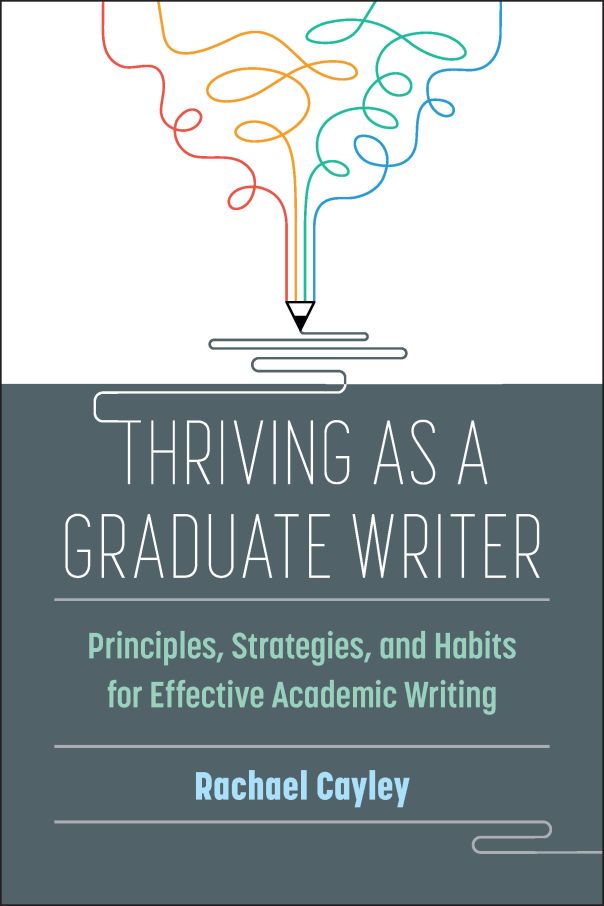
Thriving as a Graduate Writer

Rachael Cayley's avatarExplorations of Style

Over the past few months, in the lead-up to the publication of my book, I’ve used this space to share brief excerpts. Now the book is out! If you want a copy, you can order it from the University of Michigan website (or other popular book ordering places!). In case you haven’t decided whether this book would be a good addition to your library, here’s a brief overview.

I wrote Thriving as a Graduate Writer because I believe graduate students can reframe their experience of academic writing. We all know that writing is at the heart of the academic enterprise. It is both how we communicate and how we are assessed. That combination can be brutal for any writer, and it’s particularly fraught for graduate writers, who must learn disciplinary writing practices while being judged on their early efforts. Recognizing these challenges is valuable; graduate students are better off knowing…

View original post 533 more words

Auerhahn Press

1960s: Days of Rage's avatar1960s: Days of Rage


While he was stationed with the Army in Germany during the 1950s, David Haselwood conceived the idea of becoming a publisher. At the time he was corresponding with Michael McClure in San Francisco—who needed a publisher for his Hymns to St. Geryon. When Haselwood, a native of Wichita, Kansas, was released from the Army ca. 1958, he came to live in San Francisco’s North Beach and joined the Beats. He became familiar with all the poets and the new poetry being created at that time—some of it live, some in manuscript form—and saw that a small press would be a kind of surrogate wish fulfillment. He too had dreamed of becoming a poet. The first book under the Auerhahn Press imprint was John Wieners’s The Hotel Wentley Poems in 1958. An unfortunate experience with a commercial printing firm led Haselwood to decide to study the rudiments of printing…

View original post 156 more words

Kathryn Joyce: How Sarasota County Became Florida’s Laboratory for Far-Right Extremism

dianeravitch's avatarDiane Ravitch's blog

If you read one article today, make it this one.

Kathryn Joyce is an outstanding journalist who has written several excellent articles about the far-right conspiracy to destroy public education. In this important article, published by both the Hechinger Report and Vanity Fair, she examines the rightwing takeover of public schools in Sarasota, Florida, by the extremist Moms for Liberty and their hero Governor DeSantis.

Joyce begins:

SARASOTA COUNTY, Fla. — On a Sunday afternoon in late May 2022, Zander Moricz, then class president of Sarasota County’s Pine View School, spent the moments before his graduation speech sitting outside the auditorium, on the phone with his lawyers. Over the previous month, the question of what he’d say when he stepped to the podium had become national news. That March, Florida Governor Ron DeSantis had signed the Parental Rights in Education Act, quickly dubbed the “Don’t Say Gay” law for…

View original post 1,300 more words