Neo-noir

1960s: Days of Rage's avatar1960s: Days of Rage

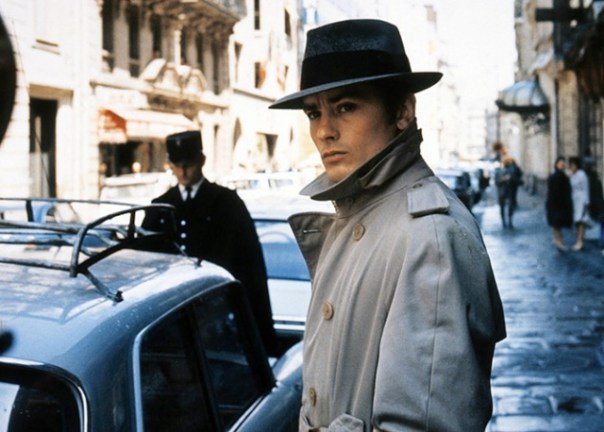
Le Samourai (1967)

Neo-noir is a revival of film noir, a genre that had originally flourished during the post-World War II era in the United States—roughly from 1940 to 1960. The French term, film noir, translates literally to English as ‘dark film’, because they were quite dark both in lighting, but also indicating sinister stories often presented in a shadowy cinematographic style. Neo-noir has a similar style but with updated themes, content, style, and visual elements. The neologism neo-noir, using the Greek prefix for the word new, is defined by Mark Conard as ‘any film coming after the classic noir period that contains noir themes and noir sensibility’. Another definition describes it as later noir that often synthesizes diverse genres while foregrounding the scaffolding of film noir. The classic film noir era is usually dated from the early 1940s to the late 1950s. The…

View original post 250 more words

Reeling in the Tears

Dave Astor's avatarDave Astor on Literature

Parts of some novels make you cry. It could be tears of sorrow when a character (human or animal) dies or gets severely injured or there’s an unrequited-love situation, tears of happiness when there’s a long-delayed reunion or a character gets long-delayed justice or appreciation, etc.

If the author handles such scenes right, reader weeping is often a good thing. Our emotions have been engaged — to the max. One of the reasons why we love literature.

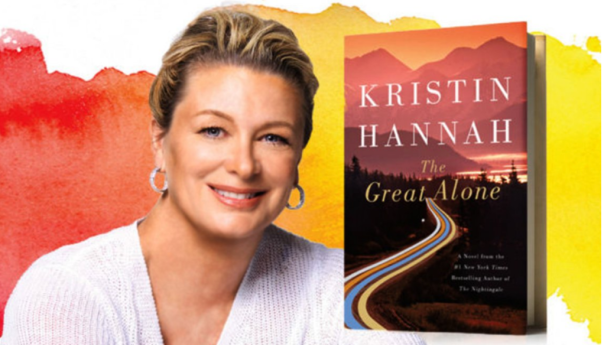
I thought about this last week while blubbering through the final chapters of Kristin Hannah’s superb 2018 novel The Great Alone, about a family that moves to a remote section of Alaska in the 1970s as the father tries to deal with trauma from being a prisoner of war in Vietnam — only to continue traumatizing his wife and teen daughter with physical and mental abuse. The whole book is emotionally intense…

View original post 323 more words

Towards an African Revolution: Fanon and the New Popular Movement (Hirak) Engulfing Algeria

1960s: Days of Rage's avatar1960s: Days of Rage


“During the upheavals that the North African and West Asian region witnessed a decade ago – what has been dubbed the ‘Arab Spring’- Fanon’s thought proved to be as relevant as ever. Not only relevant, but insightful in helping to grasp the violence of the world we live in, and the necessity of a sustained rebellion against it. Fanon’s wrote during in a period of decolonisation in Africa and elsewhere in the Global South. Born in Martinique, a French colony in the Caribbean, though Algerian by choice, he wrote from the vantage point of the Algerian revolution against French colonialism and of his political experiences on the African continent. … For me, as an Algerian activist, Fanon’s dynamic and revolutionary thinking, always about creation, movement and becoming, remains prophetic, vivid and committed to emancipation from all forms of oppression. He strongly and compellingly argued for a path to a future…

View original post 134 more words

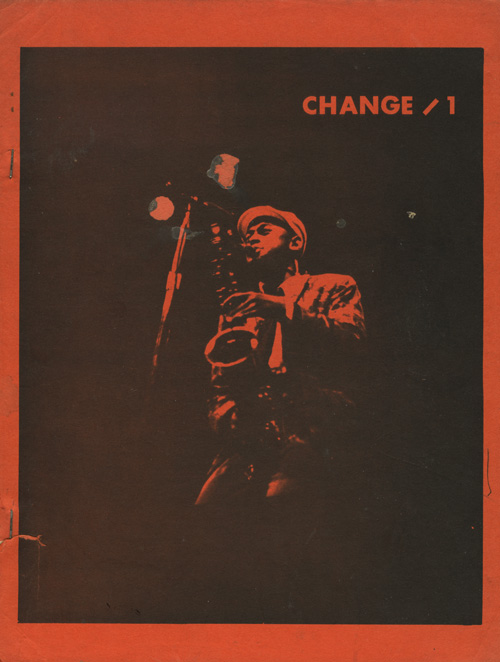
Change: #1, Fall/Winter 1965: Archie Shepp

1960s: Days of Rage's avatar1960s: Days of Rage


“CHANGE was a magazine designed to take on the overflow of reviews and information that couldn’t be handled in issues of Work that now became almost too thick to be stapled. The emphasis in CHANGE was The New Thing, The New Music, The New Wave, etc., a world that was undergoing a spiritual revolution, a new consciousness  reflected in art and music. The cover of CHANGE featured a photo by Leni Sinclair of Archie Shepp, printed on bright orange boards. CHANGE was a forum for FIRE MUSIC of all kinds; the most advanced Jazz magazine of New Music in the country, perhaps in the world. CHANGE was international. It reviewed important live performances: Tam Fiofori on Ornette Coleman, George Tysh on Steve Lacy in Paris and many others. Recordings, interviews and reviews included; Albert Ayler,  Charles Mingus, Wayne Shorter, Eric Dolphy, Sun Ra, and Ali Akbar Khan…

View original post 182 more words

Michigan Passes Historic Increases for Education

dianeravitch's avatarDiane Ravitch's blog

Michigan is in track to make record investments in the quality of life for children and schools.

My friend Mitchell Robinson, a member of the State board of education, shared the following good news:

The State of Michigan passed a third consecutive historic education budget last night—and did so with bipartisan support, meaning the changes included in this budget can go into effect immediately.

It’s amazing to see what a state education budget can look like when you have pro-education legislators in charge–and teachers chairing the House and Senate Education Committees and the Senate Appropriations Subcommittee on PreK-12.

The budget includes:

•universal school meals

•foundation allowance increase of 5% — the largest in state history

•fully funded special education programs

•expanded Pre-K programs

•student teacher stipends for K-12

The budget also appropriates $11 million to a K-5 Music Education Pilot Program that provides funding to school districts that currently do…

View original post 48 more words

Fillmore West 1969: The Complete Recordings – Grateful Dead

1960s: Days of Rage's avatar1960s: Days of Rage


Fillmore West 1969: The Complete Recordings is a 10-CD live album by the rock band the Grateful Dead. It contains four complete concerts recorded on February 27, February 28, March 1, and March 2, 1969, at the Fillmore West in San Francisco. The album was remixed from the original 16-track concert soundboard tapes. It was released as a box set in November 2005, in a limited edition of 10,000 copies. Five of the seven songs on the Grateful Dead’s 1969 album Live/Dead – the first live rock album recorded in 16-track – were selected from these shows. … Fillmore West 1969, released at the same time as Fillmore West 1969: The Complete Recordings, is a three-disc compilation that features highlights of the four nights. The opening acts at these concerts were Pentangle and the Sir Douglas Quintet. A bonus disc included with Fillmore East:…

View original post 167 more words

Timothy Snyder: Ten Lessons from the Wagner Mutiny

dianeravitch's avatarDiane Ravitch's blog

Last Saturday, we awoke to news that the mercenary Wagner Group was marching to Moscow. For a few hours, it seemed that there was a coup in the making. The Wagner troops did not encounter any resistance. They shot down several Russian helicopters. But suddenly the leader of the Wagner Group announced that he had struck a deal with the president of Belarus, and the advancing army turned back, only 120 miles from Moscow.

There are two articles that helped explain the odd series of events. One was written by Anne Applebaum in The Atlantic. When the Wagner Group rolled into Rostov-on-Don, there was no resistance. People brought them drinks and treats. She says that Putin had cultivated a sense of apathy among the Russian people. One man has been in office for 23 years and will remain in office for the next 13 years. Unless he wants to…

View original post 3,072 more words

The Limits of Absurdity By Robert Zaretsky

1960s: Days of Rage's avatar1960s: Days of Rage


“… On March 25, 1946, the French anthropologist Claude Lévi-Strauss, having left the rainforests of Brazil for the concrete canyons of New York City, confronted a social structure as complex and harsh as those he had found in the rainforests of Brazil. Moonlighting as the French Embassy’s cultural attaché, Lévi-Strauss received an unexpected visit from a group of French passengers who had just arrived on an American freighter, the Oregon. Immigration officials had detained one of them because he refused to give the names of friends who belonged to the Communist Party. Lévi-Strauss dispatched a colleague to the docks, and the French visitor, frazzled and frustrated, was finally released. With this faintly absurd event began Albert Camus’s only visit made to America. Camus was no ordinary tourist. France’s Ministry of Foreign Affairs had sent him as an official representative of the recently liberated country. Who better to speak to…

View original post 179 more words

Tom Clark in conversation with Beat Scene editor Kevin Ring

1960s: Days of Rage's avatar1960s: Days of Rage

Tom Clark and a stone fence in Vence, France, 25 July 1966

Kevin Ring: A lot of people will know you, at least in England, as the author of a biography of Jack Kerouac for Harcourt Brace in 1984. How did that come about? Tom Clark: The commission to write a Kerouac life for Harcourt Brace Jovanovich came as a hand-me-down. Matthew Bruccoli, a professional entrepreneur in the biography industry who was overseeing a series of what he termed ‘brief but comprehensive’ illustrated lives of American authors for Harcourt, first offered the assignment to Lawrence Ferlinghetti, who declined, as did a second nominee, Robert Creeley; Creeley in turn recommended me, and I accepted. This was in 1981. I had earlier done several biographies, including one writer’s life, that of Damon Runyon, so I had some general sense of what I was getting myself into. Creeley, who was quite sympathetic…

View original post 213 more words

What Mother Country Radicals Misses About the Weather Underground

1960s: Days of Rage's avatar1960s: Days of Rage


Weatherman organization leader John Jacobs (football helmet, center)

“… In 1969, a militant faction of Students for a Democratic Society (SDS) borrowed this line from Bob Dylan’s song ‘Subterranean Homesick Blues’ for the title of a manifesto they read at the organization’s national convention in Chicago. Led by the charismatic young attorney Bernardine Dohrn, the Weathermen, as the group would become known, called for building a youth guerrilla army and broke away from the larger organization, for all intents and purposes spelling the end of the organized New Left. This story has been told many times before and is told again in Mother Country Radicals, a new podcast about the Weather Underground produced by Zayd Dohrn, a communications scholar and son of Bernardine Dohrn and fellow former Weathermen leader, Bill Ayers. In the months after the Chicago convention, Weathermen radicals transformed themselves into urban guerrillas, changed their name to…

View original post 173 more words