Georgia: Teacher May Be Fired for Teaching “Divisive Concept” about Gender

dianeravitch's avatarDiane Ravitch's blog

Like other Republican dominated states, Georgia passed copycat legislation banning the teaching of “divisive concepts” that might make some students feel uncomfortable or ashamed of something that happened long ago (like slavery, Jim Crow laws, peonage, segregation, etc., all of which is factual and true).

Despite the fact that the law was designed to deter teachers from accurately teaching about racism, a fifth-grade teacher is fighting for her job because she assigned a book about gender.

Anyone who wants to understand why teachers are leaving and teacher shortages are widespread should read this story.

At first glance, the plight of Katherine Rinderle, a fifth-grade teacher in Georgia, might seem confusing. Rinderle faces likely termination by the Cobb County School District for reading aloud a children’s book that touches on gender identity. Yet she is charged in part with violating policy related to a state law banning “divisive concepts” about race…

View original post 430 more words

Why Bob Dylan wanted a blurry photo for ‘Blonde on Blonde’

1960s: Days of Rage's avatar1960s: Days of Rage


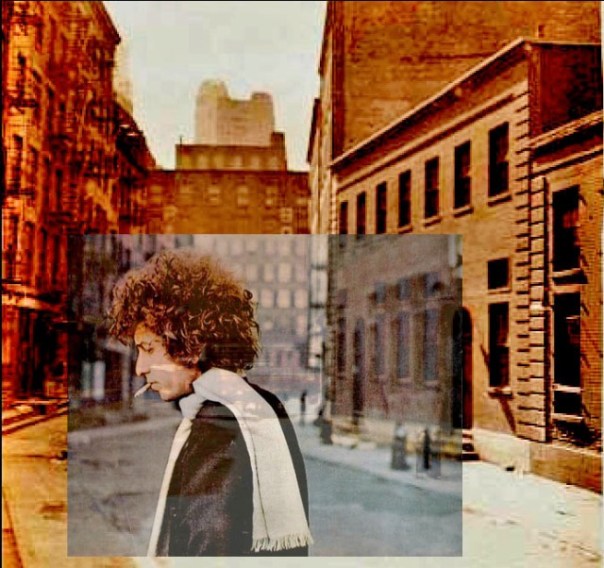
“It’s an instantly recognisable image: Bob Dylan, in all his mid-1960s psychedelic glory, standing outside a New York brownstone. A checkerboard scarf dangles from his neck. An inscrutable look comes across his face. If you’ve ever spent hours pouring over the double-album majesty of Dylan’s 1966 LP Blonde on Blonde, you know exactly what this image looks like. But if you ever thought that something was slightly askew about the image, you’re not wrong. A close look at the front cover shows that Dylan is slightly out of focus on the cover. It’s part of the mystique of the album – was Dylan purposefully trying to tell us something about himself with the blurry photo? Was it a comment on his famously obfuscated lyrics? Maybe he was starting to slowly resent the spotlight that captured his every detail. Could it be a reference to a drug trip? As…

View original post 266 more words

Frank O’Hara’s Last Night

1960s: Days of Rage's avatar1960s: Days of Rage


“Sitting at a big wooden table at Ken Ruzicka’s home on a cold November morning in Fire Island Pines, the 79-year-old artist and landscape designer is telling me how he acquired the table. We’re surrounded by space heaters, which keep the one-story cottage warm, and his own artwork, accumulated from more than 40 years of painting; a smell of summer mold hovers in my nose as Ruzicka explains that the table comes from famed furniture designer and friend David Ebner, for whom he made a garden in exchange for the table many years ago. Ruzicka is a natural storyteller, but he knows why I’m here. In art and literary lore, he’s known for being the driver that hit poet Frank O’Hara near Crown Walk by the Pines on July 24, 1966. O’Hara, then known more as an art curator at the Museum of Modern Art, also wrote and published…

View original post 275 more words

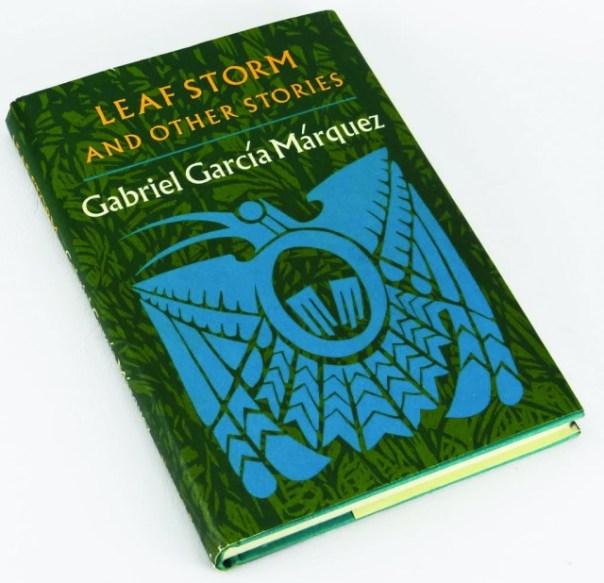
Leaf Storm and Other Stories – Gabriel Garcia Marquez (1972)

1960s: Days of Rage's avatar1960s: Days of Rage


Leaf Storm is the common translation for Gabriel García Márquez‘s novellaLa Hojarasca. First published in 1955, it took seven years to find a publisher. Widely celebrated as the first appearance of Macondo, the fictitious village later made famous in One Hundred Years of Solitude, Leaf Storm is a testing ground for many of the themes and characters later immortalized in said book. It is also the title of a short story collection by García Márquez. … The narrative of Leaf Storm shifts between the perspectives of three generations of one family as the three characters (father, daughter and grandson respectively) find themselves in a spiritual limbo after the death of a man passionately hated by the entire village yet inextricably linked to the patriarch of the family. The novella takes place in Macondo, the fictional town that would be the future site of more…

View original post 259 more words

The Adventures of Tintin: Destination Moon (1953), Explorers on the Moon (1954)

1960s: Days of Rage's avatar1960s: Days of Rage


Destination Moon is the sixteenth volume of The Adventures of Tintin, the comics series by Belgian cartoonist Hergé. The story was initially serialised weekly in Belgium’s Tintin magazine from March to September 1950 and April to October 1952 before being published in a collected volume by Casterman in 1953. The plot tells of young reporter Tintin and his friend Captain Haddock who receive an invitation from Professor Calculus to come to Syldavia, where Calculus is working on a top-secret project in a secure government facility to plan a crewed mission to the Moon. … Tintin, Snowy, and Captain Haddock travel to join Professor Calculus, who has been commissioned by the Syldavian government to secretly build a spacecraft that will fly to the Moon. Arriving at the Sprodj Atomic Research Centre, they meet the centre’s managing director, Mr. Baxter, and Calculus’ assistant, the…

View original post 181 more words

Greg Olear: Leonard Leo, the Man Who Stacked the Supreme Court

dianeravitch's avatarDiane Ravitch's blog

Greg Olear is a novelist and journalist who writes a blog called PREVAIL. The following post appeared there. I post only part of it. If you want to see his complete list of Leonard Leo’s claque, open the link and continue reading. This is part one of a two-part report.

Greg Olear writes:

He’s one of the most powerful individuals in the country. His spiderweb of connections is extensive. But most Americans, including many working in Washington, have never heard of him.

Occupying the center of an intricate web of political, legal, religious, and business connections, Leonard Leo is the quintessential Man in the Middle, a veritable dark-money spider. Like a spider, he is patient, painstaking, relentless, and much more powerful that he appears. And like a spider, he prefers to stay hidden.

I first wrote about him in February 2021, in a piece called “Leo the Cancer.” Leo, who…

View original post 720 more words

Herbert Marcuse and the Student Revolts of 1968: An Unpublished Lecture

1960s: Days of Rage's avatar1960s: Days of Rage

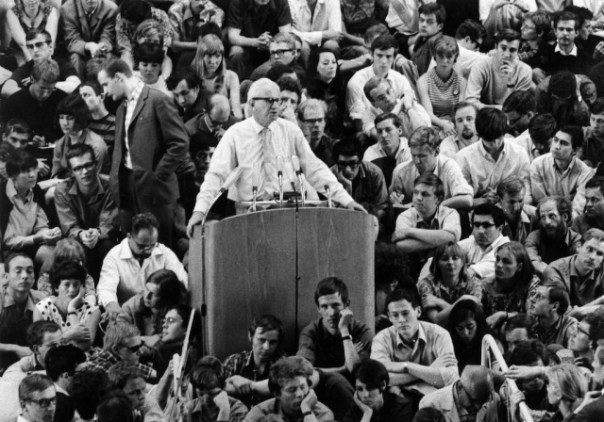
Herbert Marcuse giving a lecture in Berlin, 1967.

“In May 1968, the neo-Marxist philosopher Herbert Marcuse visited Paris and Berlin at the height of the student movements that were making news around the world. The text presented here is the transcript of a two-hour talk about those events that Marcuse delivered on May 23, 1968, shortly after his return to the United States, while the outcome of the May movement in France was still very much in doubt. It offers unique insights into the way a thinker often credited with providing the European student movements of 1968 with much of their ideological energy viewed them as they unfolded. Marcuse had gone to Paris to participate in an academic conference on ‘The Role of Karl Marx in the Development of Contemporary Scientific Thought.’ By the time he arrived in Paris, the student movement was already under way and the French press…

View original post 209 more words

1970 Jazz: Free, Avant-Garde and Experimental

1960s: Days of Rage's avatar1960s: Days of Rage

Ed Blackwell, Dewey Redman, Ornette Coleman, Charlie Haden at 131 Prince Street, May 1971.

“In previous articles about jazz music recorded in 1970, we featured albums on major jazz labels including Atlantic, Impulse! and Blue Note, with some of the releases showcasing free and experimental jazz by artists such as Chick Corea’s Circle Quartet, Pharoah Sanders, Alice Coltrane and Rahsaan Roland Kirk. In this article we will review other recordings of the esoteric sides of jazz, all recorded in 1970 and released on various labels. We open with a free jazz royalty. In April 1968, as a shareholder in a co-op that purchased an old seven-story factory at 131 Prince Street in Soho, just south of Greenwich Village in New York, Ornette Coleman became the owner of the street-level and third floors in the building. “I was just trying to find a place where I could go and make music…

View original post 308 more words

writing conclusions – getting the stuff sorted

pat thomson's avatarpatter

Conclusions are hard. It might seem that all you have to do is go back to your research question and simply provide an answer. But the reality is that much more is needed. Much more. And that much more comes at the end of your research project, and when you are likely to be at your most tired.

Hey Ho. You have to summon up enough energy to do the last bit. Whether you are working on a funded research project or a doctoral thesis, the very last part of the text you are writing still needs your time and some clever thinking. After all, it’s what readers are likely to most remember.

One way to kick off conclusion thinking is via some planning. Just like any other piece of your writing, your conclusion can benefit from some pre-composition work. I say work because the most important part of conclusion…

View original post 739 more words