Heather Cox Richardson: The GOP Crazies Sabotage the Defense Budget

dianeravitch's avatarDiane Ravitch's blog

Heather Cox Richardson wrote early today about the GOP’s irresponsible politicization of the defense budget. Typically the defense budget passes with a bipartisan vote. But not this year because the House GOP majority is completely cowed by the hard-right extremists. The Republican crazies inserted all their anti-WOKE priorities into the bill, which will not be passed by the Senate. Marjorie Taylor Greene owns House Speaker Kevin McCarthy.

Richardson writes:

Traditionally, the National Defense Authorization Act (NDAA), which funds the annual budget and appropriations of the Department of Defense, passes Congress on a bipartisan basis. Since 1961 it has been considered must-pass legislation, as it provides the funding for our national security. For all that there is grumbling on both sides over one thing or another in the measure, it is generally kept outside partisanship.

Late last night, House Republicans broke that tradition by loading the bill with a wish list…

View original post 676 more words

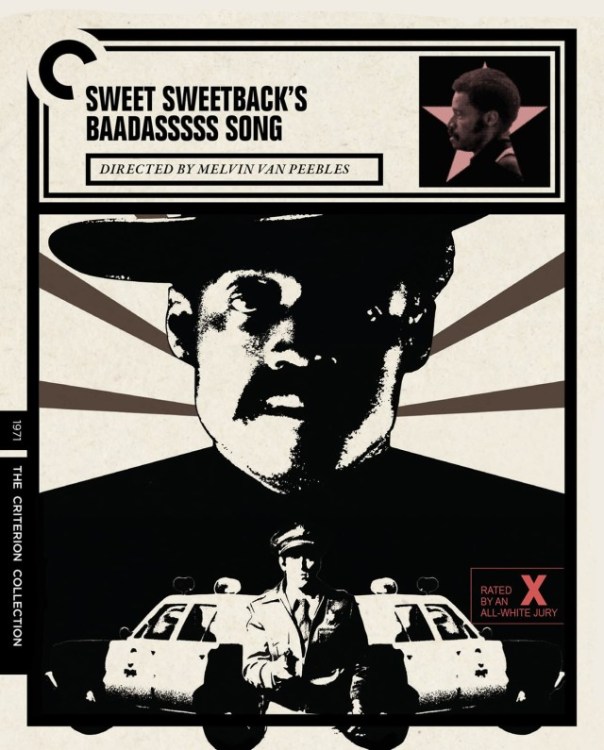
Sweet Sweetback’s Baadasssss Song – Melvin Van Peebles (1971)

1960s: Days of Rage's avatar1960s: Days of Rage

Sweet Sweetback’s Baadasssss Song: “I’m Gonna Say a Black Ave Maria For You”. “My mother was not having it. Still not having it. Her memories of being dragged to see Sweet Sweetback’s Baadasssss Song (1971) by my father (of course) remain quite visceral, and I adore her attempt to sleep it away. For many, the film is still difficult to process, and that may very well have everything to do with its seemingly irreconcilable assertion of both revolution and pornography. Arguably, the film—and all Black films, for that matter—may be best appreciated with a deliberate suspension of authenticity fantasies or demands for definitive answers about Black life. Black film criticism needs more productive ambivalence than truth claims or approaches strictly governed by Sociology 101. Messy and riveting, Sweet Sweetback’s Baadasssss Song’s style and politics continue to compellingly challenge assumptions about the idea of Black film and American film history. The film…
View original post 176 more words

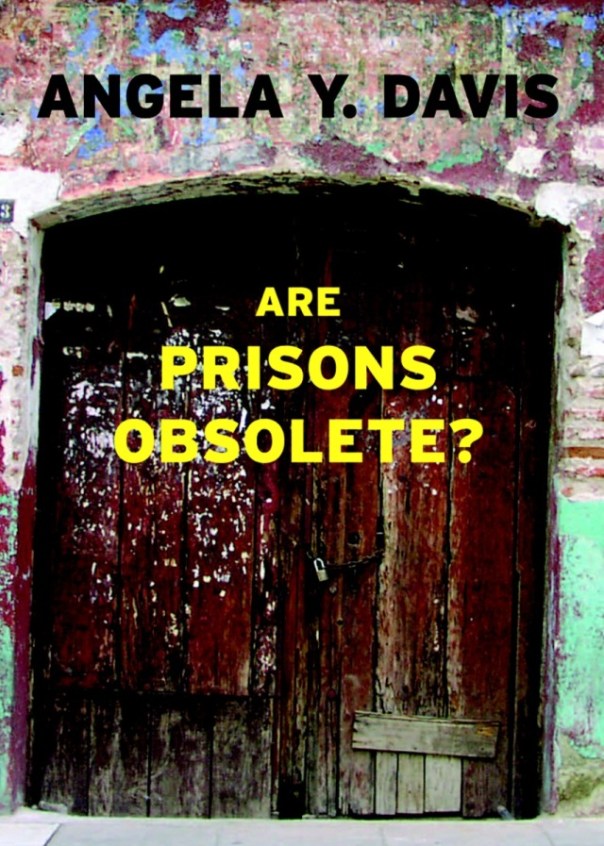
Masked Racism: Reflections on the Prison Industrial Complex by Angela Davis

1960s: Days of Rage's avatar1960s: Days of Rage


“Imprisonment has become the response of first resort to far too many of the social problems that burden people who are ensconced in poverty. These problems often are veiled by being conveniently grouped together under the category ‘crime’ and by the automatic attribution of criminal behavior to people of color. Homelessness, unemployment, drug addiction, mental illness, and illiteracy are only a few of the problems that disappear from public view when the human beings contending with them are relegated to cages. Prisons thus perform a feat of magic. Or rather the people who continually vote in new prison bonds and tacitly assent to a proliferating network of prisons and jails have been tricked into believing in the magic of imprisonment. But prisons do not disappear problems, they disappear human beings. And the practice of disappearing vast numbers of people from poor, immigrant, and racially marginalized communities has literally become big…

View original post 165 more words

’50s progression

1960s: Days of Rage's avatar1960s: Days of Rage

Pretty Little Angel Eyes – Curtis Lee (1961)
“The 50s progression (also known as the ‘Heart and Soul’ chords, the ‘Stand by Me’ changes, the doo-wop progression and the ‘ice cream changes’) is a chord progression and turnaround used in Western popular music. The progression, represented in Roman numeral analysis, is: I–vi–IV–V. For example, in C major: C–Am–F–G. As the name implies, it was common in the 1950s and early 1960s and is particularly associated with doo-wop. The first popular song to use the progression was Blue Moon, written in 1934. This inspired Heart and Soul in 1938 and Blueberry Hill in 1940. In Western classical music during the common practice period, chord progressions are used to structure a musical composition. The destination of a chord progression is known as a cadence, or two chords…

View original post 278 more words

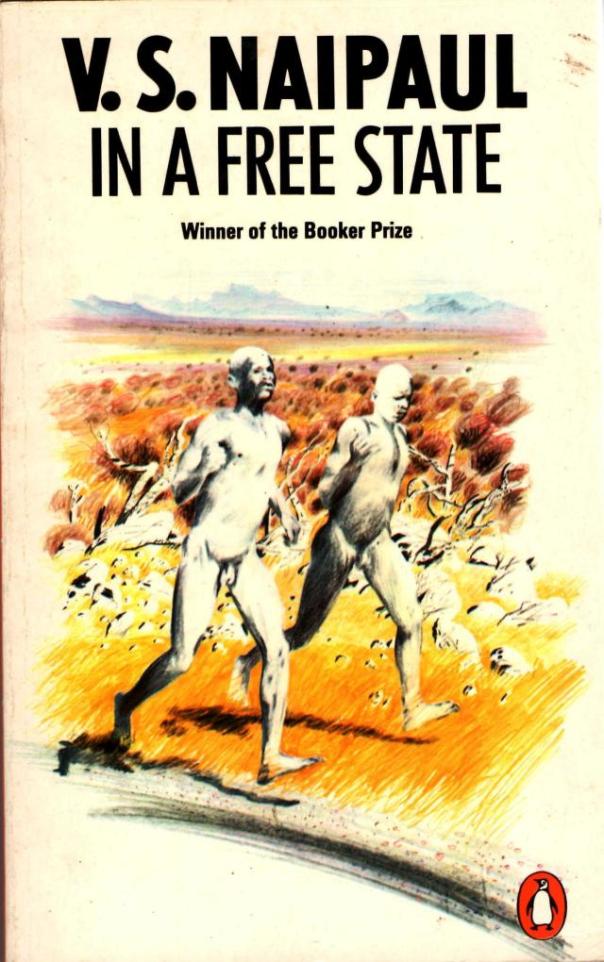
In a Free State – V. S. Naipaul (1971)

1960s: Days of Rage's avatar1960s: Days of Rage


“There appears to have been some contestation in the published form In a Free State was to assume. Subtitled A Novel with Two Supporting Narratives, V. S. Naipaul’s 1971 masterpiece features the eponymous novel, two stories which he calls ‘supporting narratives,’ and the bookends of a prologue and an epilogue, taken from his own journal during his travels. It is, therefore, more accurately, a novel with four supporting narratives. … I am of the view that Naipaul’s earlier decision was the correct one: it had resulted in a formally original and dazzling book, over and above being a remarkable, clear-eyed, truthful and brutal meditation on exile and displacement. Because form seems to have historically been considered—and is still seen as—a white guy’s thing, and because Naipaul never strayed from the realist mode, In a Free State was never acknowledged for the ways it pushed the boundaries. It seems too late…

View original post 207 more words

Environmentalism in The Lord of the Rings

1960s: Days of Rage's avatar1960s: Days of Rage


Pastoral vision of an unspoilt England: the Old Mill at Hobbiton, reconstructed for the filming of Peter Jackson’s The Lord of the Rings

“The theme of environmentalism in The Lord of the Rings has been remarked upon by critics since the 1970s. The Hobbits‘ visions of Saruman‘s industrial hell of Isengard and Sauron‘s desolate polluted land of Mordor have been interpreted as comments on modern society, while the destruction of Isengard by the tree-giant Ents, and ‘The Scouring of the Shire‘ by the Hobbits, have a strong theme of restoration of the natural environment after such industrial pollution and degradation. However, Tolkien’s love of trees and unspoilt nature is apparent throughout the novel. J. R. R. Tolkien was brought up as a boy first in rural Warwickshire at Sarehole, at that time just outside Birmingham, and then inside that industrial…

View original post 261 more words

Nancy Flanagan: Why Do Moms for Liberty Support the “Science of Reading”?

dianeravitch's avatarDiane Ravitch's blog

Nancy Flanagan, retired teacher in Michigan, wonders why the extremist Moms for Liberty have jumped into the reading wars on the side of the “Science of Reading.” The politicization of reading is not new. Phonics has long been a rightwing cause, unfairly, in my view. Every reading teacher should know how to teach phonics.

What’s new is the idea that only phonics can be considered “the science of reading.” This conceit was hatched by the National Reading Panel in 2000. The new Bush administration was super pro-phonics and inserted a $6 billion phonics program called Reading First into No Chikd Left Behind. After six years, Reading First was abandoned because it was riddled with conflicts of interest and self-dealing, and an extensive evaluation concluded that it didn’t make a difference.

Flanagan is especially interested in reading instruction in middle school.

She begins:

I am fascinated by the increasing politicization—no other…

View original post 366 more words

academic writing – it’s a lot

pat thomson's avatarpatter

When we talk about academic writing, as usually refer to papers, books, chapters and dissertations. However, there’s a lot more to academic writing than just these four. Even if these are the most high stakes quartet going, there’s still more. A lot more.

This post is simply a list of the most common kinds of writing types that you will come across which all count as academic writing.

Caveats. This is not an exhaustive list. Texts which appear in one group below may equally work in another. Texts are not simply words on a page, but are variously multimodal, digital and hard copy. Some texts serve more than one purpose.

So with that in mind, here goes.

Texts that report academic work written primarily for other academics – and wehich m ay be audited:

Literature reviews and annotated bibliographies

Conference papers

Talks and presentations

Conference papers

Conference posters

Abstracts

Books…

View original post 398 more words

When Writers Do the Twist

Dave Astor's avatarDave Astor on Literature

Credit: Freepik

I like bwat — books with a twist. And short stories with unexpected endings. The element of surprise is a great thing, plus it’s fun to think back to the start and middle of the novel or briefer tale to see what might have telegraphed the twist.

Some VERY famous short stories with shockingly not-foreseen conclusions? Shirley Jackson’s “The Lottery” (first published in The New Yorker just over 75 years ago), Guy de Maupassant’s “The Necklace,” Kate Chopin’s “The Story of an Hour,” Ambrose Bierce’s “An Occurrence at Owl Creek,” and of course various O. Henry tales — including “The Gift of the Magi” and “The Last Leaf.”

Many mystery novels obviously also have unpredictable endings, as the authors use misdirection and red herrings to try to make you think someone other than the actual culprit did the murder(s). Agatha Christie’s And Then There Were None, anyone?

View original post 228 more words