Jim Morrison Tells Me I Have Greek Feet by Lindsey Martin-Bowen (I AM STILL WAITING Series)

silverbirchpress's avatarSilver Birch Press

statue lmnstuffJim Morrison Tells Me I Have Greek Feet
by Lindsey Martin-Bowen

Jim claims inherited feet shapes
are based on their origins.
“With that index toe outgrowing
your hallux (big toe),” he says,
“yours are Greek.” Then he grins.

For decades, I ignored my feet,
except to clean—soak in Epsom salts—
until this year, when they bleed.
I rub a pumice stone over cracks,
wait for them to heal, and
meditate about feet:
Cornerstones to columns,
pedestals to pillars—
our feet hold up our worlds.

Greek feet—barefoot runners
leap across urns for eternity.
Greeks used few feet in poetry—
Sappho’s many lines lost.
And they wrote plays
in couplets, repeating the first line’s
number of feet in the next,
so back-row listeners knew
who spoke when feet repeated.

“You know that means you dominate
a marriage or household,” Jim adds,
grins again, wrinkles his nose.
“I don’t,” I boldly say.
“I…

View original post 460 more words

The Socialism of James Baldwin

1960s: Days of Rage's avatar1960s: Days of Rage


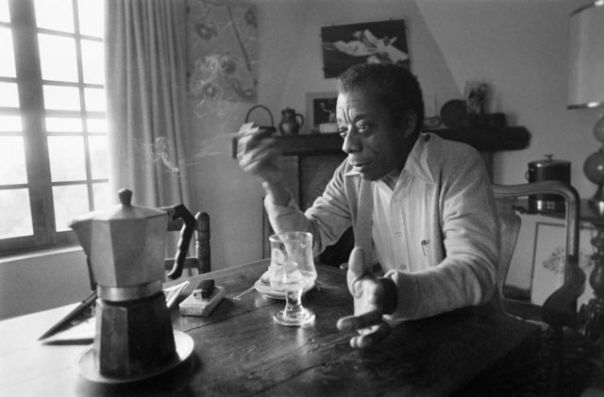
“In the early 1940s, James Baldwin was in his teens and living in New York City when he joined the Young People’s Socialist League, a branch of the Socialist Party of America. His first foray into formal political life followed years of informal activity, including public agitation. ‘At thirteen, I had been a convinced fellow traveler,’ Baldwin wrote in his political memoir, No Name in the Street. ‘I marched in one May Day parade, carrying banners, shouting, East Side, West Side, all around the town, We want the landlords to tear the slums down!’ Baldwin’s attraction to left-wing politics was practical, based on his experience growing up in the tenements of Harlem. ‘I didn’t know anything about Communism,’ he wrote, ‘but I knew a lot about slums.’ Baldwin’s self-conception as a budding socialist was a far cry from how he would later describe his relationship with the Left. ‘My…

View original post 281 more words

Washington Post: What is Critical Race Theory and Why Do Republicans Want to Ban It in Schools?

dianeravitch's avatarDiane Ravitch's blog

This article by Marisa Iati in the Washington Post is a good layperson’s guide to the furor over “critical race theory” and teaching about race and racism in the schools. As I read the article, I was gratified to see the reference to the late legal scholar Derrick Bell. For just a moment, I felt like a Forrest Gump of American history because Derrick and I became friends in the mid-1980s and in personal meetings, we debated whether racism was more or less vitriolic than it had been in the past. I believed the Brown decision changed everything and that racism would eventually be reduced an insignicant ember. He argued that the Brown decision was gratifying but changed very little, and that racism was as virulent as ever even though it was less respectable. In retrospect, I feel that I was a naive optimist and that he was prescient…

View original post 2,102 more words

Moondrops by Jagari Mukherjee (I AM STILL WAITING Series poem)

silverbirchpress's avatarSilver Birch Press

silver apples of the moonMoondrops
by Jagari Mukherjee

I am still waiting for you
to hand me love
in a shiny blue-and-silver
wrapping paper, tied
with a slim satin bow.
If only romance had been
smooth as silk—or soft,
such as the music
you often play,
with the harmonica
between your lips.
I thought this time
it was for keeps, but
we smoked passion up
in joints and planted hyacinths
in the ash collected
in a green glass vase.

So now I mourn my loss alone,
and the eyes fill with moondrops;
I failed to transform the soul
to stone. I am still waiting
for you to return.

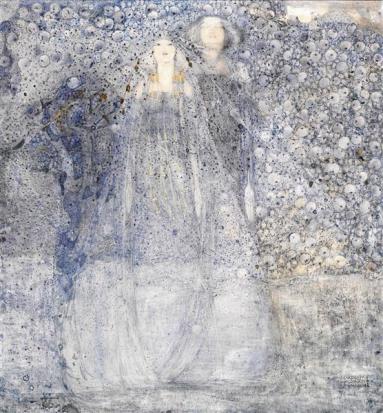
PAINTING:The Silver Apples of the Moon by Margaret Macdonald (1912).

Mukherjee2ABOUT THE AUTHOR: Jagari Mukherjee is a poet, editor, and reviewer based in Kolkata, India. She has authored three collections of poetry. Her latest full-length volume of poetry, The Elegant Nobody, was published by…

View original post 130 more words

academic writers as readers

pat thomson's avatarpatter

Many academic writers are avid readers. That’s because there is a strong connection – not causal, but surely correlated, she says hastily – between reading and writing. Reading and writing are mutually beneficial, they feed each other.

I was thinking about the read-write connection just this morning as I sat reading the books section of the weekend newspaper.

As I slurped down my breakfast smoothie – strawberry, raspberry and banana with yoghurt in case you want to know – I got stuck into the regular column where writers talk about the books that they read. And I realised that we tend not to have these kinds of conversations with academic writers. We don’t ask what academic writers are reading at the moment, the books influenced them most, the book they wish they’d written, the book they are ashamed not to have read, the book they couldn’t finish, the book they…

View original post 805 more words

TCS: Two More Poets, Six Poems, Shared Birthday

wordcloud9's avatarFlowers For Socrates

Good Morning

______________________________

Welcome to The Coffee Shop, just for you early risers
on Monday mornings. This is an Open Thread forum,
so if you have an off-topic opinion burning a hole in
your brainpan, feel free to add a comment.

______________________________

When you use the term minority or minorities
in reference to people, you’re telling them that
they’re less than somebody else.

– Gwendolyn Brooks

View original post 1,471 more words

Criticisms of The 1619 Project

dianeravitch's avatarDiane Ravitch's blog

Criticism of The 1619 Project appeared soon after its publication. On the right, it was denounced as an unjustified, outrageous attack on traditional American values and ideals, an attack on the Founding Fathers, an attack on the Declaration of Independence and the Constitution. President Trump denounced it and established the “1776 Commission” to urge the teaching of “traditional” history that instills patriotism and pride. Legislators in Republican-dominated states framed legislation to ban it as well as the teaching of “critical race theory.”

It was not only conservatives who objected to The 1619 Project. Five respected historians published their disagreements, sent them to The New York Times, and demanded corrections. Adam Serwer of The Atlantic reviewed the debate and offered a balanced view of the different criticisms, as well as the response by The New York Times to the critics.

He wrote:

The reaction to the project was not…

View original post 3,931 more words

Simon & Garfunkel – Parsley, Sage, Rosemary and Thyme (1966)

1960s: Days of Rage's avatar1960s: Days of Rage


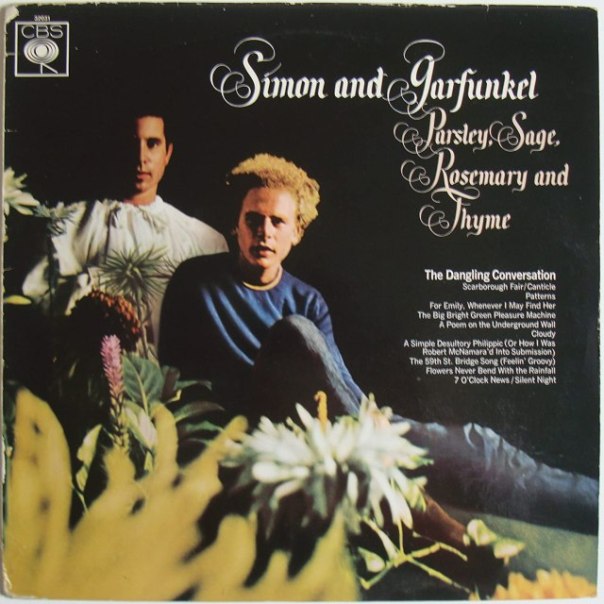
“Simon & Garfunkel’s first masterpiece, Parsley, Sage, Rosemary and Thyme was also the first album on which the duo, in tandem with engineer Roy Halee, exerted total control from beginning to end, right down to the mixing, and it is an achievement akin to the Beatles’ Revolver or the Beach Boys’ Pet Sounds album, and just as personal and pointed as either of those records at their respective bests. After the frantic rush to put together an LP in just three weeks that characterized the Sounds of Silence album early in 1966, Parsley, Sage, Rosemary and Thyme came together over a longer gestation period of about three months, an uncommonly extended period of recording in those days, but it gave the duo a chance to develop and shape the songs the way they wanted them. The album opens with one of the last vestiges of Paul Simon’s stay in England…

View original post 351 more words

Thursday’s Gone by Steve Bogdaniec (I AM STILL WAITING Series)

silverbirchpress's avatarSilver Birch Press

eyes-that-dream-20-3-08-clifford-dies-2008.jpg!LargeThursday’s Gone
by Steve Bogdaniec

Last night
old cassettes and records came to me in a dream
they all ganged up on me
spinning me around
asking me how I liked it for a change

Then CDs and DVDs came by
all shiny and proud
they scoffed at me too
talking about me like I was no better
than outdated magnetic tape technology

The cassettes and the records pushed stop on me
and asked the CDs and DVDs who the hell they thought they were
like they could bully me
but no one better try it

The CD pulled knives
the records had chains
and they started dancing about
in a tightly choreographed fight scene
which is weird, since I’ve never actually seen West Side Story
and yet I knew enough to reference it in my dream

I need to see West Side Story some time
I don’t why I…

View original post 242 more words

Casey at the Bat

wordcloud9's avatarFlowers For Socrates

June 3, 1888 – The San Francisco Daily Examiner first publishes “Casey at the Bat” by newspaper columnist Ernest Lawrence Thayer

Ernest Lawrence Thayer (1863-1940) American writer, newspaper columnist, and poet. He graduated with a B.A. in philosophy from Harvard University in 1885. While at Harvard, he met William Randolph Hearst, who would later hire him to write a humorous column for the San Francisco Examiner when Hearst was running the paper.

To read Thayer’s poem “Casey at the Bat” click:

View original post 610 more words