Roundup of Recent “New York School of Poetry” News and Links (11/15/21)

Andrew Epstein's avatarLocus Solus: The New York School of Poets

Here is one of my semi-regular roundups of recent links and news related to the New York School of poets. (Previous roundups can be foundhere).
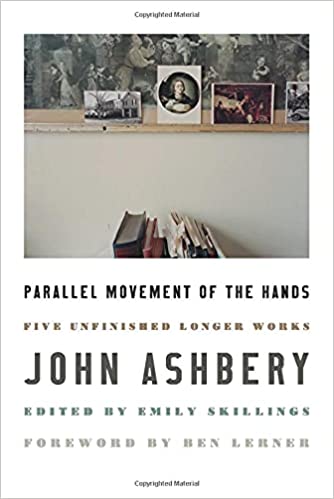
  • In exciting news for fans of the late John Ashbery, the first posthumous collection of Ashbery’s work was published this summer by Farrar, Straus and Giroux. With a preface by Ben Lerner and a in-depth and insightful introduction by editor Emily Skillings, Parallel Movements of the Hands: Five Unfinished Longer Works “gathers unpublished, book-length projects and long poems written between 1993 and 2007, along with one (as yet) undated work, to showcase Ashbery’s diverse and multifaceted artistic obsessions and sources.” The book has received thoughtful and interesting reviews, which often delve into the “unfinished” nature of these works, by Ange Mlinko (TLS) and Rowland Bagnall (LARB), Alberto Morillo (Poetry Foundation) and others. You can also find video of a panel discussion and reading…

View original post 1,114 more words

Surf’s Up – The Beach Boys (1971)

1960s: Days of Rage's avatar1960s: Days of Rage


“Surf’s Up is the 17th studio album by American rock band the Beach Boys, released August 30, 1971 on Brother/Reprise. It received largely favorable reviews and reached number 29 on the US record charts, becoming their highest-charting LP of new music in the US since 1967. In the UK, Surf’s Up peaked at number 15, continuing a string of top 40 records that had not abated since 1965. The album’s title and cover artwork (a painting based on the early 20th-century sculpture ‘End of the Trail‘) are an ironic, self-aware nod to the band’s early surfing image. Originally titled Landlocked, the album took its name from the closing track ‘Surf’s Up‘, a song originally intended for the group’s unfinished album Smile. … In contrast to the previous LP Sunflower, Brian Wilson was not especially active in the…

View original post 321 more words

Killing of Meredith Hunter

1960s: Days of Rage's avatar1960s: Days of Rage


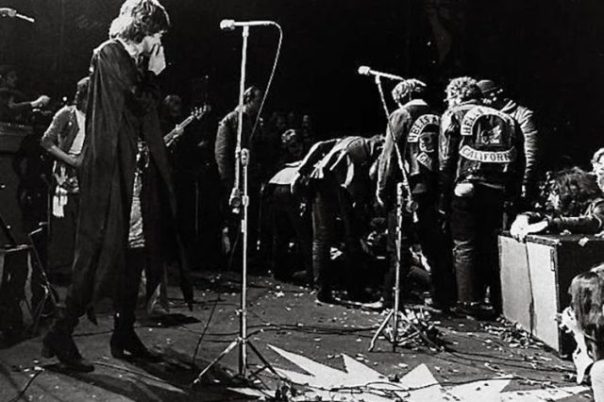
“Meredith Curly Hunter, Jr. (October 24, 1951 – December 6, 1969) was an audience member who was killed at the 1969 Altamont Free Concert. During the performance by The Rolling Stones, Hunter approached the stage, and was violently driven off by members of the Hells Angels motorcycle club who had agreed to serve as security guards. He subsequently returned to the stage area, drew a revolver, and was stabbed and beaten to death by Hells Angel Alan Passaro. The incident was caught on camera and became a central scene in the Maysles Brothers documentary Gimme Shelter. Passaro was charged with murder and tried in 1971. Following 17 days of testimony, an eight-man, four-woman jury deliberated for 12 and a half hours before Passaro was acquitted on grounds of self-defense. Hunter was an 18-year-old from Berkeley, California, nicknamed ‘Murdock’ and described by friends as…

View original post 253 more words

Jan Resseger: Biden’s “Build Back Better Program” Would Lift Millions of Children Out of Poverty

dianeravitch's avatarDiane Ravitch's blog

Jan Resseger, one of our best informed bloggers and social justice advocates, lauds President Biden’s Build Back Better program for its benefits for children. It would end decades of policies that punish poor children. Our nation has dramatically reduced poverty among the elderly, but neglected our children.

She writes:

The U.S. House of Representatives finally passed President Biden’s infrastructure plan last Friday. The Senate passed it a while ago, and the bill is headed to Biden’s desk for signature.  At the same time, Democrats in the U. S. House of Representatives pledged that if the Congressional Budget Office confirms cost estimates for the Build Back Better Bill, Democrats in the House will pass the current version of the plan and send it on to the Senate for consideration. For months, Congress has been debating the programs that are part of this plan, and even if Congress passes it, it won’t…

View original post 1,263 more words

Education Unanchored

wordcloud9's avatarFlowers For Socrates

by IRENE FOWLER, Contributor

Education propels the world forward, towards the iridescent light of the possible, practical and perfected

– Irene Fowler


Whatever your preferred flavour of life is – sweet, savoury, spicy or somethin’ else, welcome to the melting pot. I am on West African time, so ‘servez-vous.’

Even though we are helpless to change things on a macro scale, we can in our own small ways, align with love and the positive. As we contribute our quota, we are building towards a critical mass which can force change/s for good.


Unesco affirms the Universal Declaration of Human Rights proclamation that education is a fundamental human right for everyone which includes higher education; the opportunity should be accessible to all based on individual capacity, and be progressively free.

There is no doubt that across the board, nations allocate more revenue towards military expenditure, than other domestic sectors. This is…

View original post 535 more words

Wallace Stevens and the New York School Poets

Andrew Epstein's avatarLocus Solus: The New York School of Poets

For a while now, I’ve been trying to make the case here and there that Wallace Stevens’s outsized influence on American avant-garde poetry — including on the poets of the New York School — has often been overlooked, to the detriment of both.

Now, I’ve had the chance to expand on this argument in an essay I contributed to a new collection entitled The New Wallace Stevens Studies, edited by Bart Eeckhout and Gül Bilge Han, which was recently published by Cambridge University Press.

In the piece, I argue that literary history has long downplayed or ignored Stevens’s crucial role in the history of experimental poetics, from Objectivism, to the various movements of the “New American Poetry,” to Language poetry, and beyond. For reasons I discuss in the essay, Stevens has long been cast as a formalist favorite and latter-day Romantic or neo-Symbolist poet, of marginal importance to avant-garde poets…

View original post 287 more words

Facing History Why we love Camus.

1960s: Days of Rage's avatar1960s: Days of Rage


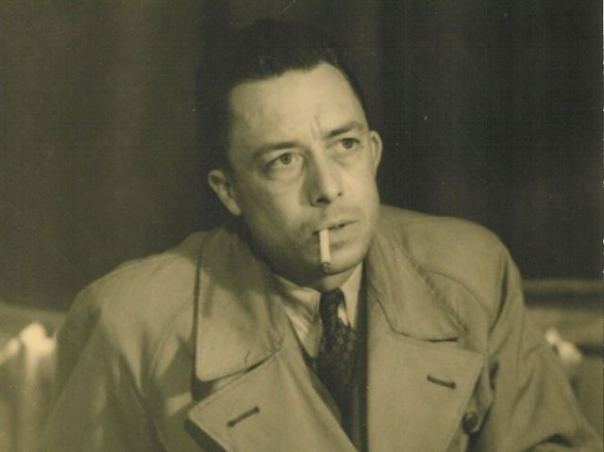
“The French novelist and philosopher Albert Camus was a terrifically good-looking guy whom women fell for helplessly—the Don Draper of existentialism. This may seem a trivial thing to harp on, except that it is almost always the first thing that comes up when people who knew Camus talk about what he was like. When Elizabeth Hawes, whose lovely 2009 book ‘Camus: A Romance’ is essentially the rueful story of her own college-girl crush on his image, asked survivors of the Partisan Review crowd, who met Camus on his one trip to New York, in 1946, what he was like, they said that he reminded them of Bogart. ‘All I can tell you is that Camus was the most attractive man I have ever met,’ William Phillips, the journal’s editor, said, while the thorny Lionel Abel not only compared him to Bogart but kept telling Hawes that Camus’s central trait was…

View original post 353 more words

Three Poems – John Ashbery (1972)

1960s: Days of Rage's avatar1960s: Days of Rage


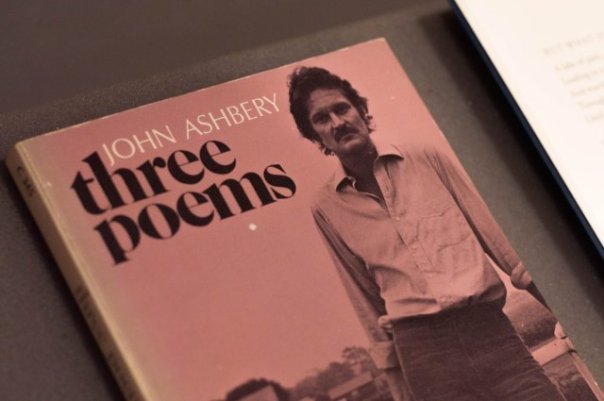
“… (John) Ashbery’s most recent volume, ‘Three Poems,’ restates his commitment to hermetic language in more extreme terms than ever before. The very modesty of the book’s title is a provocation, for these are not poems at all, but meditations couched in a maddeningly elusive prose style. Never, I think, have the simple forms of prose been waylaid so masterfully into statements that defy interpretation. The volume is divided into three sections of varying length, entitled ‘The New Spirit,’ ‘The System’ and ‘The Recital,’ which, we are informed, ought to be read in sequence as a trilogy. The nature of the sequence eludes me, since I can discover little in the way of development or resolution in the over‐all movement of the poems. But this, and all my other attempts at explanation, must be taken quite tentatively, since ‘Three Poems’ has a way of keeping its secrets. The keeping of…

View original post 257 more words

Stacks of Good Books Are Weighty from the Decade That Started With ’80

Dave Astor's avatarDave Astor on Literature

It’s been a while since I focused on a specific decade of literature, so today I’ll discuss…the 1980s.

At first thought, those 10 years don’t seem like an amazing period for fiction, but there were quite a few memorable novels published during that time. Just a coincidence? Maybe. Still, many ’80s authors were directly or indirectly influenced by that decade’s many political and cultural happenings — the conservative reigns of Ronald Reagan and Margaret Thatcher, the seismic changes in the Soviet Union, far-right evangelical involvement in U.S. politics, continued racism and patriarchy (“thanks” in part to those evangelicals), the sick “greed is good” mentality (not just in the ’80s of course), the AIDS pandemic, MTV, the rise of personal computers, etc.

I just finished The Alchemist, a seemingly simple short novel (just 167 pages) that’s actually quite profound. Paulo Coelho’s 1988-published saga of young Santiago’s epic journey probably could…

View original post 627 more words