Wallace Stevens and the New York School Poets

Andrew Epstein's avatarLocus Solus: The New York School of Poets

For a while now, I’ve been trying to make the case here and there that Wallace Stevens’s outsized influence on American avant-garde poetry — including on the poets of the New York School — has often been overlooked, to the detriment of both.

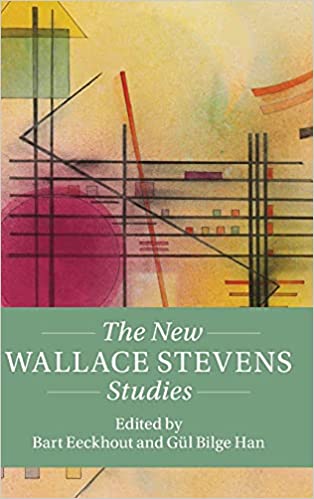
Now, I’ve had the chance to expand on this argument in an essay I contributed to a new collection entitled The New Wallace Stevens Studies, edited by Bart Eeckhout and Gül Bilge Han, which was recently published by Cambridge University Press.

In the piece, I argue that literary history has long downplayed or ignored Stevens’s crucial role in the history of experimental poetics, from Objectivism, to the various movements of the “New American Poetry,” to Language poetry, and beyond. For reasons I discuss in the essay, Stevens has long been cast as a formalist favorite and latter-day Romantic or neo-Symbolist poet, of marginal importance to avant-garde poets…

View original post 287 more words

Facing History Why we love Camus.

1960s: Days of Rage's avatar1960s: Days of Rage


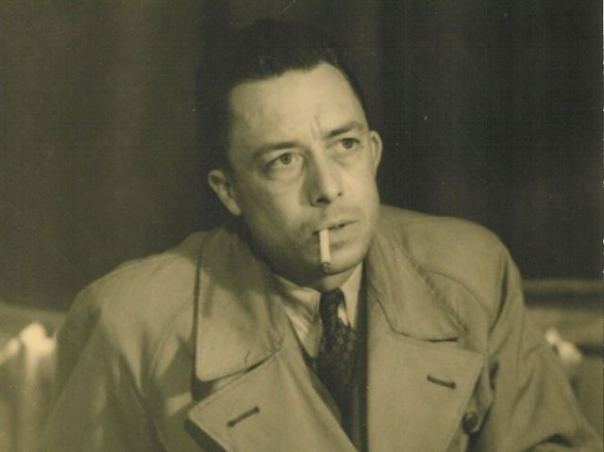
“The French novelist and philosopher Albert Camus was a terrifically good-looking guy whom women fell for helplessly—the Don Draper of existentialism. This may seem a trivial thing to harp on, except that it is almost always the first thing that comes up when people who knew Camus talk about what he was like. When Elizabeth Hawes, whose lovely 2009 book ‘Camus: A Romance’ is essentially the rueful story of her own college-girl crush on his image, asked survivors of the Partisan Review crowd, who met Camus on his one trip to New York, in 1946, what he was like, they said that he reminded them of Bogart. ‘All I can tell you is that Camus was the most attractive man I have ever met,’ William Phillips, the journal’s editor, said, while the thorny Lionel Abel not only compared him to Bogart but kept telling Hawes that Camus’s central trait was…

View original post 353 more words

Three Poems – John Ashbery (1972)

1960s: Days of Rage's avatar1960s: Days of Rage


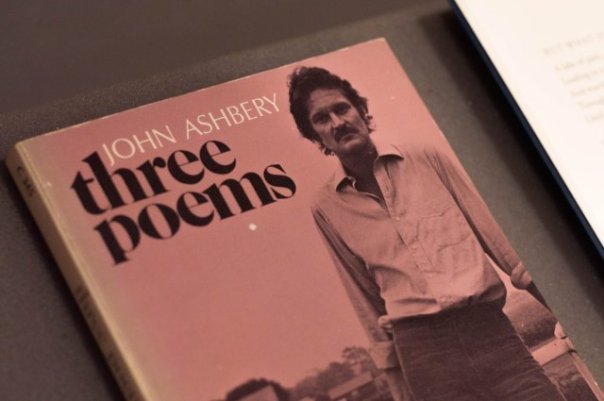
“… (John) Ashbery’s most recent volume, ‘Three Poems,’ restates his commitment to hermetic language in more extreme terms than ever before. The very modesty of the book’s title is a provocation, for these are not poems at all, but meditations couched in a maddeningly elusive prose style. Never, I think, have the simple forms of prose been waylaid so masterfully into statements that defy interpretation. The volume is divided into three sections of varying length, entitled ‘The New Spirit,’ ‘The System’ and ‘The Recital,’ which, we are informed, ought to be read in sequence as a trilogy. The nature of the sequence eludes me, since I can discover little in the way of development or resolution in the over‐all movement of the poems. But this, and all my other attempts at explanation, must be taken quite tentatively, since ‘Three Poems’ has a way of keeping its secrets. The keeping of…

View original post 257 more words

Stacks of Good Books Are Weighty from the Decade That Started With ’80

Dave Astor's avatarDave Astor on Literature

It’s been a while since I focused on a specific decade of literature, so today I’ll discuss…the 1980s.

At first thought, those 10 years don’t seem like an amazing period for fiction, but there were quite a few memorable novels published during that time. Just a coincidence? Maybe. Still, many ’80s authors were directly or indirectly influenced by that decade’s many political and cultural happenings — the conservative reigns of Ronald Reagan and Margaret Thatcher, the seismic changes in the Soviet Union, far-right evangelical involvement in U.S. politics, continued racism and patriarchy (“thanks” in part to those evangelicals), the sick “greed is good” mentality (not just in the ’80s of course), the AIDS pandemic, MTV, the rise of personal computers, etc.

I just finished The Alchemist, a seemingly simple short novel (just 167 pages) that’s actually quite profound. Paulo Coelho’s 1988-published saga of young Santiago’s epic journey probably could…

View original post 627 more words

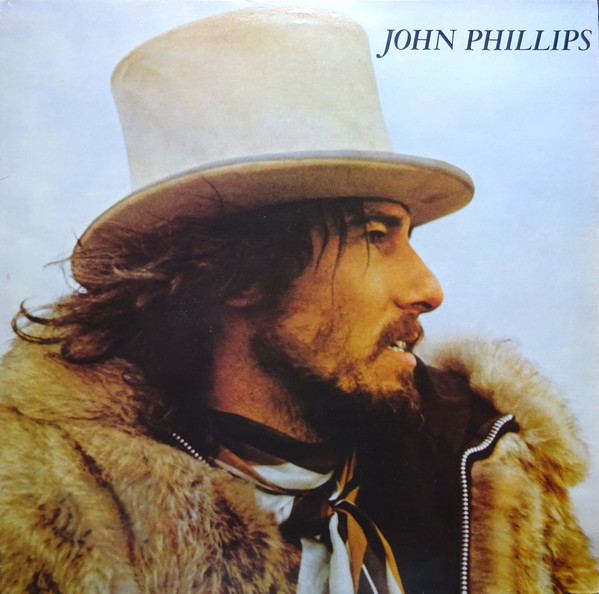
John Phillips – John, The Wolf King Of LA (1969)

1960s: Days of Rage's avatar1960s: Days of Rage


“In 1970, John Phillips, chief songwriter of the recently disbanded The Mamas & the Papas released his first solo album, John, Wolfking of L.A.. The Mamas & the Papas had been a pop juggernaut and, with tracks like ‘California Dreaming’ and other hits, had perpetrated the California-as-Eden idea that was reflected by other acts of the day. But the Mamas were anything but idyllic, torn apart by interband jealously and the tumultuous romantic relationship between John and Michelle Phillips. The stakes where high when Wolfking was released, but despite some high-chart action for ‘Mississippi,’ the album flopped. Sonically, the album treads the ‘Cosmic Americana’ sound Gram Parsons was always going on about, fitting in nicely with the urban-cowboy, soft-rock sounds of The Byrds, American Beauty-era Dead, Crosby, Stills, Nash and Young (together and separately), and Parsons’ own Flying Burrito Brothers. Barroom pianos tinkle drunkenly, the drums maintain a…

View original post 320 more words

The New York School: The First Generation

1960s: Days of Rage's avatar1960s: Days of Rage

Left to right: Arthur Gold, Julia Gruen, Harold Clurman, Bobby Fizdale, John Ashbery, Jane Freilicher, Joe Hazan, and Jane Wilson, Water Mill, New York, 1962. Photograph by John Gruen.

The New York School really began, strangely enough, in Cambridge, Massachusetts, at Harvard University where several of its most famous members were students along with other postwar poets Robert Bly, Robert Creeley, Donald Hall, Adrienne Rich, and Richard Wilbur. It was at Harvard that Kenneth Koch met John Ashbery and that John Ashbery published Frank O’Hara, later meeting him in the flesh at an opening of a show of Edward Gorey’s watercolors (Gorey was Ashbery’s roommate). All three eventually ended up in New York City, where they became involved with each other and with a number of painters, including Jane Freilicher, Nell Blaine, Larry Rivers, and Fairfield Porter. Everyone, it seems, wrote for Art News or worked at the…

View original post 319 more words

Yvonne Rainer – “Film About A Woman Who…” (1974)

1960s: Days of Rage's avatar1960s: Days of Rage


From Erin Brannigan: Dancer, choreographer, performer, filmmaker and writer Yvonne Rainer, who began choreographing in 1961 and made her first film in 1967, is a key figure in the story of the New York avant-garde in terms of both her writing and practice. (2) Rainer provided a commentary on the influences that preceded her own aesthetic objectives and articulated her own project through practice and explicatory discourse, establishing her position as a key player within the New York avant-garde from the early 1960s through to the mid-1990s. During this period she produced twelve films, including silent short works for multimedia performances (which she calls ‘filmed choreographic exercises’) (3) as well as features. According to Rainer, her fascination with dance and film emerged simultaneously when she moved on from acting at 25 (p. 51). She is certainly a choreographer who had as many film reference points as choreographic, evidenced in…

View original post 288 more words

The Dark Places

Nan's avatarNan's Notebook

darkness

I’m sure I don’t need to repeat myself, but I’m going to anyway … I’m a fan of Heather Cox Richardson. 😊 I read every newsletter she writes … and recently started reading some of the comments as well.

Awhile back, I posted the comments of an individual who had written what I was thinking … and today, I found another person who expressed my thoughts. And maybe yours as well. In any case, for the benefit of those who might have missed it, following is a portion of Eric O’Donnell’s remarks in response to Heather’s most recent newsletter where she talks about recent and upcoming elections.

Trump touched the dark places in tens of millions of American souls. He awoke and aroused those who hate and fear cities, hated a black President, hated the smug entitlement of Hillary Clinton, hated being preached to about climate, hated the speed with…

View original post 297 more words

Making It: Pick up a spot welder and join the revolution.

1960s: Days of Rage's avatar1960s: Days of Rage


Enthusiasts of the maker movement foresee a third industrial revolution.

January 5, 2014: “In January of 1903, the small Boston magazine Handicraft ran an essay by the Harvard professor Denman W. Ross, who argued that the American Arts and Crafts movement was in deep crisis. The movement was concerned with promoting good taste and self-fulfillment through the creation and the appreciation of beautiful objects; its more radical wing also sought to advance worker autonomy. The problem was that no one in America seemed to need its products. The solution, according to Ross, was to provide technical education to the critics and the consumers of art alike. This would stimulate demand for high-quality objects and encourage more workers to take up craftsmanship. The cause of the Arts and Crafts movement would be achieved, he maintained, only ‘when the philosopher goes to work and the working man becomes a philosopher.’ … Although…

View original post 237 more words

Isaac Hayes – Shaft (1971)

1960s: Days of Rage's avatar1960s: Days of Rage


“When the latest sequel/reboot of Shaft hit screens this past June, one essential element was missing: the music of Isaac Hayes.  While the late composer-artist’s seminal ‘Theme from Shaft’ was referenced in Christopher Lennertz’s score, Hayes’ commanding voice was nowhere to be found – some said to the detriment of the film.  While the new Shaft underperformed in theatres, it had at least one happy byproduct as Craft Recordings revisited the classic original 1971 film soundtrack with a new deluxe edition.  This 2-CD iteration fused Hayes’ original album of the score (a mainstay on both CD and vinyl) with the original MGM soundtrack as actually heard in the film, previously released only as part of a 2008 limited-edition box set from the defunct Film Score Monthly label.  Shaft: Deluxe Edition offers the best of both worlds, and is a compelling addition to any soundtrack or soul library. The original Stax…

View original post 332 more words