Kimberlé Williams Crenshaw: Dr. King Understood “Critical Race Theory” Before It Had a Name

dianeravitch's avatarDiane Ravitch's blog

Kimberlé Williams Crenshaw is a professor of law at Columbia and UCLA and one of the leading figures in the field of critical race studies. She wrote the following article for the Los Angeles Times, where she demonstrates that the new laws banning the study of systemic racism simultaneously ban Dr. King’s views of America’s racial problems, which were not solved by passing civil rights laws. The furor over CRT shows that racism remains a powerful force today. Critics of CRT maintain illogically that teaching the history of racism is racist, that uncomfortable facts must not be taught at all, and that history must be scrubbed clean of divisive realities. As Crenshaw points out, King would have fought the current effort to cleanse U.S. history; his own words and works cannot be taught.

For the first time, we’re observing the Rev. Martin Luther King Jr. holiday under new laws in…

View original post 2,010 more words

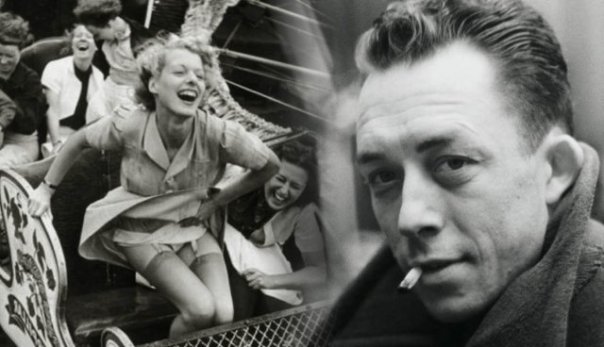
Life is Absurd! Exploring Albert Camus’ Rebellious Philosophy

1960s: Days of Rage's avatar1960s: Days of Rage


“What is the absurd? For Algerian French existential writer Albert Camus, our desire for meaning in a meaningless universe arises in the absurd. In this article, we explore Camus’ philosophy of the absurd through a re-envisioned account of the Greek myth of Sisyphus, as well as his ideas about rebellion and what it means to be an existential hero. Alternative accounts are discussed to inspire you to form your own philosophy of the absurd. … Taking inspiration from existential writers and philosophers of the likes of Friedrich Nietzsche, Albert Camus’ writing explored existential themes of disillusionment and alienation in a war-torn period in which people felt abandoned (by God) and without meaning. His major contribution to philosophy is his views on ‘the absurd,’ a nihilistic outlook on life which he explored in his essays, novels and plays. To understand what ‘the absurd’ is, we must first look at what…

View original post 241 more words

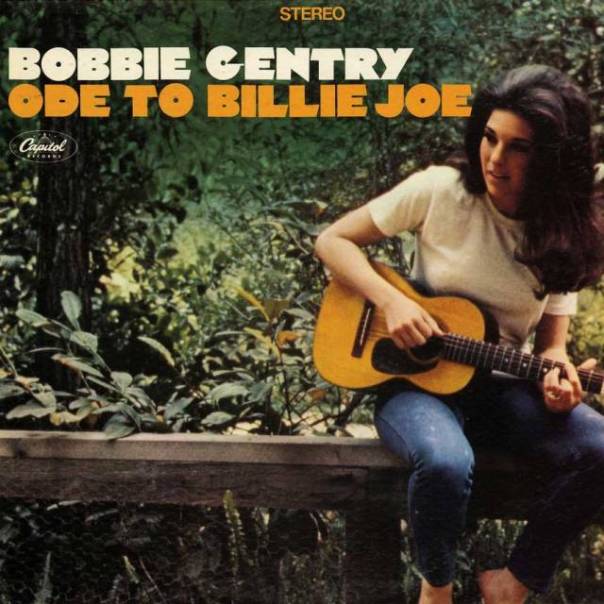
Ode to Billie Joe – Bobbie Gentry (1967)

1960s: Days of Rage's avatar1960s: Days of Rage


“Money, Mississippi, has a population of about 100. The settlement is famous for two things. One is real: in 1955, a 14-year-old boy, Emmett Till, was lynched, a murder referred to in songs by The Staple Singers and Bob Dylan. The other is fictional: Bobbie Gentry’s ‘Ode to Billie Joe’. An atmospheric production that mixed country music with funky R&B, ‘Ode to Billie Joe’ is an enigma. Its storyline is clear enough; some of the details are not. Billie Joe McAllister has jumped off the Tallahatchie Bridge in Money into the river below and, over dinner, a family offer opinions about their deceased acquaintance. Gentry sings of apple pie, cutting cotton, a prank involving frogs and, eventually, the death of the family’s father from a virus. Gradually the closeness of the song’s narrator to Billie Joe becomes apparent; she and Billie had been seen throwing something off the bridge on…

View original post 180 more words

Driving by the Lake With John Ashbery

1960s: Days of Rage's avatar1960s: Days of Rage


“It was convenient for John Ashbery, and dumb luck for me, that I was living in Rochester and could pick him up at the airport whenever he arrived from New York to visit his mother. Sometimes, because he didn’t like to fly, he’d arrive at the bus station instead; but I could meet him there too. It was an arrangement from which we both might profit, he explained, not profit in the American sense but in a way best expressed if you said it in French, profiter de. And thus we began my unexpected education, a kind of improvised fellowship with visiting tutor and bonus bits of wisdom delivered in French. John, as most anyone who follows poetry will know by now, was born in Rochester and raised on his father’s fruit farm in the next county to the east; though he spent a lot of time, as much…

View original post 253 more words

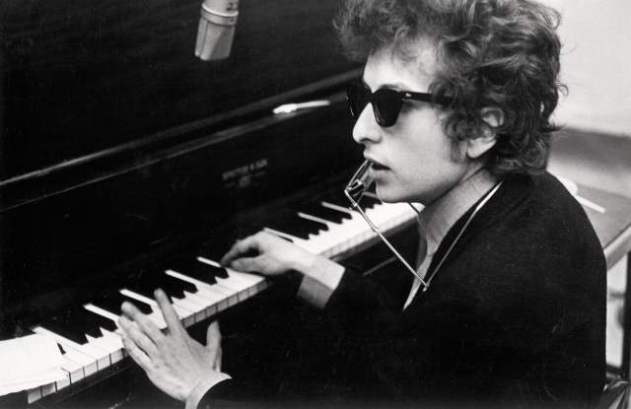
Bob Dylan: Brecht of the Juke Box, Poet of the Electric Guitar by Jack Newfield (January 1967)

1960s: Days of Rage's avatar1960s: Days of Rage


“Norman Morrison burned himself to death to protest the Viet­nam war, and when reporters visited his spare room they saw quotes from Bob Dylan scrawled on the peeling walls. Students at the University of California have organized a non-credit seminar on Dylan’s poetry. Esquire Magazine quotes Stokely Carmich­ael singing to himself — not an Otis Redding blues — but Dylan. In a recent peace demonstration a teenybopper marched with a home-made placard that bore the crayoned motto, ‘The hypnotic splattered mist is slowly lifting,’ a line from Dylan’s ‘The Chimes or Freedom.’  W. H. Auden, Howard Nemerov, and Norman Podhoretz say they have never heard of Dylan. Critic and poet John Ciardi says Dylan knows nothing about poetry. Even Norman Mailer, existentialist fight manager and white hope of the over-30 generation, says, ‘If Dylan is a poet, so is Cassius Clay.’ But 25-year-old Dylan, the Brecht of the juke box…

View original post 222 more words

Edward Albee’s Vortex of Violence (January 18, 1964)

1960s: Days of Rage's avatar1960s: Days of Rage

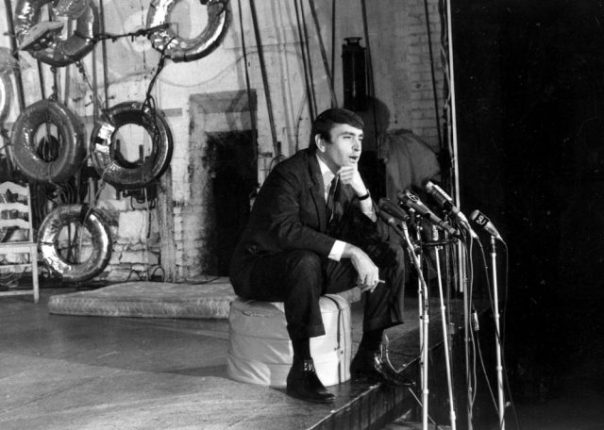
In this May 2, 1967, file photo, playwright Edward Albee, winner of the 1967 Pulitzer Prize for drama, for his play “A Delicate Balance,” talks to reporters during a news conference at the Cherry Lane Theater in the Greenwich Village section of New York.

“… The big woman greases her arms with hog fat. The man sullenly does the same. A lame dwarf lurches from one to the other like an evil Cupid, insane with glee. Townspeople whisper excitedly. When the woman and the man have finished readying themselves, they face each other, crouch, and spring. Their fight is brutal, and for a time it is even. Then the woman’s greater strength begins to tell. She has nearly strangled the man, when the dwarf shrieks and jumps on her back. The man recovers, clubs the woman to the ground, then gouges out her eyes. The Ballad of the Sad Café

View original post 310 more words

Virginia: Youngkin Will Get More Charter Schools by Gutting Local Control

dianeravitch's avatarDiane Ravitch's blog

Remember when the Republican Party demanded local control of schools? Insisted on local control?

No longer.

In its quest for school privatization, the GOP has turned firmly against local control of schools. The local school board is the biggest obstacle to privatization by charters, so Republican governors like Virginia’s Glenn Youngkin create new state entities to bypass local school boards. It is hard to believe that Republicans were once staunch advocates for local control, but that was when the local school boards opposed desegregation.

Youngkin is proposing legislation that will enable “regional” boards, appointed by the State Board of Education (appointed by Youngkin), to authorize new charter schools. Local control is dead.

The Youngkin-backed charter school bill would let the state Board of Education create “regional charter school divisions” made up of two or three localities. Each of the localities would have to enroll at least 3,000 students and…

View original post 173 more words

Ronnie Spector: You Can’t Put Your Arms Around a Memory

1960s: Days of Rage's avatar1960s: Days of Rage

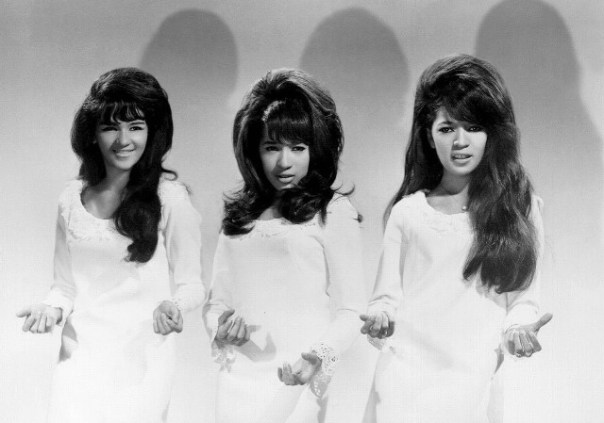
Publicity photo of the Ronettes—Nedra Talley, Veronica Bennett (Ronnie Spector) and Estelle Bennett
“On Wednesday, in the hours after Ronnie Spector’s family announced her passing from cancer at seventy-eight, I played, on loop, her cover of the Johnny Thunders punk anthem ‘You Can’t Put Your Arms Around a Memory.’ Recorded for The Last of the Rock Stars, her 2006 comeback album, the song is also a dirge for Thunders, who died in 1991; he had been one of Ronnie’s crucial supporters in the period after she left her abusive ex-husband, the megalomaniac, murderer, and iconoclastic music producer Phil Spector. On YouTube, you can watch her perform a live version of the song from 2018: after showing footage from an archival interview the Ronettes did with Dick Clark sometime in the sixties, she comes out, to applause, and says, ‘Sorry, I was backstage crying.’ Dabbing her eyes, she mourns…

View original post 278 more words

When Martin Luther King Came to Harlem

1960s: Days of Rage's avatar1960s: Days of Rage


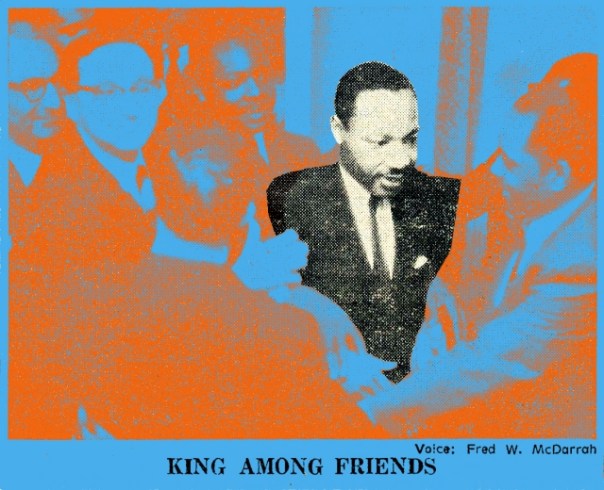
“Less than a year before his assassination, the Reverend Martin Luther King Jr. came to Harlem. In the June 22, 1967, Village Voice, contributor Marlene Nadle observed the crowd anxiously awaiting the Baptist minister’s arrival: ‘Using programs folded accordion style instead of pastel fans with pictures of Christ, they managed to turn the chandeliered ballroom of the Hotel Roosevelt into a Baptist Church.’ At times during her reporting on the event, Nadle comes across as jaded, as in her description of when the audience initially glimpses King in a movie being shown by the hospital workers’ union, which had arranged the event: ‘The Lord appeared for the first time — on film. There was a great burst of applause.’ But when King arrives in the flesh and delivers his speech, Nadle acknowledges why the crowd is so rapt: ‘What he said was not important. It was the man who…

View original post 239 more words