
 February 1969: Pete O’Neal talks about the formation of the Kansas City chapter of the Black Panther Party.
“Charlotte Hill O’Neal is known by several names. Residents of the Arusha region of northern Tanzania, where she has lived for decades, call her Mama C as Charlotte is difficult for Tanzanians to pronounce. Others call her Mama Africa because of the scarification on her cheeks and the ring piercing her nose, and because she encourages the local youth to be proud of their culture and heritage. Her Orisha spiritual name is Osotunde Fasuyi. She was initiated several years ago as a priestess in the Yoruba belief system, which originated about 10 000 years ago in present-day Nigeria. Enslaved Africans brought it to the Americas and the Caribbean, where it syncretised with other belief systems and is now practised throughout these areas. Charlotte is bedecked in jewellery and beads. Some items represent…
View original post 261 more words
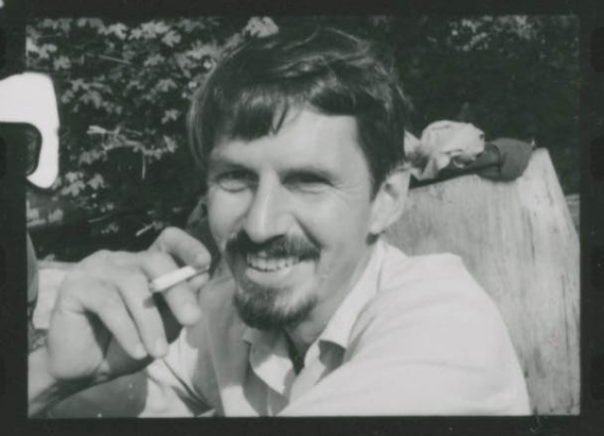

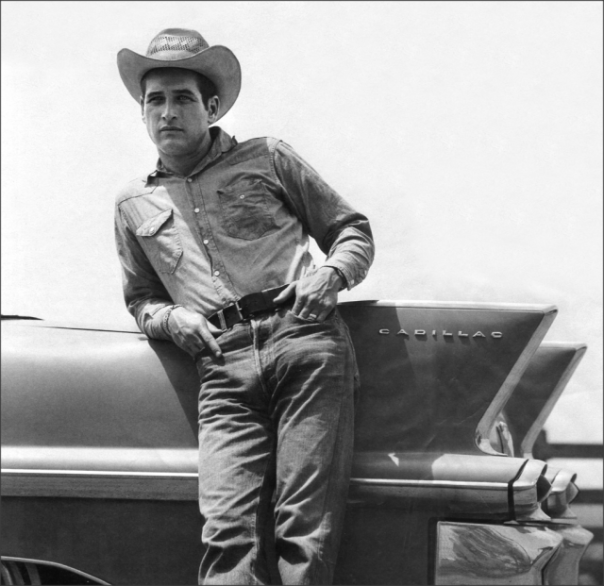
 Left to right: Claude Simon, Alain Robbe-Grillet, Robert Pinget, publisher Jérôme Lindon, Samuel Beckett, Nathalie Sarraute
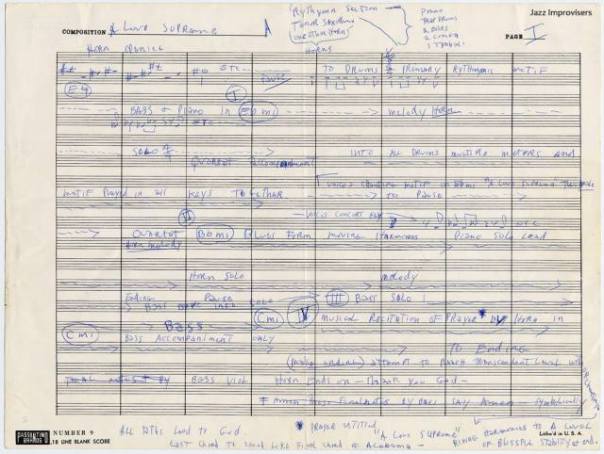 John Coltrane Handwritten – A Love Supreme (1965)
 Taxicab driver at the wheel with two passengers, N.Y.C. 1956
 In this Oct. 21, 1969, photo is author Jack Kerouac who only lived in St. Petersburg, Fla., a handful of years before he died there in 1969. But the Sunshine City still claims him as its own. One hundred years ago on March 12, Kerouac was born in Lowell, Mass.
 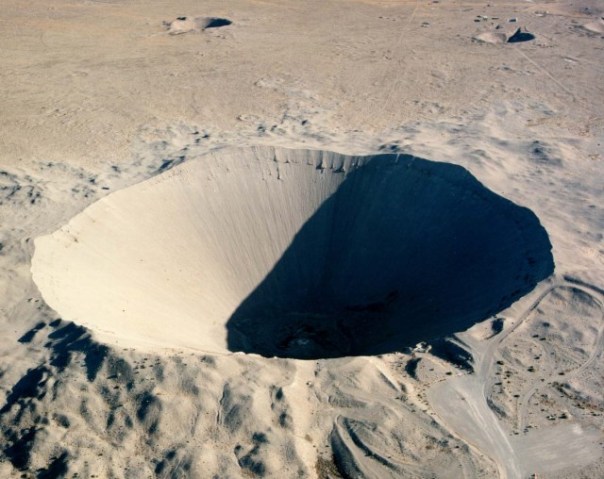 The 1962 “
 dean ramser