Category Archives: Uncategorized

America’s Tipping Point

wordcloud9's avatarFlowers For Socrates

by IRENE FOWLER, Contributor

America is teetering on the brink, and which side of history it ends up on, will have lasting implications for the global community at-large. The foundations of America are mired in harsh and callous controversy; an inescapable legacy which has dogged and peppered every defining and accompanying narrative of the nation.


Against this backdrop is the astronomical human progress which has been achieved, and has come to represent the flowering of human potential. The apotheosis of America from the terra firma of fellow earthlings to a bestowed characterization, as “God’s own country” is still current. The moniker conjures notions of astronomical power, limitless resources, grandeur, invincibility, dominance and immortality.

Having the imprimatur of ‘America’ affixed to a person, place or thing, is a universal coin of the realm and mark of peculiarity.

View original post 355 more words

The Moment Sylvia Plath Found Her Genius

1960s: Days of Rage's avatar1960s: Days of Rage


“The voluminous critical conversation about Sylvia Plath has tended to orbit a few topics: her suicide, of course, and the ways mental illness and madness perhaps predicted her death and marked her poetry; the blazing ferocity of her posthumous masterpiece Ariel; the co-opting of images and metaphors (from the Holocaust, for instance) in those late poems; and the overall relationship of her biography to her supposedly confessional poems, especially when it comes to Ted Hughes, his affair with Assia Wevill, and his curation of Plath’s legacy after her death. These are all compelling topics, and they’ve had a deep and lasting effect on how we read Plath’s poetry. But I prefer to think about Plath’s amazing poems and the creative surges that enabled her to write them. In Plath we have a unique example of rapid, surging development of a poet’s art. In only seven years—from 1956, when the…

View original post 204 more words

On The Road: Jack Kerouac and the Beat Generation’s Style

1960s: Days of Rage's avatar1960s: Days of Rage


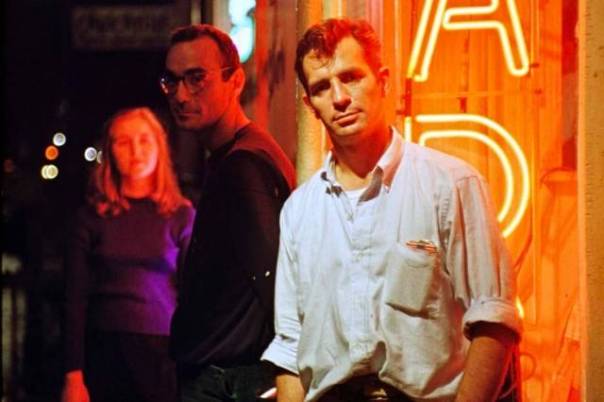
“Take someone from 70 years ago, drop them on a city street today. Would their style fit in seamlessly with those surrounding them on the sidewalk? Styles change. The best dressed style icons of almost any era—no matter how respected—wouldn’t fit in to our particular moment without raising eyebrows. However, a small few manage to weather the twists and turns of style history, crafting a personal style that manages to remain relevant across time. For someone like Jack Kerouac, his scrappy mid-’50s style manages to resonate all the way into 2018. Esquire has called Kerouac’s fashion ‘casually elegant.’ GQreferred to the man as the ‘originator of blue collar cool’ and claimed he was one of the first ‘rejecting the notion that class was synonymous with value.’ The Beats presaged the ‘urban rustic’ moment that would happen early in the 21st century that resulted in the resurgence of numerous American…

View original post 175 more words

Nat Hentoff (June 10, 1925 – January 7, 2017)

1960s: Days of Rage's avatar1960s: Days of Rage

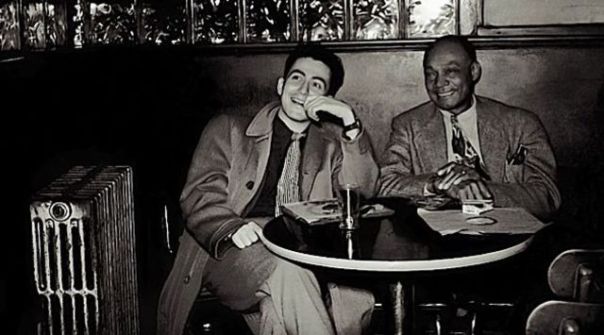
Nat Hentoff with the clarinetist Edmond Hall in 1948 at the Savoy, a club in Boston.

“Nat Hentoff, an author, journalist, jazz critic and civil libertarian who called himself a troublemaker and proved it with a shelf of books and a mountain of essays on free speech, wayward politics, elegant riffs and the sweet harmonies of the Constitution, died on Saturday at his home in Manhattan. He was 91. His son Nicholas said he was surrounded by family members and listening to Billie Holiday when he died. Mr. Hentoff wrote for The Village Voice for 50 years and also contributed to The New Yorker, The Washington Post, Down Beat magazine and dozens of other publications. He wrote more than 35 books — novels, volumes for young adults and nonfiction works on civil liberties, education and other subjects. The Hentoff bibliotheca reads almost like an anthology: works by a jazz aficionado…

View original post 216 more words

Samizdat Is Russia’ Underground Press

1960s: Days of Rage's avatar1960s: Days of Rage

Samizdat copies

“Censorship existed even be fore literature, say the Russians. And, we may add, censorship being older, literature has to be craftier. Hence, the new and remarkably viable underground press in the Soviet Union called samizdat. The word is a play on Gosizdat, which is a telescoping of Gosudarstvennoye Izdatelstvo, the name of the monopoly‐wielding State Publishing House. The sampart of the new word means ‘self.’ The whole samizdat—translates as: ‘We publish ourselves’—that is, not the state, but we, the people. Unlike the underground of Czarist times, today’s samizdat has no print ing presses (with rare exceptions): The K.G.B., the secret police, is too efficient. It is the typewriter, each page produced with four to eight carbon copies, that does the job. By the thousands and tens of thousands of frail, smudged onionskin sheets, samizdat spreads across the land a mass of protests and petitions, secret court minutes, Alexander…

View original post 250 more words

Gandalf

1960s: Days of Rage's avatar1960s: Days of Rage


“Gandalf is one of many protagonist in J. R. R. Tolkien‘s novels The Hobbit and The Lord of the Rings. He is a wizard, one of the Istari order, and the leader of the Fellowship of the Ring. Tolkien took the name ‘Gandalf’ from the Old Norse‘Catalogue of Dwarves’ (Dvergatal) in the Völuspá. As a wizard and the bearer of one of the Three Rings, Gandalf has great power, but works mostly by encouraging and persuading. He sets out as Gandalf the Grey, possessing great knowledge and travelling continually. Gandalf is focused on the mission to counter the Dark Lord Sauron by destroying the One Ring. He is associated with fire; his ring of power is Narya, the Ring of Fire. As such, he delights in fireworks to entertain the hobbits of the Shire, while in great…

View original post 245 more words

The Guggenheim

1960s: Days of Rage's avatar1960s: Days of Rage

The Guggenheim Museum, designed by Frank Lloyd Wright (1867 – 1969), who developed the concept of ‘organic architecture’, that a building should develop out of its surroundings. The Guggenheim’s concrete rings allow light into the building to display the exhibits to their full potential.
“The Solomon R. Guggenheim Museum, often referred to as The Guggenheim, is an art museum at 1071 Fifth Avenue on the corner of East 89th Street on the Upper East Side of Manhattan in New York City. It is the permanent home of a continuously expanding collection of Impressionist, Post-Impressionist, early Modern, and contemporary art and also features special exhibitions throughout the year. The museum was established by the Solomon R. Guggenheim Foundation in 1939 as the Museum of Non-Objective Painting, under the guidance of its first director, Hilla von Rebay. The museum adopted its current name in 1952, three…

View original post 217 more words

#13 – “I Fought the Law” – Bobby Fuller Four (1966), Palisades Park – Freddy Cannon (1962), Del Shannon – Runaway (1961), etc.

1960s: Days of Rage's avatar1960s: Days of Rage


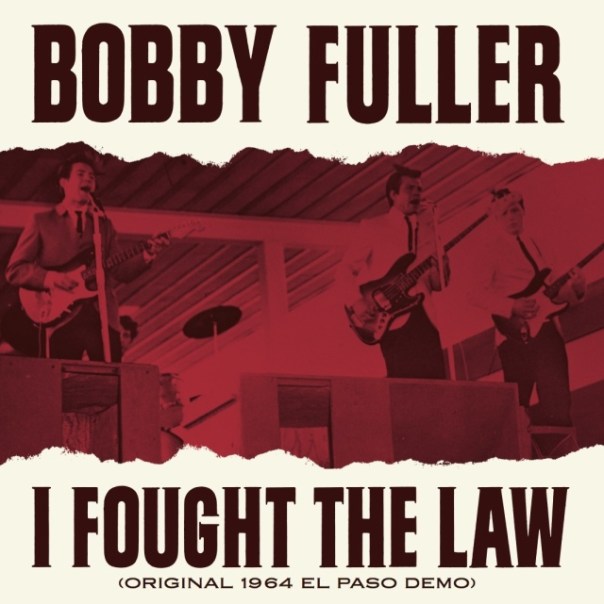
“The song ‘I Fought the Law’ was written in 1959 by singer-songwriter Sonny Curtis, who was with The Crickets. (Curtis played the guitar with The Crickets after Buddy Holly’s death). The song was on their 1960 album In Style with the Crickets and was released as a single, but it did not chart successfully. Others covered it, but the version by the Sixties rock music band Bobby Fuller Four was released in December of 1965 and in 1966 it went to #9 on the U.S. Billboard Hot 100 and #11 in Canada. They also released it on their 1966 album titled I Fought the Law. There have numerous covers of the song, including versions by The Clash, Hank Williams, Jr., Dead Kennedy’s, Sam Neely, Nitty Gritty Dirt Band, Dave Courtney, Mike Ness, John Cougar Mellencamp, Johnny Cash, Bruce Springsteen, Roy Orbison, Tom Petty, Green Day, Alvin and the Chipmunks…

View original post 212 more words

TCS Black Poetry Day – “This Freedom … This Beautiful and Terrible Thing”

wordcloud9's avatarFlowers For Socrates

Good Morning!

______________________________

Welcome toTheCoffeeShop, just for you early risers
on Monday mornings.This is an Open Thread forum,
so if you have an off-topic opinion burning a hole in
your brainpan, feel free to add a comment.

______________________________

“You’re allowed to miss the people who were bullets to you,
but you’re not allowed to let them shoot you again.”
– Reyna Biddy, spoken word poet, author of We Find Our Way

“What does it mean to be a poet in a country where more money
per minute is spent on armaments, when we are supposed to be at
peace, than is spent to feed the starving children …When the price

of one stealth bomber, already outmoded, is more than the entire
federal appropriation for all the arts in this country? What does it

mean that a Black, lesbian, feminist, warrior, poet, mother is…

View original post 2,984 more words