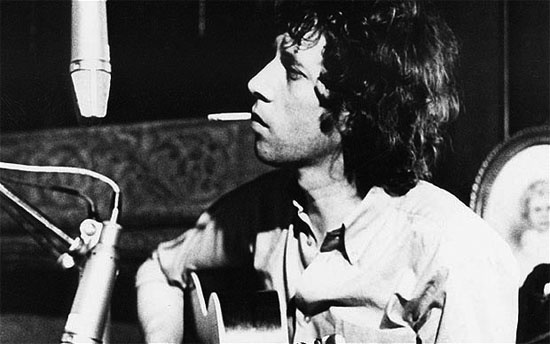
“Bowles holds a unique place in American literature. As an exile, he shared with 1920’s expatriate novelist Gertrude Stein, among others, a distanced perspective on his native culture. Through his translations, he earned an international reputation as an author with a North African sensibility. His fiction reflects a world akin to that written about by existentialists Jean-Paul Sartre or Albert Camus, and indeed he has been described as America’s foremost existentialist writer, a label more likely to restrict him to a time period than to characterize his fiction accurately. Although his nihilism does strike one as a bit pretentious, it also has a modern application, reflecting as it does a dark vision of the world as contemporary as the times demand. Bowles became a guru of sorts to the Beat generation, although Bowles’s attraction for them was as much for his writings about drugs as for his generally pessimistic…
View original post 199 more words
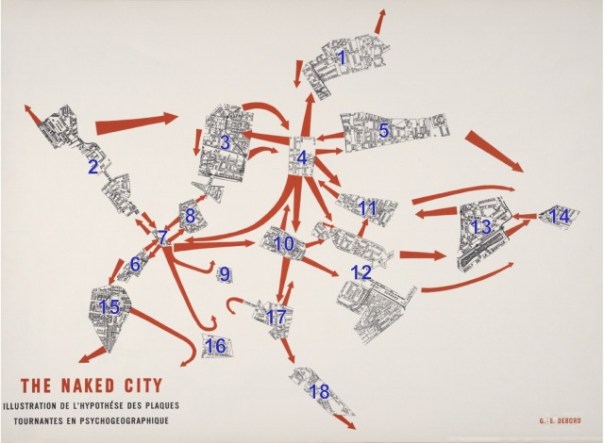 Guy Debord’s “Naked City”, map of Paris
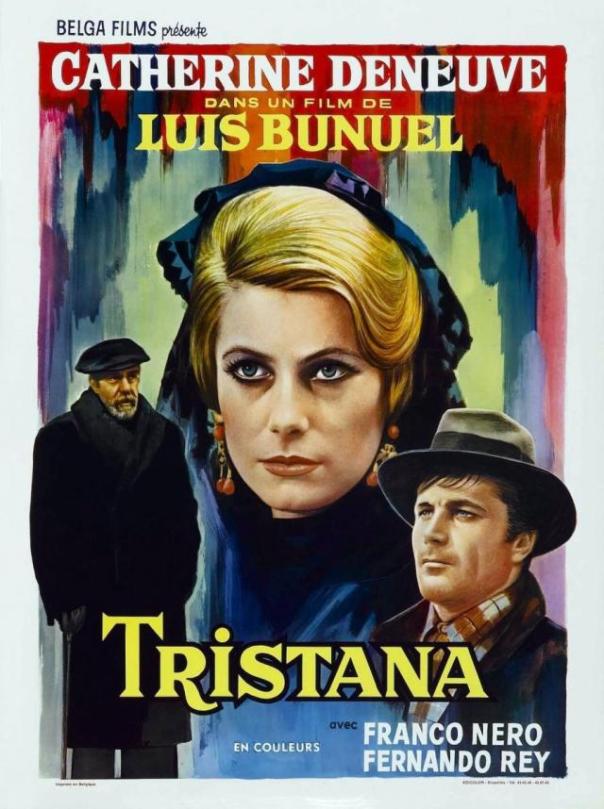 “The journal entry above, dated October 4, 1969, was written during the second week of shooting Tristana (1970), Catherine Deneuve’s second—and final—collaboration with Luis Buñuel after the enormous success of Belle de Jour (1967). Abounding in bizarre detail, the jotting succinctly captures Tristana’s impeccable balance of precision and perversion. As in Belle de Jour—in which Deneuve’s character, Séverine, a YSL-clad haute bourgeoise, finds erotic liberation through byzantine psychosexual fantasies and part-time work at a boutique bordello, where she is christened with the nom de pute of the title—Tristana hinges on the defilement of its eponymous character. When the film opens, Tristana is all in black, still in mourning for her recently deceased mother. The innocent, timid, orphaned teenager becomes the ward of Don Lope (Buñuel regular Fernando Rey), a lecherous, hypocritical, overweening Manchegan aristocrat who wastes no time in seducing her. ‘I’m your father and your husband,’ the…