All posts by Dr. Dean Albert Ramser

Unknown's avatar

About Dr. Dean Albert Ramser

Slava Ukraine! Supporting student success in Ukraine. Retired educator (English / Education: GED2EdD; "Ми будемо поруч один з одним як члени людства в найкращому сенсі цього слова". (Горан Перссон) Слава Україна 🇺🇦 "We will be there for one another as fellow members of humanity, in the finest sense of the word." (Goran Persson) https://cal.berkeley.edu/DeanRamser

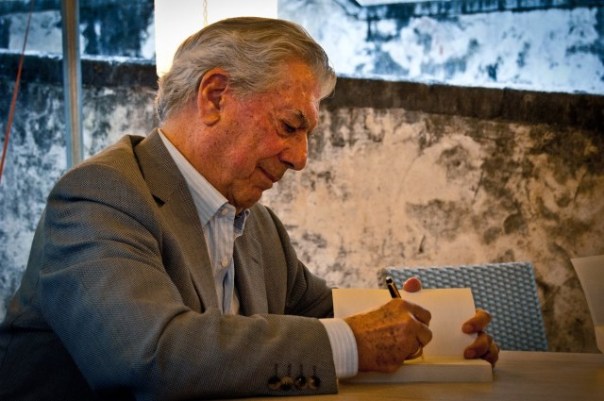
Mario Vargas Llosa: Fiction and hyper-reality

1960s: Days of Rage's avatar1960s: Days of Rage


“When Mario Vargas Llosa, the precocious star of the 1960s ‘boom’ in Latin American fiction, ran for president in 1990 in his native Peru, many of his most avid readers prayed he would lose. As his friend, the Cuban writer Guillermo Cabrera Infante, observed: ‘Peru’s uncertain gain would be literature’s loss. Literature is eternity, politics mere history.’  That may have been scant consolation to the vanquished Vargas Llosa when the dark-horse victor, Alberto Fujimori, seized dictatorial powers in 1992 and fell only in 2000 in one of the most bizarre corruption scandals in Latin American history. But for the nearly man, who maintains that he lost the election largely for telling the truth, his candidacy was a ‘terrible mistake’ which he does not regret. ‘It was a very instructive experience, though not pleasant,’ he smiles stiffly. ‘I learned a lot about Peru, about politics and about myself: I learned…

View original post 170 more words
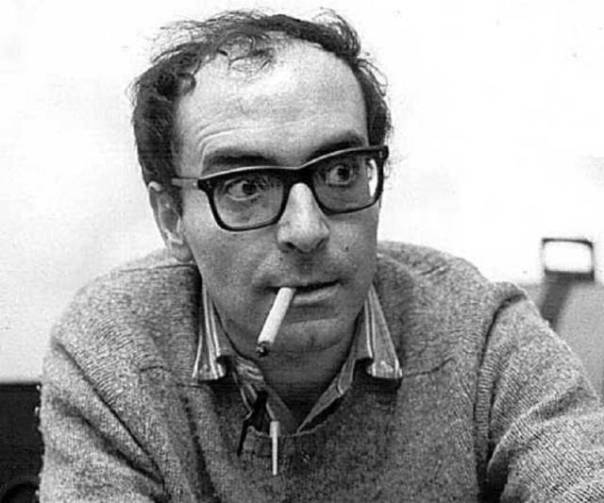
Jean-Luc Godard: His Life to Live

1960s: Days of Rage's avatar1960s: Days of Rage


“In the October 1950 Issue of La Gazette du cinema, a young Jean-Luc Godard, writing pseudonymously, penned a sentence that serves, for biographer Richard Brody, as a skeleton key to the legendary director’s often-inscrutable inner workings: ‘At the cinema, we do not think, we are thought.’ Brody, a film critic and editor at the New Yorker, uses this key throughout his rigorous yet readable biographical study, as dauntingly massive as it is helpfully clarifying, to unlock the intensely personal and political influences that shaped the work of an artist as pivotal to the evolution of his chosen medium as Picasso and Bob Dylan were to theirs. Like Picasso, Godard is an artist of many phases, each with enough revolutionary singularity to have sustained the reputation of any other director; like Dylan, he was a meteoric phenomenon of the 1960s who suffered a motorcycle accident and retreated to domestic…

View original post 171 more words

Fiona Hill Assesses Putin’s Plans in Ukraine

dianeravitch's avatarDiane Ravitch's blog

Fiona Hill has studied the words and actions of Vladimir Putin for years as a Russia expert on the National Security Council. Since Trump fired her, she has been at the Brookings Institurion and is free to speak in public.

I think you will find this interview in Foreign Policy interesting.

She thinks Putin is playing mind games with the West.

What a liar he is. He just signed a “historic” deal with Ukraine to allow Ukrainian wheat to reach global markets and ease world hunger. One day later, Russian missiles struck the port of Odessa, where the grain was supposed to be shipped out.

View original post

Meet ‘The Afronauts’: An Introduction to Zambia’s Forgotten 1960s Space Program

1960s: Days of Rage's avatar1960s: Days of Rage


“Broadly speaking, the ‘Space Race’ of the 1950s and 60s involved two major players, the United States and the Soviet Union. But there were also minor players: take, for instance, the Zambian Space Program, founded and administered by just one man. A Time magazine article published in November 1964 — when the Republic of Zambia was one week old — described Edward Mukuka Nkoloso as a ‘grade-school science teacher and the director of Zambia’s National Academy of Science, Space Research and Philosophy.’ Nkoloso had a plan ‘to beat the U.S. and the Soviet Union to the moon. Already Nkoloso is training twelve Zambian astronauts, including a 16-year-old girl, by spinning them around a tree in an oil drum and teaching them to walk on their hands, the only way humans can walk on the moon.’ Nkoloso and his Quixotic space program seem to have drawn as much attention as…

View original post 206 more words

Husbands – John Cassavetes (1970)

Great film! Great acting! Great directing!

1960s: Days of Rage's avatar1960s: Days of Rage


“In John Cassavetes’s Husbands, the director, Ben Gazzara, and Peter Falk play Gus, Harry, and Archie, three middle-aged, middle-class suburbanites who come together at the funeral of their close mutual friend Stuart, and, united in grief, commence drinking together. And then . . . they keep drinking. When the sun has risen, they careen around New York avoiding their families and careers, and when responsibilities threaten to catch up to them, they hop a flight to London so that their full focus can remain on the only thing that matters: one another. The longer the movie goes on—and it seems to be composed of small eternities—the more it hurts. And like all the best of Cassavetes’s work, it feels as if every frame hums with astonishing life. No image or sound is ever employed just to convey information. Always, overwhelmingly, feeling. Posthumously canonized as the patron saint of American independent…

View original post 181 more words

A Black Panther love story

1960s: Days of Rage's avatar1960s: Days of Rage

February 1969: Pete O’Neal talks about the formation of the Kansas City chapter of the Black Panther Party.
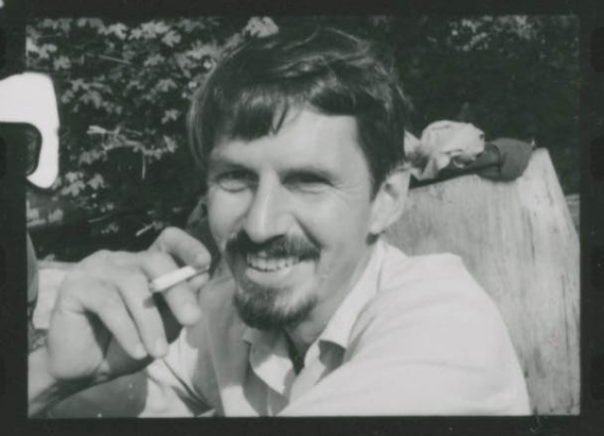
“Charlotte Hill O’Neal is known by several names. Residents of the Arusha region of northern Tanzania, where she has lived for decades, call her Mama C as Charlotte is difficult for Tanzanians to pronounce. Others call her Mama Africa because of the scarification on her cheeks and the ring piercing her nose, and because she encourages the local youth to be proud of their culture and heritage. Her Orisha spiritual name is Osotunde Fasuyi. She was initiated several years ago as a priestess in the Yoruba belief system, which originated about 10 000 years ago in present-day Nigeria. Enslaved Africans brought it to the Americas and the Caribbean, where it syncretised with other belief systems and is now practised throughout these areas. Charlotte is bedecked in jewellery and beads. Some items represent…

View original post 261 more words

Robert Creeley – “I Know a Man”

1960s: Days of Rage's avatar1960s: Days of Rage


“Robert Creeley’s ‘I Know a Man’ is in many ways a signature poem. Few poems we choose to discuss on PoemTalk are such. Many are downright unrepresentative. This one might indeed be unrepresentative but if a person knows just one Creeley poem this is probably it. It’s been much written about. InThe San Francisco RenaissanceMichael Davidson explores the ‘Beat ethos’ with a detailed reading of ‘I Know a Man.’ Similarly, PoemTalkers Randall Couch, Jessica Lowenthal and Bob Perelman find beat here — but also its counterargument, and/or a rejoinder to its dark depth and to the beat propensity for driving nowhere (or somewhere) fast. Robert Kern in boundary 2 — a 1978 essay — finds postmodern poetics in the Creeleyite anthem: in a nutshell, composition as recognition. Cid Corman (himself the topic of an upcoming PoemTalk) finds and commends the ‘basic English’ of the poem, comparing it…

View original post 213 more words

New York City children playing on car-free streets in the summer of ’68

1960s: Days of Rage's avatar1960s: Days of Rage


“The city’s Parks Department opened a new photography exhibition at Central Park’s Arsenal Gallery that displays more than 40 archived photographs from the department’s collection. Called ‘Streets In Play: Katrina Thomas, NYC Summer 1968,’ the exhibit features images taken by the late photographer Katrina Thomas, who in 1968 was hired by NYC Mayor John Lindsay and tasked with capturing the city’s summer initiative, ‘Playstreets,’ in which residential blocks were closed to vehicles and instead equipped for recreational activity. Lindsay originally commissioned the photos for publicity, and to show proof that the city had been ‘compensating for a lack of investment in low-income, racially segregated neighborhoods,’ according to a press release. Thomas’ keen eye and affinity for capturing natural-looking moments brought to life ‘a child’s-eye view of the possibilities for play and delight in less-than-hospitable environments.’ Many high-profile photographers of the time had been capturing life on the city streets, aiming…

View original post 163 more words

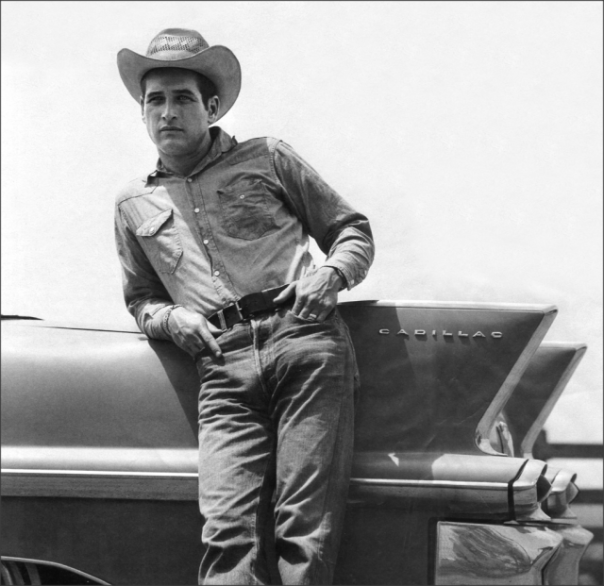
Hud – Martin Ritt (1963)

1960s: Days of Rage's avatar1960s: Days of Rage


Hud is a 1963 American Western film directed by Martin Ritt and starring Paul Newman, Melvyn Douglas, Brandon deWilde, and Patricia Neal. It was produced by Ritt and Newman’s recently founded company, Salem Productions, and was their first film for Paramount Pictures. Hud was filmed on location on the Texas Panhandle, including Claude, Texas. Its screenplay was by Irving Ravetch and Harriet Frank Jr. and was based on Larry McMurtry‘s 1961 novel, Horseman, Pass By. The film’s title character, Hud Bannon, was a minor character in the original screenplay, but was reworked as the lead role. With its main character an antihero, Hud was later described as a revisionist Western. The film centers on the ongoing conflict between principled patriarch Homer Bannon and his unscrupulous and arrogant son, Hud, during an outbreak of foot-and-mouth disease putting the family’s…

View original post 213 more words

Nouveau roman

1960s: Days of Rage's avatar1960s: Days of Rage

Left to right: Claude Simon, Alain Robbe-Grillet, Robert Pinget, publisher Jérôme Lindon, Samuel Beckett, Nathalie Sarraute

“The Nouveau Roman (French pronunciation: ​[nuvo ʁɔmɑ̃], ‘new novel’) is a type of 1950s French novel that diverged from classical literary genres. Émile Henriot coined the term in an article in the popular French newspaperLe Monde on May 22, 1957 to describe certain writers who experimented with style in each novel, creating an essentially new style each time. Most of the founding authors were published by Les Éditions de Minuit with the strong support of Jérôme Lindon. Alain Robbe-Grillet, an influential theorist as well as writer of the Nouveau Roman, published a series of essays on the nature and future of the novel which were later collected in Pour un Nouveau Roman. Rejecting many of the established features of the novel to date, Robbe-Grillet regarded many earlier novelists…

View original post 235 more words