All posts by Dr. Dean Albert Ramser

Unknown's avatar

About Dr. Dean Albert Ramser

Slava Ukraine! Supporting student success in Ukraine. Retired educator (English / Education: GED2EdD; "Ми будемо поруч один з одним як члени людства в найкращому сенсі цього слова". (Горан Перссон) Слава Україна 🇺🇦 "We will be there for one another as fellow members of humanity, in the finest sense of the word." (Goran Persson) https://cal.berkeley.edu/DeanRamser

A Poem by H.D. on Her Birthday

wordcloud9's avatarFlowers For Socrates

September 10, 1886Hilda Dolittle born, pen name H.D., American poet and novelist, known for avant-garde poetry, literary editor of  The Egoist journal during WWI, frequently used Greek mythology and insights from psychoanalysis in her work; H.D.’s work was on its way to being forgotten when the Second Wave of Feminism launched Women’s Studies and Arts and History programs, and new-made women scholars re-discovered her.

To read H.D.’s poem “The Walls DoNot Fall, XIV” click:

View original post 179 more words

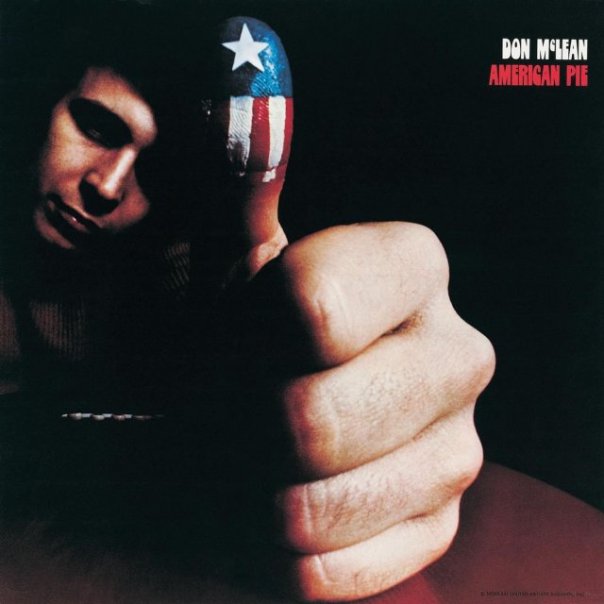
“American Pie” – Don McLean (1971)

1960s: Days of Rage's avatar1960s: Days of Rage


“‘American Pie’ is a song by American singer and songwriter Don McLean. … The repeated phrase ‘the day the music died‘ refers to a plane crash in 1959 that killed early rock and roll stars Buddy Holly, The Big Bopper, and Ritchie Valens, ending the era of early rock and roll; this became the popular nickname for that crash. The theme of the song goes beyond mourning McLean’s childhood music heroes, reflecting the deep cultural changes and profound disillusion and loss of innocence of his generation – the early rock and roll generation – that took place between the 1959 plane crash and either late 1969 or late 1970. The meaning of the other lyrics, which cryptically allude to many of the jarring events and social changes experienced during that period, have been debated for decades.  … Some commentators have identified…

View original post 282 more words

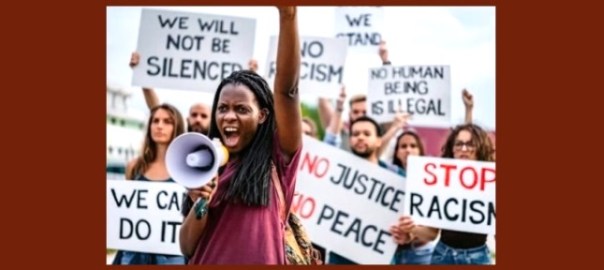
White Supremacy

wordcloud9's avatarFlowers For Socrates

by IRENE FOWLER, Contributor

___________________________

“You have to get over the fear of facing the worst in yourself. You should instead
fear unexamined racism. Fear the thought that right now, you could be contributing
tothe oppression of others and you don’t know it. But do not fear those who bring
thatoppression to light. Do not fear the opportunity to do better.”– Ijeoma Oluo

___________________________

“The world does not need white people to civilize others.
The real White People’s Burden is to civilize ourselves.”– Robert Jensen

___________________________

“When you have only ever experienced privilege,
equality feels like oppression.”– Adam Rutherford

___________________________

To read Irene’s new poem “White Supremacy” click:

View original post 208 more words

Poems for Wonderful Weirdos Day

wordcloud9's avatarFlowers For Socrates

If you could look up “wonderful weirdo” in the 13th edition of The Chambers Dictionary of the Twentieth Century, I think you might very well find a photograph of Shel Silverstein.

Shel Silverstein (1930-1999), beloved children’s book author, poet, singer-songwriter, cartoonist, and screenwriter, has over 20 million books in print in 30 languages.

To read Shel Silverstein’s poems click:

View original post 201 more words

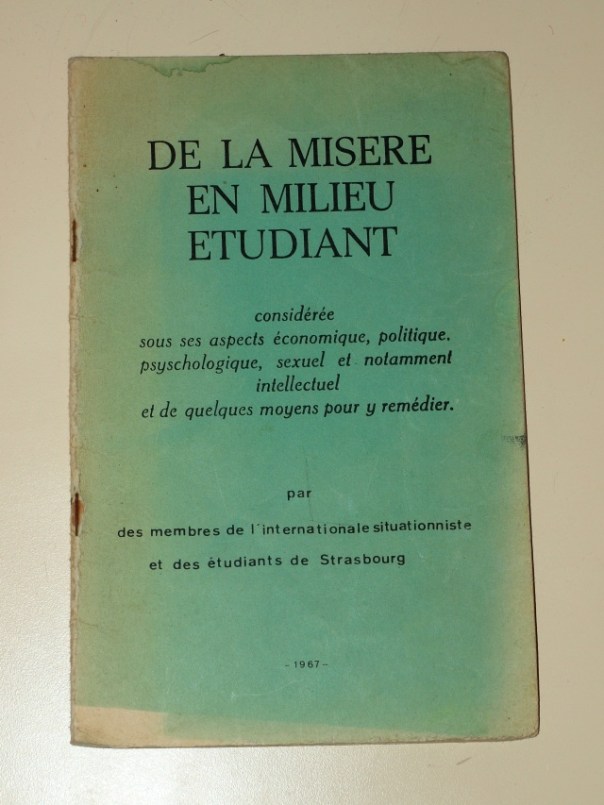
On the Poverty of Student Life

1960s: Days of Rage's avatar1960s: Days of Rage


On the Poverty of Student Life: A Consideration of Its Economic, Political, Sexual, Psychological and Notably Intellectual Aspects and of a Few Ways to Cure it … is a pamphlet first published by students of the University of Strasbourg and the Situationist International (SI) in 1966. Attacking the subservience of university students and the strategies of student radicals, it caused significant uproar, led to the dissemination of Situationist ideas, and precipitated the events of May 1968 in France. Taking advantage of the apathy of their colleagues, five ‘Pro-situs’, Situationist-influenced students had been elected to the University of Strasbourg’s students’ union in November 1966 and began scandalising the authorities. Their first action was to form an ‘anarchist appreciation society’ called The Society for the Rehabilitation for Karl Marx and Ravachol; next they appropriated union funds to flypost ‘Return of the Durruti Column’, André Bertrand’s détourned comic strip. They then…

View original post 167 more words

Interview with Tom Veitch on William S. Burroughs

1960s: Days of Rage's avatar1960s: Days of Rage

Tom Veitch Magazine #2

“… How did the book come to be published by Ted Berrigan and C Press? For some reason, Ted liked my writing. The first thing he saw by me was a first-person novel called The Transfigured, which Lorenz Gude showed him in late 1961 or early 1962. He loved it, and we immediately became friends. In fact, I was welcomed into the ‘Tulsa circle’, so to speak, which at that time was headquartered in Ted’s apartment near Columbia University. By the time Ted started C Magazine, I was living in Vermont, and he wrote me saying I ought to come back to New York and join the fun. I did, and we immediately began Malgmo’s End. After he had published C Magazine for a while he wanted to do chapbooks and pamphlets, and so he put together Literary Days, which was the first C Press…

View original post 207 more words

Sam Shepard : Seven Plays, Fool for Love and Other Plays

1960s: Days of Rage's avatar1960s: Days of Rage


“Sam Shepard’s plays are performed on and off Broadway and in all the major regional American theatres. They are also widely performed and studied in Europe, particularly in Britain, Germany and France, finding both a popular and scholarly audience. A leader of the avant-garde in contemporary American theatre since his earliest work. Sam’s plays are not easy to categorize. They combine wild humor, grotesque satire, myth and a sparse, haunting language to present a subversive view of American life. His settings are often a kind of nowhere, notionally grounded in the dusty heart of the vast American Plains; his characters are typically loners, drifters caught between a mythical past and the mechanized present; his work often concerns deeply troubled families. Before he was thirty, Shepard had over thirty plays produced in New York. In his works Shepard has repeatedly examined the moral anomie and spiritual starvation that characterize the world…

View original post 183 more words

The Collected Poems of Frank O’Hara (1974)

1960s: Days of Rage's avatar1960s: Days of Rage


“I first met the poet Frank O’Hara in the early 1990s. I was in the process of abandoning the writing program I was enrolled in at a local university for the much less muddied waters of the religious studies department; and, for his part, Frank had been dead for a little over twenty-five years. Frank O’Hara died at 8:50 p.m. on July 25, 1966 at Bayview General Hospital on Long Island. Mark Ford, editor of O’Hara’s Selected Poems (2008) [not to be confused by The Selected Poems of Frank O’Hara, 1974], succinctly describes the events of the previous evening, a night O’Hara spent with his friends Morris Golde, J. J. Mitchell, and Virgil Thomson clubbing on Fire Island. ‘The beach taxi in which he and his friend J. J. Mitchell were traveling broke down. As they waited for a replacement to arrive, a Jeep approaching from the opposite direction swerved…

View original post 167 more words

Mel’s Drive-In Protest 1963

1960s: Days of Rage's avatar1960s: Days of Rage


“By the 1960s, San Francisco’s widespread racist employment patterns ushered in a series of social protest movements led by the city’s progressives aimed at promoting equal rights and job opportunities for African American residents of the city. The Civil Rights Movement was expanding northward after major protests in the American South where most of the African American population was concentrated at the time. African Americans were a minority in San Francisco, but racism limited job opportunities and had been prompted the creation in 1958 of a largely ineffective municipal Fair Employment Practices Committee. Among the local businesses in the Bay Area targeted for their discriminatory hiring practices was Mel’s Drive-In, a restaurant chain with locations in San Francisco and Berkeley co-owned by Mel Weiss and City Supervisor Harold Dobbs. The sit-in at Mel’s Drive-In garnered a large number of participants, from local college students to community activists, and became the…

View original post 197 more words

Howard Zinn Carried Out an Act of Radical Diplomacy in the Middle of the Vietnam War

1960s: Days of Rage's avatar1960s: Days of Rage


Howard Zinn (left) and Daniel Berrigan (right) in Hanoi, Vietnam, in February 1968.

“A ‘rare act in the great madness of this war’ was how forty-five-year-old historian Howard Zinn described North Vietnam’s decision to release three American pilots during the Tet Offensive. Standing beside Jesuit priest, poet, and anti-war activist Daniel Berrigan in front of a room full of US reporters, Zinn read from one of his notebooks and declared their recent trip to Hanoi a success. The two anti-war activists met with the North Vietnamese government in February 1968 and helped transport the three prisoners back to the United States. The exchange was largely symbolic but was an extension of his radical internationalism and opposition to foreign wars. Reexamining his provocative trips behind enemy lines during the Vietnam War — on what would have been his hundredth birthday today — serves as a reminder that Zinn was both an…

View original post 201 more words