All posts by Dr. Dean Albert Ramser

Unknown's avatar

About Dr. Dean Albert Ramser

Slava Ukraine! Supporting student success in Ukraine. Retired educator (English / Education: GED2EdD; "Ми будемо поруч один з одним як члени людства в найкращому сенсі цього слова". (Горан Перссон) Слава Україна 🇺🇦 "We will be there for one another as fellow members of humanity, in the finest sense of the word." (Goran Persson) https://cal.berkeley.edu/DeanRamser

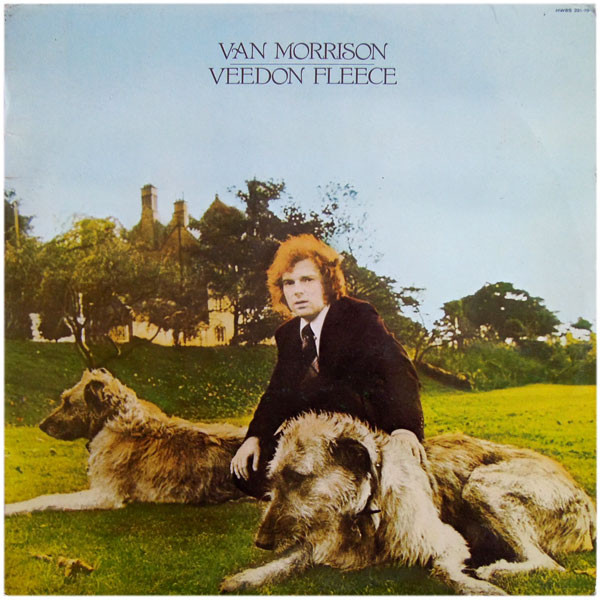
Veedon Fleece – Van Morrison (1974)

1960s: Days of Rage's avatar1960s: Days of Rage


Veedon Fleece is the eighth studio album by Northern Irish singer-songwriter Van Morrison, released on 5 October 1974. Morrison recorded the album shortly after his divorce from wife Janet (Planet) Rigsbee. With his broken marriage in the past, Morrison visited Ireland on holiday for new inspiration, arriving on 20 October 1973 (with his fiancée at the time, Carol Guida). While there he wrote, in less than three weeks, the songs included on the album (except ‘Bulbs‘,  ‘Country Fair’ and ‘Come Here My Love’). It has been compared to Astral Weeks (1968) with the same ‘stream of consciousness’ lyrics but musically it is more Celtic, acoustic and heavily influenced by Morrison’s Irish trip. It has been called a genuinely underground album that he seemed to disown quickly after recording and has been referred to as Morrison’s ‘forgotten masterpiece’. … In 1978, Morrison recalled that he recorded…

View original post 202 more words

The History of the East Village’s Cedar Tavern

1960s: Days of Rage's avatar1960s: Days of Rage

Jackson Pollock, Alchemy, 1947

“It was, in other words, the primary hangout for the avant-garde. Such was its reputation, that it formed the setting of Kurt Vonnegut’s 1987 novel Bluebeard, as the hub where his fictional hero Rabo Karebekian held court with his fellow painterly bohemians. The artist Elaine de Kooning, wife of Willem de Kooning, referred to it as the epicenter of a ‘decade-long bender’ and, as recorded in David Lehman’s history of the period The Last Avant-Garde: The Making of the New York School of Poets, artist Ad Reinhardt said, ‘We go there to meet the very people we hate most, other painters.’ Artist Franz Kline, along with Frank O’Hara and the de Koonings, were usually at the center of the hub and the cross-pollination between the worlds of poetry and art clearly played a part in the development of their early work…

View original post 241 more words

Pauline Kael – I Lost It at the Movies (1965)

1960s: Days of Rage's avatar1960s: Days of Rage


September 1993: “Nineteen-Sixty-Two was the year I found out there was more to movies than rooting for the good guys and cowering in your seat. I saw Bergman’s The Seventh Seal, Dreyer’s The Passion of Joan of Arc, and The Manchurian Candidate, probably the first American movie that could have carried Fassbinder’s title Fear Eats the Soul. But 1962 was also the year of a filmic incident I’ve recalled at least as often as I’ve thought of any of those classics: the night I saw The Pirates of Blood River. It was the last day of school. The theater was jammed with students, most of them graduating and most of them drunk. The air was thick with the tension oozing out of a thousand bodies. Up on screen, evil pirates, noble Huguenots, and a lot of piranha fish gave chase to a progressively incomprehensible story-line. The movie…

View original post 246 more words

Drag Queens vs. Fascist Boys & Girls

dianeravitch's avatarDiane Ravitch's blog

Recently, the power lines in Moore County, North Carolina, went down, damaged by gunfire, and officials suspect they were intentionally sabotaged, leaving 40,000 or so people without power. Some suspect that the power was shut down to prevent a drag show from happening.

Crooks&Liars points to domestic terrorism and mentions an activist who had loudly denounced the drag show. The activist, a former Army officer, had previously been questioned about her participation in the January 6 insurrection. She posted on Facebook that she knew why the power went out.

The Washington Post reported that the FBI is investigating.

At Sunrise Theater on Saturday night, drag queen Naomi Dix was about to introduce an act when the lights went out. Dix said that participants immediately suspected that the power outage might be connected to those opposed to the performance (Dix spoke to The Post on the condition that she be identified…

View original post 669 more words

Political positions of Noam Chomsky

1960s: Days of Rage's avatar1960s: Days of Rage


Noam Chomsky (born December 7, 1928) is an intellectual, political activist, and critic of the foreign policy of the United States and other governments. Noam Chomsky describes himself as an anarcho-syndicalist and libertarian socialist, and is considered to be a key intellectual figure within the left wing of politics of the United States. Chomsky is often described as one of the best-known figures of the American Left, although he doesn’t agree with the usage of the term. … He identifies with the labor-oriented anarcho-syndicalist current of anarchism in particular cases, and is a member of the Industrial Workers of the World. He also exhibits some favor for the libertarian socialist vision of participatory economics, himself being a member of the Interim Committee for the International Organization for a Participatory Society. He believes that libertarian socialist values exemplify the rational and morally consistent extension of…

View original post 216 more words

Art, revolution and the ‘Golden Age of the Cuban Poster’

1960s: Days of Rage's avatar1960s: Days of Rage

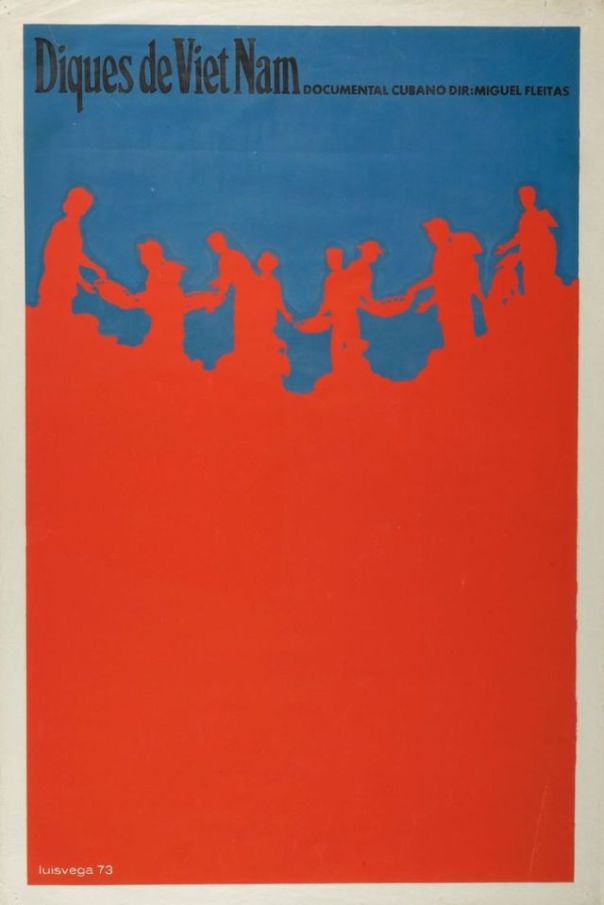
Luis Vega De Castro (b. 1944), Diques de Viet Nam, 1973. Silkscreen poster.

“During a period of profound and rapid social and political changes, the Cuban poster boldly documented and embodied the spirit and ideals of the Cuban revolution. ‘Thanks to those daring, inspired artists, an important part of the visual memory of Cubans is indelibly imprinted in their bold graphic designs,’ writes Leonardo Padura Fuentes in Mira Cuba: The Cuban Poster Art from 1959 (2014). ‘It had a dignity and an aesthetic standing that turned the utilitarian poster into a milestone of Cuban cultural history in the second half of the twentieth century.’ Offered as a single lot in our Latin American Art Online  sale (18-30 May), the 38 posters — or carteles —  in this collection were created between 1965 and 1973 by a handful of the genre’s most talented and innovative graphic artists, mostly to promote…

View original post 201 more words

Poems Collected at Les Deux Mégots/Poets at Le Metro

1960s: Days of Rage's avatar1960s: Days of Rage

Poets at Le Metro 19 (December 1964).

During the 1950s, East Tenth Street between Third and Fourth Avenues housed a number of art galleries exhibiting the most advanced art in America on a street that until then had been occupied by pawnshops, pool rooms, and sheet metal shops. During that decade, the area became a primary stomping ground for the young Abstract Expressionist painters and their attendant theorists/promoters, Harold Rosenberg and Clement Greenberg. Here, also, poet Frank O’Hara served as an important link between artists and poets in the East Village. Art openings became mandatory for ‘networking,’ and several of the galleries along Tenth Street also offered poetry readings and jazz. The Tenth Street Coffee House, owned by Micky Ruskin, was the scene from 1960 until 1962 of the first poetry readings in the area (organized by Chester Anderson, Howard Ant, and Ree Dragonette, and including Carol Bergé…

View original post 241 more words

Teenage tragedy song

1960s: Days of Rage's avatar1960s: Days of Rage


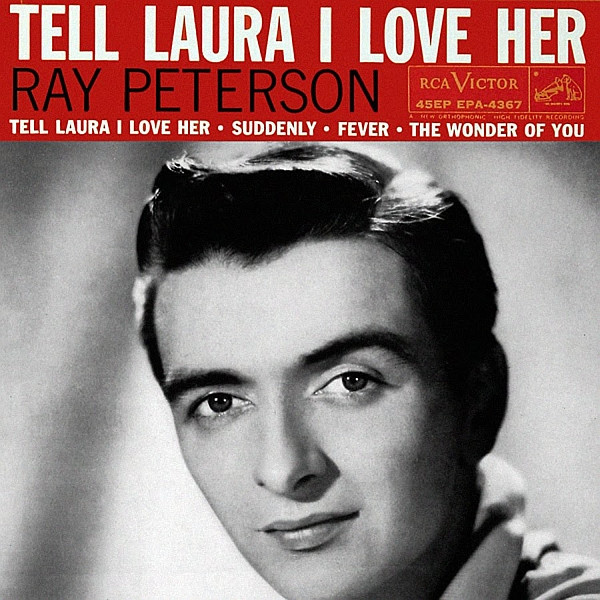
“A teenage tragedy song is a style of ballad in popular music that peaked in popularity in the late 1950s and early 1960s. Examples of the style are also known as ‘tear jerkers’, ‘death discs’ or ‘splatter platters’, among other colorful sobriquets coined by DJs that then passed into vernacular as the songs became popular. Often lamenting teenage death scenarios in melodramatic fashion, these songs were usually sung from the viewpoint of the dead person’s sweetheart, as in ‘Last Kiss‘ (1961), or another witness to the tragedy, or the dead (or dying) person. Other examples include ‘Teen Angel’ by Mark Dinning (1959), ‘Tell Laura I Love Her‘ by Ray Peterson (1960), ‘Ebony Eyes‘ by the Everly Brothers (1961), ‘Dead Man’s Curve‘ by Jan and Dean (1964), and ‘Leader of the Pack‘ by the Shangri-Las

View original post 223 more words