All posts by Dr. Dean Albert Ramser

Unknown's avatar

About Dr. Dean Albert Ramser

Slava Ukraine! Supporting student success in Ukraine. Retired educator (English / Education: GED2EdD; "Ми будемо поруч один з одним як члени людства в найкращому сенсі цього слова". (Горан Перссон) Слава Україна 🇺🇦 "We will be there for one another as fellow members of humanity, in the finest sense of the word." (Goran Persson) https://cal.berkeley.edu/DeanRamser

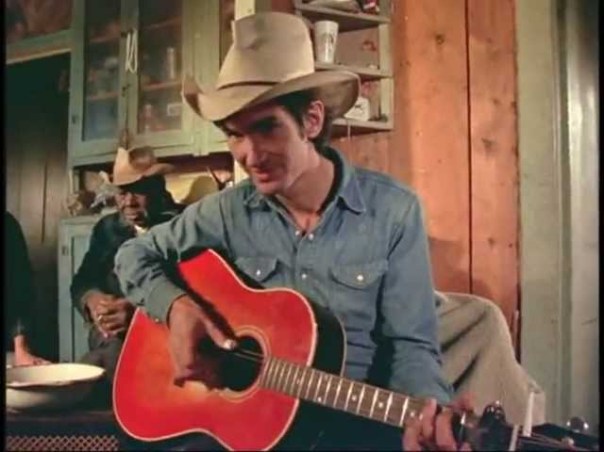
Townes van Zandt – “Pancho and Lefty” (1972)

1960s: Days of Rage's avatar1960s: Days of Rage


“‘Pancho and Lefty’, originally ‘Poncho and Lefty’, is a song written by American country music singer-songwriter Townes Van Zandt. Often considered his ‘most enduring and well-known song’, Van Zandt first recorded it for his 1972 album The Late Great Townes Van Zandt. … The song is composed as a ballad of four stanzas which use the two-verse refrain: ‘All the Federales say they could’ve had him any day/ They only let him slip away out of kindness I suppose.’ The first two stanzas are sung back-to-back with the refrain being sung only after the second stanza. The verses of the first stanza introduce Lefty as a restless young soul who leaves home and his loving mother to seek his fortune south of the border. The verses of the second stanza introduce Pancho as a Mexican ‘bandit boy’, who ‘wore his gun outside his…

View original post 230 more words

A Cinderella Story

wordcloud9's avatarFlowers For Socrates

by IRENE FOWLER, Contributor

“Well, there’s one thing:
they can’t order me to stop dreaming.”
Cinderella

“In order to rise from its own ashes,
a phoenix first must burn.”
Octavia Butler

“Many waters cannot quench love,
Neither can the floods drown it:
If a man would give all the substance
of his house for love, It would
utterly be contemned.”
Song of Solomon 8: 7 (KJV)

To read Irene’s poem “Cinderella” click:

View original post 166 more words

writing on the fly

pat thomson's avatarpatter

New year, new me. Well probably not. But 2023 me has been in a new place, working away from home and from the office. And I’ve been reflecting on what I want and need in order to write.

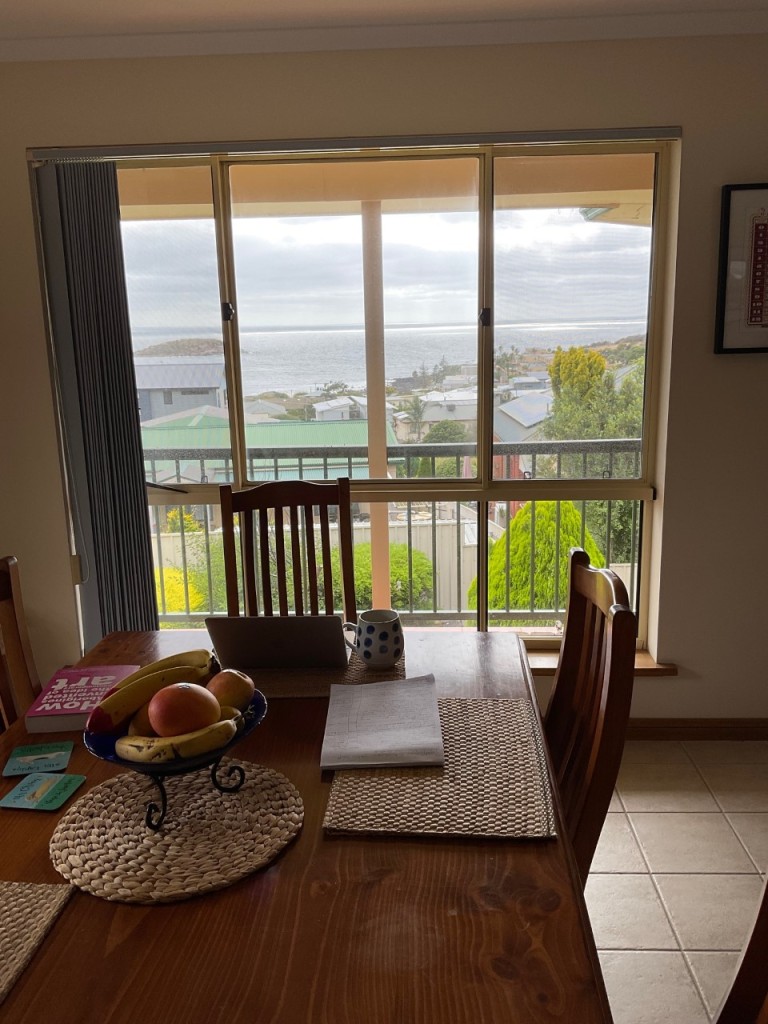
I’m quite well set up for mobile work. The house where I am staying – yes the view the view – has good internet access almost all the time. I have a couple of mini devices – tablet and MacBook – with me, and they speak unobtrusively and easily to each other. Every file I have is in three different cloud storages. My bibliographic software and library are online. Access to journals online all OK. And I have enough ebooks to keep me going for the time I’m away. My partner understands I still need to work and can’t go out to party every morning. So everything ought to go swimmingly.

Alas…

View original post 759 more words

The Beauty of Artistic Correspondence Through Collage: Ray Johnson and William S. Wilson

1960s: Days of Rage's avatar1960s: Days of Rage

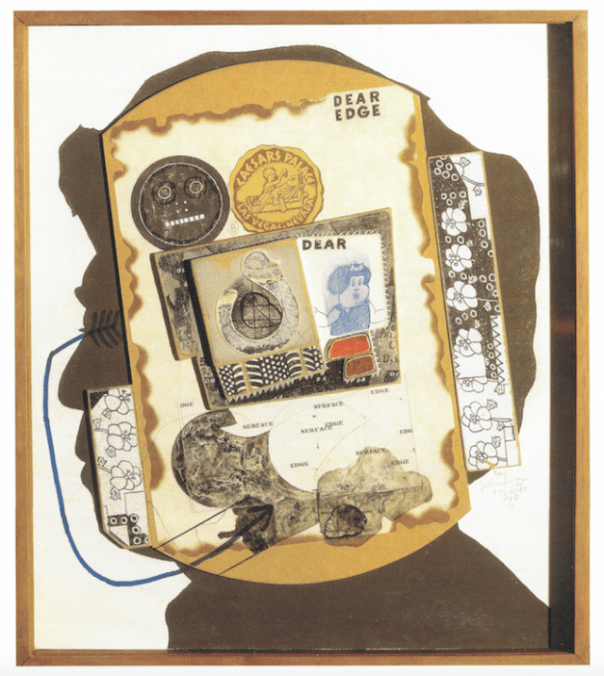
Ray Johnson’s Silhouette Profiles

“Paul Valéry once described poetry as ‘abrupt returns of the fruit to the wild state.’ That description can also be applied to artist Ray Johnson—both the man and art. One of the most quietly consequential figures in American contemporary art, Johnson’s visionary perception and extraordinary faculty resulted in an immense body of work that spans collage, correspondence, performance, painting, sculpture and book arts. Johnson’s poetic syllabary parses no difference between text and image, and his lyric is hewed from peripheral correlation and permutation; the result is breath-taking collisions that approximate the wilds of human experience. ‘Wild’ also perfectly captures Johnson’s puckish temperament and exacting mind. Stories of his singular attention and lightspeed wit are legendary. Keeping a pace with Johnson’s protean lens on the world was a feat reserved for only a few very close and similarly natured friends. The writer William S. (Bill) Wilson was one…

View original post 227 more words

Black Mountain, Intermedia, Deep Image, Ethnopoetics

1960s: Days of Rage's avatar1960s: Days of Rage

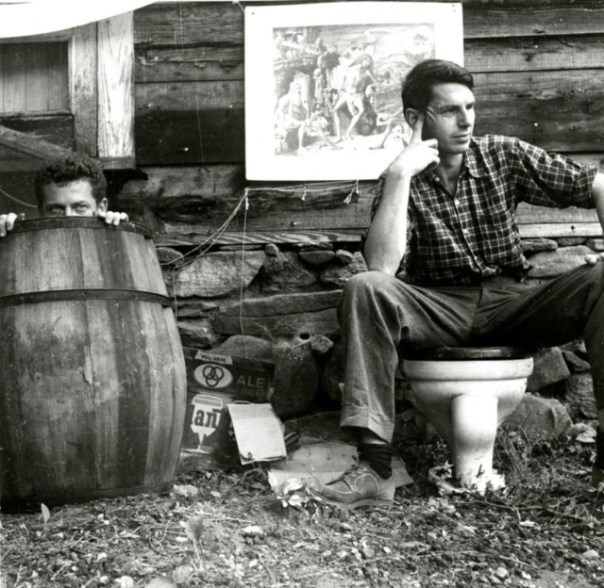
Robert Creeley and Dan Rice at Black Mountain College, 1955.

Among the several streams which made up the New American Poetry was a group known as the Black Mountain poets, so named for the experimental college in North Carolina where many of them taught or attended classes in the 1950s. The most prominent of these poets were of course Charles Olson, rector of the college in its last five years, and Robert Creeley, who edited The Black Mountain Review. The work of both has exerted an extraordinary influence on the course of American poetry in the latter half of this century. Closely allied with many of the Black Mountain writers, but especially influential on Creeley, were the poets occasionally known as the Objectivists, such as Louis Zukofsky, George Oppen, and Charles Reznikoff, who were in fact too individualistic to be part of any school. Still, the spare lyricism…

View original post 249 more words

How Marlon Brando nearly missed his defining role

1960s: Days of Rage's avatar1960s: Days of Rage


Sidney Lumet, Marlon Brando and Tennessee Williams on the set of Fugitive Kind in 1959

“… Marlon Brando, who was 23 years old, had appeared without much critical attention in five Broadway plays. He was a beautiful, brooding specimen: mercurial, rebellious and rampant. Like Stanley, he was a ruthless man-child with reservoirs of tenderness and violence. … None the less, another witness to Brando’s memorable, ferocious psychic explosion, the critic Pauline Kael, thought to herself: ‘That boy’s having a convulsion! Then I realised he was acting.’ Brando wasn’t trying to act, at least not in the hidebound acting tradition hitherto practised on the American stage. … Brando’s acting style was the performing equivalent of jazz. The notes were there, but Brando played them in a way that was uniquely personal to him. In his ability to call out of dialogue a heightened sense of emotional truth, the freedom of his…

View original post 204 more words

Fairfield Porter

1960s: Days of Rage's avatar1960s: Days of Rage

The Table On the Porch (1971)

Respect For Things As They Are by John Ashbery: “In his introduction to Fairfield Porter‘s posthumous collection of art criticism, Art in Its Own Terms, Rackstraw Downes quotes a remark Fairfield Porter made during what must have been one of the more Byzantine discussions at the Artists’ Club on Eighth Street, around 1952. The members were arguing about whether or not it was vain to sign your paintings. With the flustered lucidity of Alice in the courtroom, Porter sliced this particular Gordian knot once and for all: ‘If you are vain it is vain to sign your pictures and vain not to sign them. If you are not vain it is not vain to sign them and not vain not to sign them.’  We do not know the reaction of his colleagues; quite possibly this mise au net fell on the…

View original post 232 more words

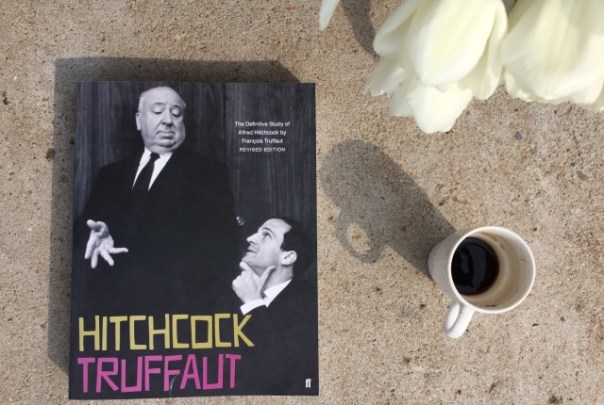
Hitchcock/Truffaut by François Truffaut (1966)

1960s: Days of Rage's avatar1960s: Days of Rage


“Film fans of a certain age, and some of them are certainly represented and name-checked in the film, will immediately recognize the true subject of the new documentary by Kent Jones, Hitchcock/Truffaut . It’s not a dual biography of the French director and the British director (ensconced in Hollywood by that time), but rather the biography of a book. Hitchcock/Truffaut (Simon & Shuster) was published in 1966, a transcription from a series of interviews Truffaut (then 30, and having finished his third film, Jules and Jim, held with Hitchcock (having finished his 40th film, The Birds) in 1962, with Helen Scott as translator, discussing his films title by title, from production histories to aesthetics. As a work of cinematic analysis, nothing like it had been done before. Film culture was still defined by Hollywood studios and fan magazines that ran puff pieces on the latest blockbusters. There hadn’t…

View original post 204 more words

The Beatles: The Strange History of Sexy Sadie

1960s: Days of Rage's avatar1960s: Days of Rage

Meditation chambers at the old Maharishi Mahesh Yogi Ashram

“‘Well, if you’re so cosmic you’ll know why,’ John Lennon explained to Maharishi Mahesh Yogi as the final two Beatles left his Ashram before fulfilling their Transcendental Meditation regimen. … Inner peace is as much a bitch as karma, which bites the asses of rock stars and gurus alike. Maharishi was accused of sexual misconduct during the Beatles’ sojourn to India for enlightenment, a journey which may have culminated in the band teaming with the Beach Boys in spreading the movement. But it darkened Lennon’s vibes so bad he banged out the holy rocking roller ‘Sexy Sadie.’ … ‘Sexy Sadie’ from The Beatles (‘White’) album preceded ‘How Do You Sleep?’ as one of Lennon’s signature tunes of personality bashing, and gave murderess Susan Atkins her signature alias. … Lennon has a reputation of taking his personal frustrations out in rhyme and…

View original post 276 more words

Fillmore Bill: Bill Graham’s Legacy

1960s: Days of Rage's avatar1960s: Days of Rage

During the 1965 Mime Troupe arrest: from left to right: Bill Graham, Ron Davis, Luis Valdez, Paul Jacobs.

“Bill Graham’s rise to fame coincided with (and is partly owed to) the heyday of late 60s counterculture movement and its music scene in San Francisco. Greg Gaar, a native San Franciscan photojournalist, describes the Haight-Ashbury of 1967 as an environment where musicians were free of pretension and concerns of commercial success. In large contrast to the famous artists of today, artists back then lived with (and lived just like) the people they performed for. In Gaar’s words, ‘The Grateful Dead would be sitting on the front steps of 710 Ashbury, where they lived. On hot days, they would be squirting cars with a water hose as the car went by …. You’d see Janis Joplin shopping on Haight Street.’ The ideology of the hippie counterculture was also largely present in the…

View original post 215 more words