All posts by Dr. Dean Albert Ramser

Unknown's avatar

About Dr. Dean Albert Ramser

Slava Ukraine! Supporting student success in Ukraine. Retired educator (English / Education: GED2EdD; "Ми будемо поруч один з одним як члени людства в найкращому сенсі цього слова". (Горан Перссон) Слава Україна 🇺🇦 "We will be there for one another as fellow members of humanity, in the finest sense of the word." (Goran Persson) https://cal.berkeley.edu/DeanRamser

TCS: Until Wings Break Into Fire

wordcloud9's avatarFlowers For Socrates

Good Morning!

_____________________________

Welcome to The Coffee Shop, just for you early risers
on Monday mornings. This is an Open Thread forum,
so if you have an off-topic opinion burning a hole in
your brainpan, feel free to add a comment.

_____________________________

“I was gravely warned by some of my female acquaintances
that no woman could expect to be regarded as a lady after
she had written a book.”
Lydia M. Child (1802-1880), American activist for
women’s rights, ending slavery, and Native American rights

“The genesis of a poem for me is usually
a cluster of words. The only good metaphor
I can think of is a scientific one: dipping
a thread into a supersaturated solution to
induce crystal formation. I don’t think I
solve problems in my poetry; I think I
uncover the problems.”
Margaret Atwood, Canadian novelist
and poet, author of The Handmaid’s Tale

View original post 2,389 more words

Wayne Shorter, Innovator During an Era of Change in Jazz, Dies at 89

1960s: Days of Rage's avatar1960s: Days of Rage

Wayne Shorter emerged in the 1960s as a tenor saxophonist and in-house composer for Art Blakey’s Jazz Messengers and the Miles Davis Quintet.

“Wayne Shorter, the enigmatic, intrepid saxophonist who shaped the color and contour of modern jazz as one of its most intensely admired composers, died on Thursday in Los Angeles. He was 89. His publicist, Alisse Kingsley, confirmed his death, at a hospital. There was no immediate information on the cause. Mr. Shorter had a sly, confiding style on the tenor saxophone, instantly identifiable by his low-gloss tone and elliptical sense of phrase. His sound was brighter on soprano, an instrument on which he left an incalculable influence; he could be inquisitive, teasing or elusive, but always with a pinpoint intonation and clarity of attack. His career reached across more than half a century, largely inextricable from jazz’s complex evolution during that span. He emerged in the 1960s…

View original post 261 more words

using jargon

pat thomson's avatarpatter

Technical terminology is often called jargon. The dictionary definition of jargon is “special words or expressions used by a profession or group that are difficult for others to understand”. Sounds OK eh. Nothing to worry about.

But the word jargon is often used very negatively. It either means that someone is talking a load of nonsense, or they are deliberately using technical language in order to appear important, or they don’t know how to speak in plain English, or they are attempting to make themselves appear more knowledgeable than others. Here the negative use of the term jargon is about – another dictionary definition – confused unintelligible language, a strange outlandish or barbarous dialect or obscure and pretentious language marked by circumlocutions and long words.

The problem in academic communication is that people often assume that the first definition – “special words used by a profession or group” is the…

View original post 585 more words

A Delicate Balance – Edward Albee (1966)

1960s: Days of Rage's avatar1960s: Days of Rage


A Delicate Balance is a three-act play by Edward Albee, written in 1965 and 1966. Premiered in 1966, it won the Pulitzer Prize for Drama in 1967, the first of three he received for his work. The uneasy existence of upper-middle-class suburbanites Agnes and Tobias and their permanent houseguest, Agnes’ witty and alcoholic sister Claire, is disrupted by the sudden appearance of lifelong family friends Harry and Edna, fellow empty nesters with free-floating anxiety, who ask to stay with them to escape an unnamed terror. They soon are followed by Agnes and Tobias’s bitter 36-year-old daughter Julia, who returns home following the collapse of her fourth marriage. The original Broadway production, directed by Alan Schneider, opened at the Martin Beck Theatre on September 22, 1966, and closed on January 14, 1967, after 132 performances and 12 previews. … Act I: Agnes, an upper-class woman in her late…

View original post 209 more words

A Checklist Of Goliard Press (London 1965–7)

1960s: Days of Rage's avatar1960s: Days of Rage


“If Matrix Press can be considered Raworth’s incunabular period, the Renaissance flowering of his career as a printer began when he started collaborating with artist Barry Hall at Goliard Press in 1965. For those old enough to remember, the ‘Summer of Love’ was a transformative time. As a teenager in England I divided my non-school time between marching with the Campaign for Nuclear Disarmament, rehearsing with my rock band, protesting the Vietnam War and attending poetry readings. They converged occasionally, as when there were benefit readings in support of striking coal miners or teachers — big rallies featuring poets (Tony Harrison, Tom Pickard, Brian Patten, Adrian Henri, Roger McGough, Barry MacSweeney, Adrian Mitchell, Bob Cobbing, Tony Jackson, et al.) instead of agit-prop rhetoricians. Swinging England was turned on to poetry, and these poets were working class. If they went to college it was art school. If they listened to music…

View original post 171 more words

Aragorn

1960s: Days of Rage's avatar1960s: Days of Rage


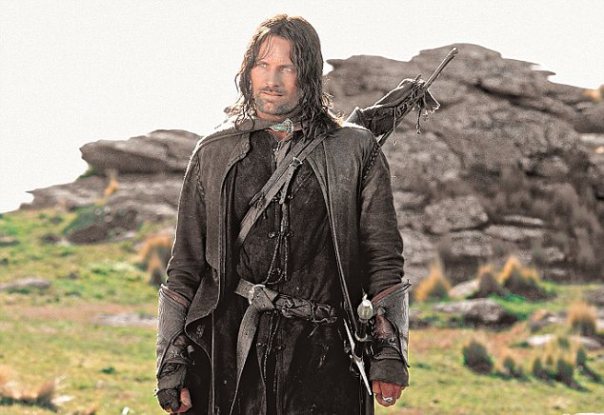
“Aragorn is a fictional character and a protagonist in J. R. R. Tolkien‘s The Lord of the Rings. Aragorn was a Ranger of the North, first introduced with the name Strider and later revealed to be the heir of Isildur, an ancient King of Arnor and Gondor. Aragorn was a confidant of the wizard Gandalf, and played a part in the quest to destroy the One Ring and defeat the Dark Lord Sauron. As a young man, Aragorn fell in love with the immortal elfArwen, as told in The Tale of Aragorn and Arwen. Arwen’s father, Elrond Half-elven, forbade them to marry unless Aragorn became King of both Arnor and Gondor. Aragorn led the Fellowship of the Ring following the loss of Gandalf in the Mines of Moria. When the Fellowship was broken, he tracked the hobbits Meriadoc…

View original post 219 more words

Umbra

1960s: Days of Rage's avatar1960s: Days of Rage


“Umbra was a collective of young black writers based in Manhattan‘s Lower East Side that was founded in 1962. Umbra was one of the first post-civil rights Black literary groups to make an impact as radical in the sense of establishing their own voice distinct from, and sometimes at odds with, the prevailing white literary establishment. The attempt to merge a Black-oriented activist thrust with a primarily artistic orientation produced a classic split in Umbra between those who wanted to be activists and those who thought of themselves as primarily writers, though to some extent all members shared both views. Black writers have always had to face the issue of whether their work was primarily political or aesthetic. Moreover, Umbra itself had evolved out of similar circumstances: in 1960 a Black nationalist literary organization, On Guard for Freedom, had been founded on the Lower East Side…

View original post 201 more words

The Imagination of Disaster by Susan Sontag (1965), When the Movies Pictured A.I., They Imagined the Wrong Disaster By A.O. Scott (2023)

1960s: Days of Rage's avatar1960s: Days of Rage


“Ours is indeed an age of extremity. For we live under continual threat of two equally fearful, but seemingly opposed, destinies: unremitting banality and inconceivable terror. It is fantasy, served out in large rations by the popular arts, which allows most people to cope with these twin specters. For one job that fantasy can do is to lift us out of the unbearably humdrum and to distract us from terrors, real or anticipated—by an escape into exotic dangerous situations which have last-minute happy endings. But another one of the things that fantasy can do is to normalize what is psychologically unbearable, thereby inuring us to it. In the one case, fantasy beautifies the world. In the other, it neutralizes it. The fantasy to be discovered in science fiction films does both jobs. These films reflect world-wide anxieties, and they serve to allay them. They inculcate a strange apathy concerning the…

View original post 200 more words

Archie Shepp – Fire Music (1965)

1960s: Days of Rage's avatar1960s: Days of Rage


“.. Fire Music must be one of  Shepp’s most interesting albums, blistering and intense,  a half-way house between Free and the Avant Garde. The musical territory ranges from the haunting recitation and requiem for Malcolm X (quick history lesson here, it is not what you might assume), to the kitsch reworking of the  Girl From Ipanema, with Shepp as Webster/Hawkins reincarnated as Freddie Kreuger’s Nightmare on Elm Street, ripping into the tune at will while caressing it. Shepp found more ways to force sound from the tenor than probably any other player, punctuating expressive breathiness with shouts, shrieks and dissonaces, sometimes choosing its own direction own irrespective of ‘the tune’. The septet surrounds him in rich and varied textures, full of surprises, with moments of Mingus but burning bright, angry and on fire, as befits its title, Fire Music. Commentators often draw connections with this mid-’60s jazz and social/ political issues of…

View original post 95 more words

Heather Cox Richardson: The Fight for Ukraine is a Fight for International Rule of Law

dianeravitch's avatarDiane Ravitch's blog

Historian Heather Cox Richardson summarized Secretary of State Anthony Blinken‘s address to the U.N. Security Council Ministerial Meeting on Ukraine Sovereignty and Russian Accountability. We must never forget that Ukraine is a sovereign nation, and it is irrelevant that it belonged to Russia in the past or during the repressive era of the Soviet Union. Ukraine belongs to the people of Ukraine. I have highlighted sections of his speech that touched me. Open the link to read the footnotes.

She wrote:

“One year and one week ago—on February 17th, 2022—I warned this council that Russia was planning to invade Ukraine,” Secretary of State Antony Blinken told the United Nations Security Council Ministerial Meeting on Ukraine Sovereignty and Russian Accountability today.

“I said that Russia would manufacture a pretext, and then use missiles, tanks, soldiers, cyber attacks to strike pre-identified targets, including Kyiv,” Blinken continued, “with the aim of toppling Ukraine’s…

View original post 945 more words