All posts by Dr. Dean Albert Ramser

Unknown's avatar

About Dr. Dean Albert Ramser

Slava Ukraine! Supporting student success in Ukraine. Retired educator (English / Education: GED2EdD; "Ми будемо поруч один з одним як члени людства в найкращому сенсі цього слова". (Горан Перссон) Слава Україна 🇺🇦 "We will be there for one another as fellow members of humanity, in the finest sense of the word." (Goran Persson) https://cal.berkeley.edu/DeanRamser

Roundup of Recent “New York School of Poetry” News and Links (6/8/23)

Andrew Epstein's avatarLocus Solus: The New York School of Poets

Here is one of my semi-regular roundups of recent links and news related to the New York School of poets. (Previous roundups can be found here).
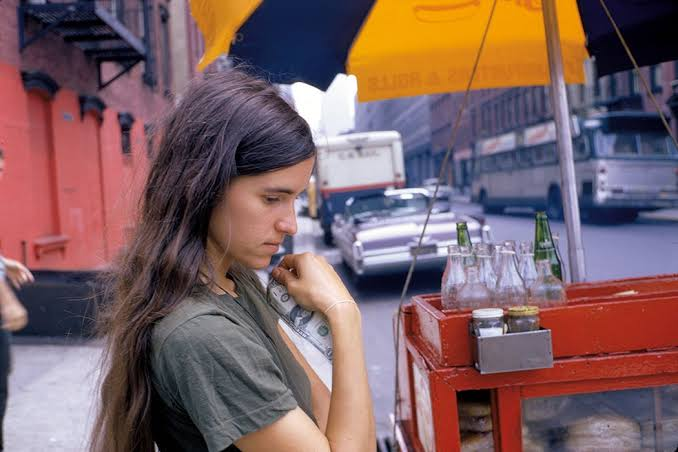
Bernadette Mayer, from Memory

  • First, I wanted to use this roundup to mark some of the sad news and sharp losses related to the New York School that I haven’t had the chance to post about here over the past few months. In December 2022 came the huge blow of Bernadette Mayer’s death at the age of 78. As someone who has written about, taught, and loved Mayer’s work for a long time, I have too much to say about her loss to fit in this space, but for now, I wanted to at least point to some of the manyobituaries and tributes to this central American poet. Also, a few weeks ago, the Poetry Project at St. Marks hosted a

View original post 1,384 more words

Biden Vetoes GOP Plan to Block College Student Loans

dianeravitch's avatarDiane Ravitch's blog

Millions of Americans are saddled with debt due to the cost of their college education. I have met adults who were still paying for their college education years after they graduated. As a society, we send mixed messages to young people: we want you to get a college education, but you will have to spend years paying for it.

When I visited Finland a decade ago, I was amazed to learn that all higher education there is tuition-free. My guide explained the Finnish view: education is a human right, and it’s immoral to make people pay for a human right.

We as a nation know that investing in education is good for the nation’s future. We all benefit when more people are better educated and have more skills and knowledge. To the extent that young people are reluctant to assume the high cost of a college education, they will choose…

View original post 499 more words

NPR: How Republicans Are Undermining Election Integrity

dianeravitch's avatarDiane Ravitch's blog

The Republican Party has an albatross around its neck, namely, the need to feed the fraudulent claim that the 2020 election was stolen. This canard has given them leeway to enact restrictions on the right to vote, typically targeting groups likely to vote for Democrats. DeSantis created a special force to arrest former felons who voted when they were not supposed to, but most of the handful who were arrested were released because the state had sent them registration cards encouraging them to vote.

The latest crazy maneuver by Republicans is to remove their state from a national database that protects election integrity, assuring that no one votes in two states.

First to drop out was Louisiana:

On a night in January 2022, Louisiana Secretary of State Kyle Ardoin stepped on stage in a former airbase in Houma, La.

With American flags draped from the stage, the topic of the…

View original post 426 more words

Robin Blaser: ‘The Holy Forest’ // 2008

1960s: Days of Rage's avatar1960s: Days of Rage


“Early on in my East Bay ramblings, I found my way into Serendipity Books, on University just up from San Pablo. Sometimes you’re in Ali Baba’s cave and you don’t even realize it. Used to be that every bookman in the area had an anecdote concerning Peter Howard, the legendarily perverse and curmudgeonly proprietor of that cavernous establishment. Peter is now gone, and Serendipity is no more, but the quality of the stock was such that for years afterwards people gossiped about where all the books ended up. Arranged on the floor amidst the general chaos were paper grocery sacks of unpriced books from the library of the late Gus Blaisdell, proprietor of Living Batch Bookstore in New Mexico, which had published the first complete version of Ronald Johnson’s Ark, which went out of print almost immediately and became fabulously expensive until it was reprinted years…

View original post 234 more words

“A Life in Boxes: The Kenneth Koch Archive at the Berg Collection” with Susannah Hollister and Emily Setina

Andrew Epstein's avatarLocus Solus: The New York School of Poets

As some of you may know, the literary scholars Susannah Hollister and Emily Setina are currently writing a much-needed biography of Kenneth Koch, which will be the first full-scale treatment of Koch’s life, his wide-ranging work as writer and teacher, his literary influences and relationships, and his connections to the New York School and to his closest friends.

Next week, on Tuesday, June 13, the New York Public Library will host a special event with Hollister and Setina titled “A Life in Boxes: The Kenneth Koch Archive at the Berg Collection,” in which they will discuss their ongoing project and their experience scouring the vast Koch archives held at the NYPL.

Here’s the event description:

Kenneth Koch is best known as a founding New York School poet and pioneer in the teaching of creative writing. His papers form one of the largest collections from a single author at the Library’s…

View original post 97 more words

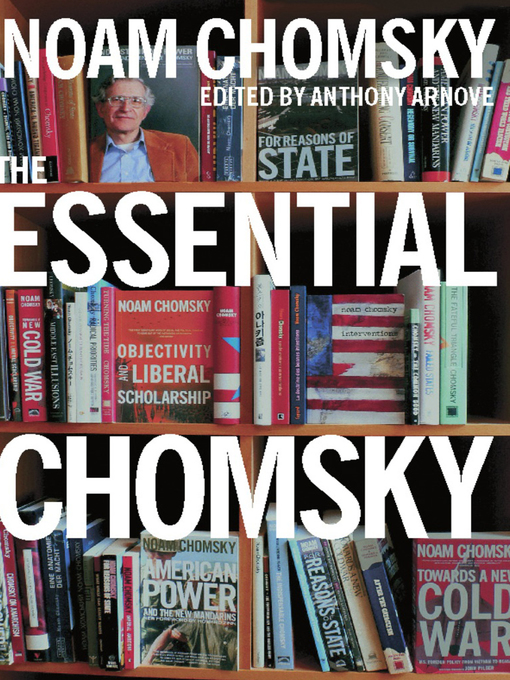
The Essential Chomsky – Noam Chomsky (2008)

1960s: Days of Rage's avatar1960s: Days of Rage


Noam Chomsky: Moral & Social Thinker: “Noam Chomsky is a powerhouse of insightful thought – this book attests to that. So analyzing or even summarizing Anthony Arnove’s The Essential Chomsky is no simple task. A moderately lengthy and notably chronological collection of texts plucked from Chomsky’s enormous output, The Essential Chomsky leaps from linguistics to Palestine to libertarian socialism and back to linguistics again. Given the political nature of Against the Current, we will focus on Chomsky’s views on political philosophy, morality, U.S. foreign and domestic policy, and propaganda, ending with thoughts on the editing. But first, a few introductory remarks on the man himself. Chomsky is professionally a linguist at the Massachusetts Institute of Technology, but he has long supplemented his academic work with writing and lecturing on contemporary political issues. Unlike his writings in the field of linguistics, which can be highly technical, his political work is consistently…

View original post 136 more words

story and academic writing – the question of pace

pat thomson's avatarpatter

Stories typically contain a mixture of action and commentary. The writer combines action and commentary in order to keep the reader informed – they know what is going on – and engaged – they want to keep reading.

Writers deliberately play around with pacing. They might select fast pacing – lots of action coming in rapid succession – in order to make the reader feel excited, worried or nervous. Think detective novels and thrillers. Think how events speed up as you reach the climax. On the other hand, writers may deliberately slow down the action in order to either hold the reader in suspense or to convey something important about characters, quality of life, atmosphere, nature of interactions and so on.

Academic writing is also about pacing. Like fiction writers, academic writers also manage the balance of action and commentary. Yes of course writing a journal article is not the…

View original post 697 more words

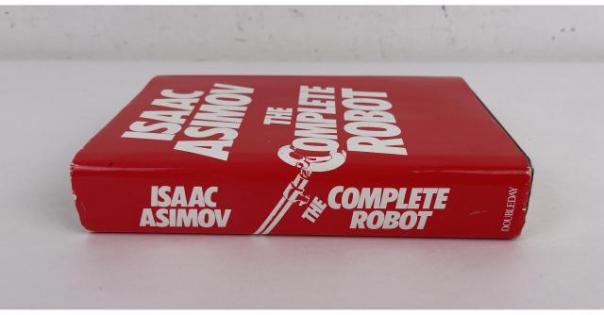
The Complete Robot – Isaac Asimov (1982)

1960s: Days of Rage's avatar1960s: Days of Rage

Why Isn’t There An Audiobook Of The Complete Robot by Isaac Asimov?: “… I love to listen to science fiction, so I was disappointed that the first book wasn’t on audio. However, there are three audiobooks available of Asimov’s short stories, I, Robot, Robot Dreams, and Robot Visions. I’m still going to have to read twelve short stories and the essays out of The Complete Robot, but it’s nice to know I can listen to 18 of them. Plus, Robot Dreams (1986) and Robot Visions (1990) have a handful of robot stories not in The Complete Robot (1982). Robot Dreams and Robot Visions have misleading titles. You’d think they’d be two collections all about robots, but they’re really collections of some of Asimov’s more popular stories and essays that feature a handful of robot stories. … What has started as an idle whim thinking about…
View original post 219 more words

Editing pan-Africanism

1960s: Days of Rage's avatar1960s: Days of Rage


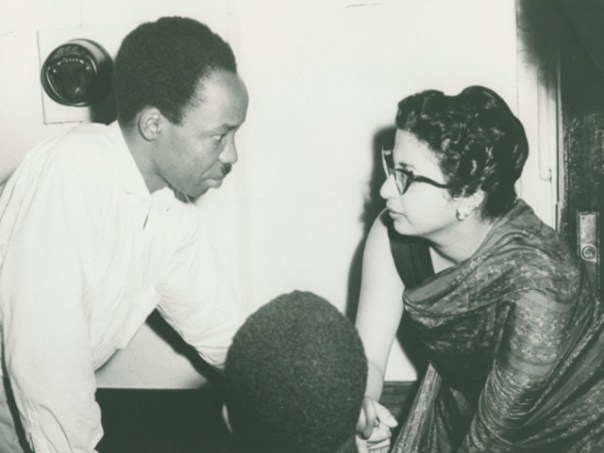
Frene Ginwala. Author supplied image.

“On April 12, 1960, a few weeks after the Sharpeville Massacre, the South African lawyer and journalist Frene Noshir Ginwala arrived in Dar es Salaam, the capital of Tanganyika. In that year, British-ruled Tanganyika was already transitioning towards independence with internal self-government. This transition provided the country’s subjects with more opportunities for political activities than most other countries in Southern and East Africa could provide. Ginwala’s important role in the anti-apartheid movement is well-known. Many obituaries written after her death on January 12, 2023, mention that she paved the way for Oliver Tambo and other South Africans to set up the ANC’s external mission after the apartheid regime banned the organization. Later on, she became the first speaker of South Africa’s first post-apartheid parliament. What is less known is that Dar es Salaam in the early 1960s was a launching pad for Ginwala’s monthly newspaper…

View original post 197 more words

Thrillers and Mysteries Had Homogenous Histories

Dave Astor's avatarDave Astor on Literature

I’ve written about diversity in literature before, but this time I’m going to be a bit more specific. As in the welcome increased diversity in thrillers and mysteries during the past few decades.

Many right-wing Republicans would find that “woke,” but they’re welcome to fall asleep listening to Ron DeSantis speeches.

There was of course some diversity in long-ago mysteries and thrillers, but old novels in those genres often featured white male detectives in lead roles and mostly “conventional” women in supporting roles. If there were rare inclusions of people of color, those characters were usually depicted in cringe stereotypical fashion.

Famous white male detectives of the 19th century and the first decades of the 20th century included Edgar Allan Poe’s C. Auguste Dupin (in three short stories rather than any novels), Charles Dickens’ Inspector Bucket, Wilkie Collins’ Sergeant Cuff, Arthur Conan Doyle’s Sherlock Holmes, Agatha Christie’s Hercule Poirot, Dorothy…

View original post 586 more words