All posts by Dr. Dean Albert Ramser

Unknown's avatar

About Dr. Dean Albert Ramser

Slava Ukraine! Supporting student success in Ukraine. Retired educator (English / Education: GED2EdD; "Ми будемо поруч один з одним як члени людства в найкращому сенсі цього слова". (Горан Перссон) Слава Україна 🇺🇦 "We will be there for one another as fellow members of humanity, in the finest sense of the word." (Goran Persson) https://cal.berkeley.edu/DeanRamser

Folk baroque

1960s: Days of Rage's avatar1960s: Days of Rage


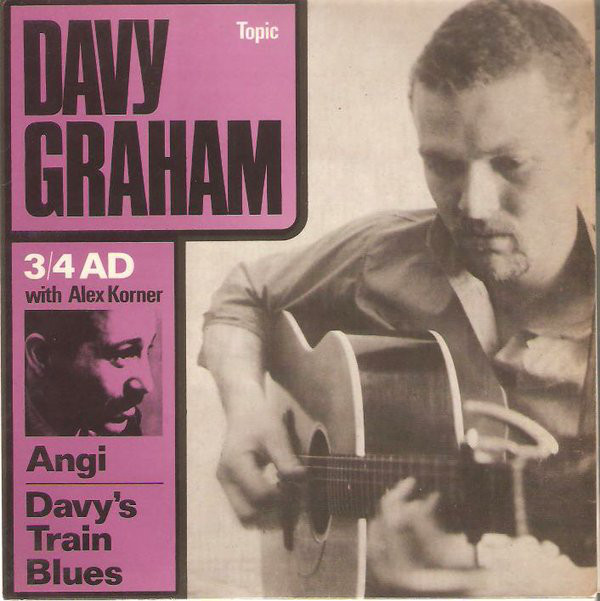
Folk baroque or baroque guitar, and also sometimes called chamber folk, is a distinctive and influential guitar fingerstyle developed in Britain in the 1960s, which combined elements of American folk, blues, jazz and ragtime with British folk music to produce a new and elaborate form of accompaniment. It has been highly important in folk music, folk rock and British folk rock playing, particularly in Britain, Ireland, North America and France. Particularly notable in the folk baroque style was the adoption of DADGAD tuning, which gave a form of suspended-fourth D chord, usefully neither major or minor, which could be employed as the basis for modal-based folk songs. It is uncertain who first developed this tuning, as both Davy Graham and Martin Carthy attributed it to each other, but it has been speculated that Graham may have acquired it from the oud while visiting north Africa…

View original post 272 more words

JACOBIN No.29 / Spring 2018: 1968

1960s: Days of Rage's avatar1960s: Days of Rage


“Between us we can change this rotten society. Now, put on your coat and make for the nearest cinema. Look at their deadly love-making on the screen. Isn’t it better in real life? Make up your mind to learn to love. Then, during the interval, when the first advertisements come on, pick up your tomatoes or, if you prefer, your eggs, and chuck them. Then get out into the street, and peel off all the latest government proclamations until underneath you discover the message of the days of May and June. Stay awhile in the street. Look at the passers-by and remind yourself: the last word has not yet been said. Then act. Act with others, not for them. Make the revolution here and now. It is your own. C’est pour toi que tu fais la révolution. — Daniel and Gabriel Cohn-Bendit, Obsolete Communism: The Left-Wing Alternative
The Tragedy…

View original post 40 more words

Balanchine, the Teacher: ‘I Pushed Everybody’

1960s: Days of Rage's avatar1960s: Days of Rage


“The setting is a ballet class, and the year is 1974. George Balanchine throws up his arms in exasperation at the sight of a dancer executing a step incorrectly at the barre. We may not be able to see her, and what she’s doing wrong, but we feel how hard Balanchine is taking it. It’s not just his words — ‘that’s bad’ — but the punctuation of his body, emphatic, agile, alive. His hands slap his thighs. He raises an arm like a stiff branch to show how far a leg should be raised. It’s not high; it’s parallel to the floor. … The new film ‘In Balanchine’s Classroom,’ directed by Connie Hochman, focuses on the teaching of the groundbreaking choreographer — and how it instilled his dances at New York City Ballet with articulate, musical brilliance. It’s both enthralling and heartbreaking. To love Balanchine is to love this film…

View original post 284 more words

Pathways and Daffodils

wordcloud9's avatarFlowers For Socrates

by IRENE FOWLER, Contributor

 Lily-rose-jasmine, scented air
Paradise to gain, much to dare

____________________________


Good morning everyone and welcome.

Whatever your preferred flavour of life is – sweet, savoury, spicy or somethin’ else, welcome to the melting pot. I am on West African time, so ‘servez-vous.’

Even though we are helpless to change things on a macro scale, we can in our own small ways, align with love and the positive. As we contribute our quota, we are building towards a critical mass which can force change/s for good.
____________________________

Whilst trying to forge ahead with our individual lives, as indeed we must, we are often weighted down with past baggage, hindered by present constrictions, and fearful of future outcomes. In fact, the business of staying alive and living (surviving and thriving), may sometimes appear to be extraordinarily daunting. These instances may be akin to a situation where a non-mountaineer…

View original post 492 more words

Saint John Coltrane: The San Francisco Church Built On A Love Supreme

1960s: Days of Rage's avatar1960s: Days of Rage


“Little of San Francisco today is as it was half a century ago. But at the corner of Turk Boulevard and Lyon Street stands a true survivor: the Church of St. John Coltrane. Though officially founded in 1971, the roots of this unique musical-religious institution (previously featured here on Open Culture) go back further still. ‘It was our first wedding anniversary, September 18, 1965 and we celebrated the occasion by going to the Jazz Workshop,’ write founders Franzo and Marina King on the Church’s web site. ‘When John Coltrane came onto the stage we could feel the presence of the Holy Spirit moving with him.’ Overcome with the sense that Coltrane was playing directly to them, ‘we did not talk to each other during the performance because we were caught up in what later would be known as our Sound Baptism.’ Or as Marina puts it in…

View original post 247 more words

A Family for My Art: Poets at the American Place Theatre

1960s: Days of Rage's avatar1960s: Days of Rage

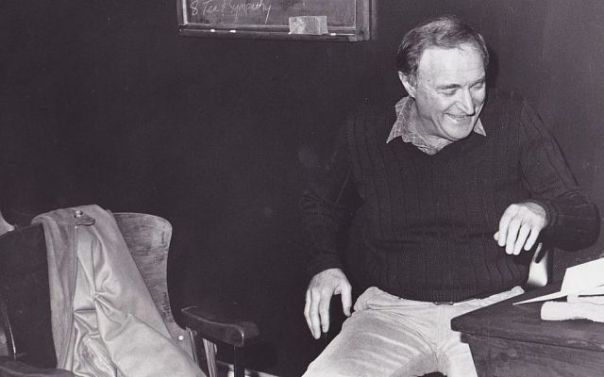
W – Wynn Handman

“In 1963, a small not-for-profit theater called the American Place Theatre was founded in St. Clements Church, a Victorian Gothic church tucked away in Manhattan’s Theater District. The theater was founded by the minister and actor Sidney Lanier, acting teacher Wynn Handman, and actor Michael Tolan. Their goal was to foster good writing for theater by providing a place where American writers, both emerging and established, could find support in writing new works for the stage. Their vision shines through the entirety of the American Place Theatre records, recently opened to the public at NYPL’s Billy Rose Theatre Division. A notable characteristic of this fledgling theater was that it sought to give a stage to poets who wished to use the dramatic form. While poetic dramas are not revolutionary, modern verse poets who also wrote plays were a bit of a rarity. Ezra Pound…

View original post 239 more words

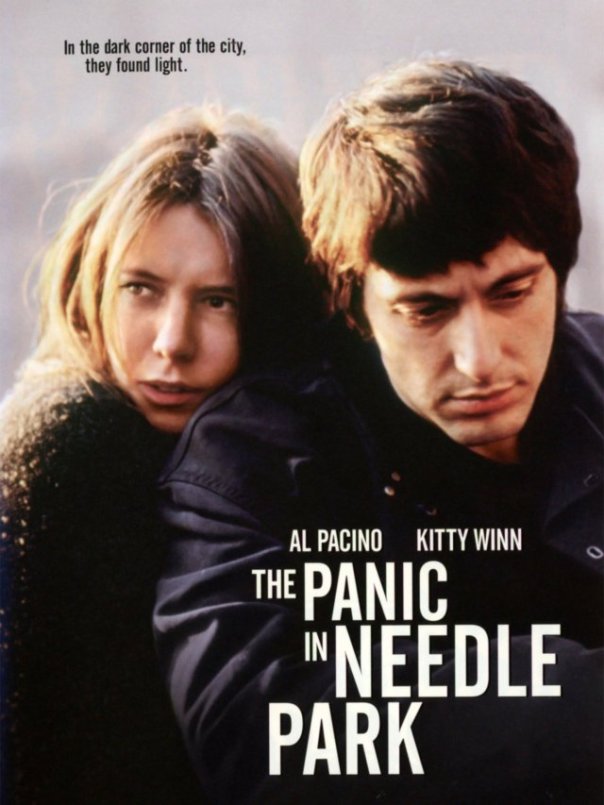
The Panic in Needle Park – Jerry Schatzberg (1971)

1960s: Days of Rage's avatar1960s: Days of Rage


The Panic in Needle Park is a 1971 American romantic drama film directed by Jerry Schatzberg and starring Al Pacino and Kitty Winn. The screenplay was written by Joan Didion and John Gregory Dunne, adapted from the 1966 novel by James Mills. The film portrays life among a group of heroin addicts who hang out in ‘Needle Park’ (then-nickname for Sherman Square on Manhattan‘s Upper West Side near 72nd Street and Broadway). The film is a love story between Bobby (Pacino), a young addict and small-time hustler, and Helen (Kitty Winn), a restless woman who finds Bobby charismatic. She becomes an addict, and life goes downhill for them both as their addictions worsen, eventually leading to a series of betrayals. In New York City, Helen returns to the apartment she shares with her boyfriend, Marco, after enduring an unhygienic and inept abortion…

View original post 342 more words

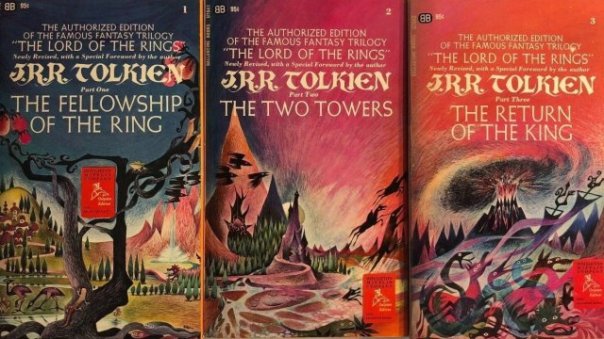
When the Nobel Prize Committee Rejected The Lord of the Rings: Tolkien “Has Not Measured Up to Storytelling of the Highest Quality” (1961)

1960s: Days of Rage's avatar1960s: Days of Rage


“When J.R.R. Tolkien’s Lord of the Rings books appeared in the mid-1950s, they were met with very mixed reviews, an unsurprising reception given that nothing like them had been written for adult readers since Edmund Spencer’s epic 16th century English poem The Faerie Queene, perhaps. At least, this was the contention of reviewer Richard Hughes, who went on to write that ‘for width of imagination,’ The Lord of the Rings ‘almost beggars parallel.’ Scottish writer Naomi Mitchison did find a comparison: to Sir Thomas Malory, author of the 15th century Le Morte d’Arthur — hardly misplaced, given Tolkien’s day job as an Oxford don of English literature, but not the sort of thing that passed for contemporary writing in the 1950s, notwithstanding the serious appreciation of writers like W.H. Auden for Tolkien’s trilogy. … The note was discovered recently by Swedish journalist Andreas Ekström, who delved into the Nobel…

View original post 284 more words

I Called Him Morgan – Kasper Collin (2016)

1960s: Days of Rage's avatar1960s: Days of Rage


ICalled Him Morgan is a 2016 Swedish produced documentary film written and directed by Kasper Collin which gives an account of the life of and relation between jazz trumpeter Lee Morgan and his common-law wife Helen Morgan, later responsible for his murder in February 1972. The documentary was produced over a period of seven years, 2009 – 2016, and edited over a period of three years. Among the participants in I Called Him Morgan are Wayne Shorter, Jymie Merritt, Billy Harper, Judith Johnson, Bennie Maupin, Larry Ridley, Paul West, Larry Reni Thomas, Al Harrison, Charli Persip and Albert ‘Tootie’ Heath. … There are 20 reviews registered at Metacritic. Eight of them are registered as 100/100, and the film has reached a metascore of 90/100. On Rotten Tomatoes, the film has a 96% ‘Certified Fresh’ score based on 52 reviews. The…

View original post 222 more words

Henry Miller: Hungry, Homeless, Happy

1960s: Days of Rage's avatar1960s: Days of Rage


“There’s only one historical figure I’ve ever come across who claimed he was hungry, homeless, and happy simultaneously. Given the brashness of his personality and his legacy, it is not surprising that it was Henry Miller who declared that these circumstances colored his existence during his pivotal Paris years. As he roamed the streets of the city, he seesawed between the three states of being and admits he experienced them concurrently more often than not. He was sleeping on sofas and hanging out at cafés hoping a familiar face would stop in to treat him to a croque-monsieur and a glass of wine. In spite of this vagabondage, he claims he was genuinely content because he was writing in a way that excited him for the first time in his life. He also maintained, at least early on, that he didn’t consider himself to be a writer. ‘I am but a man and I…

View original post 294 more words