
All posts by Dr. Dean Albert Ramser

Unknown's avatar

About Dr. Dean Albert Ramser

Slava Ukraine! Supporting student success in Ukraine. Retired educator (English / Education: GED2EdD; "Ми будемо поруч один з одним як члени людства в найкращому сенсі цього слова". (Горан Перссон) Слава Україна 🇺🇦 "We will be there for one another as fellow members of humanity, in the finest sense of the word." (Goran Persson) https://cal.berkeley.edu/DeanRamser

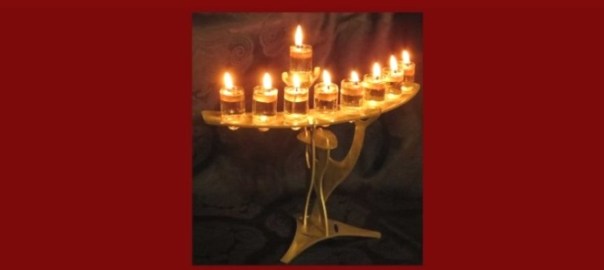
A Poem for Hanukkah

wordcloud9's avatarFlowers For Socrates

Emma Lazarus  (1849-1887) is now remembered for her poem The New Colossus, enshrined in the base of the Statue of Liberty, which contains the lines, so often quoted when immigration is talked about in America: “Give me your tired, your poor/ Your huddled masses yearning to breathe free/ The wretched refuse of your teeming shore/ Send these, the homeless, tempest-tost to me/ I lift my lamp beside the golden door!”

She was born in New York City on July 22 in 1849, the year that outgoing U.S. President James K. Polk became the first president to have his photograph taken while in office, incoming President Zachary Taylor refused to take his oath of office on a Sunday, and thousands of ‘49ers’ were joining the California Gold Rush. Lazarus was born into a large and prosperous Sephardic Jewish family, the fourth of seven children. She became a prolific writer and…

View original post 454 more words

A Poem for Native American Heritage Day

wordcloud9's avatarFlowers For Socrates

The Friday after Thanksgiving has been designated as Native American Heritage Day in the U.S. since 2008, but some Native Americans feel the day is a poor choice, since it coincides with the aggressive capitalism and greed of ‘Black Friday,’ annual opening day of the Christmas shopping frenzy. Thanksgiving itself is viewed by some as a “day of mourning”  as it celebrates the survival of the Pilgrims, part of the first wave of colonialists to arrive in North America, which would so drastically wipe out millions of the First Peoples, and end forever the way of life of the survivors.

Joy Harjo (1952 – ) is a poet, musician, author, activist and teacher, and the current U.S. Poet Laureate. Born in Tulsa, Oklahoma, she is member of the Mvskoke tribe, and a highly influential figure in the second wave of the artistic Native American Renaissance. She studied at the Institute of American Indian…

View original post 331 more words

“The Ecstasy of Gold”

1960s: Days of Rage's avatar1960s: Days of Rage


“‘The Ecstasy of Gold’ is the title of a song composed by Ennio Morricone and used to great effect in the 1966 Sergio Leone film, The Good, The Bad & The Ugly. Over the last 50 years, the song has become something of a classic, used on various occasions for its stirring, rising tempo and triumphant and uplifting energy – from Metallica concerts and sporting events to mainstream TV advertising. ‘The Ecstasy of Gold’ is among Morricone’s most famous compositions, and its performance is aided by the amazing voice of Edda Dell’Orso, who is featured in the song’s stirring vocal high notes. The song is played during a famous scene in the film when Tuco – ‘the ugly’ character, played perfectly by Eli Wallach – is frantically searching through a huge Civil War-era graveyard for the name of a gravesite that is said to hold a fortune in gold…

View original post 238 more words

Hate and Today’s Society

Nan's avatarNan's Notebook

hate

Many of us recognize that HATE is the in-play factor of much that is happening in today’s society. 

Hate towards blacks. Hate towards gays. Hate towards immigrants. Hate towards atheists. Hate towards Muslims. Hate towards “liberals.” Hate towards the poor. Hate towards …. you-name-it. 

In fact, when push comes to shove, no one and/or no group is excluded from being the target of Hate.

It’s difficult to accept, but ALL of us hold Hate in our hearts towards someone or something. Sometimes this “Hate” can be beneficial in that it serves as a protective device. However, in most cases, it is actually harmful — not only to others, but to our own psyche as well.

Of course it’s natural for us to claim: “I don’t Hate! I just intensely dislike (something or someone).” However, note the following definitions of Hate:

  • (Verb) Dislike intensely; feel antipathy or aversion towards
  • (Noun) The…

View original post 172 more words

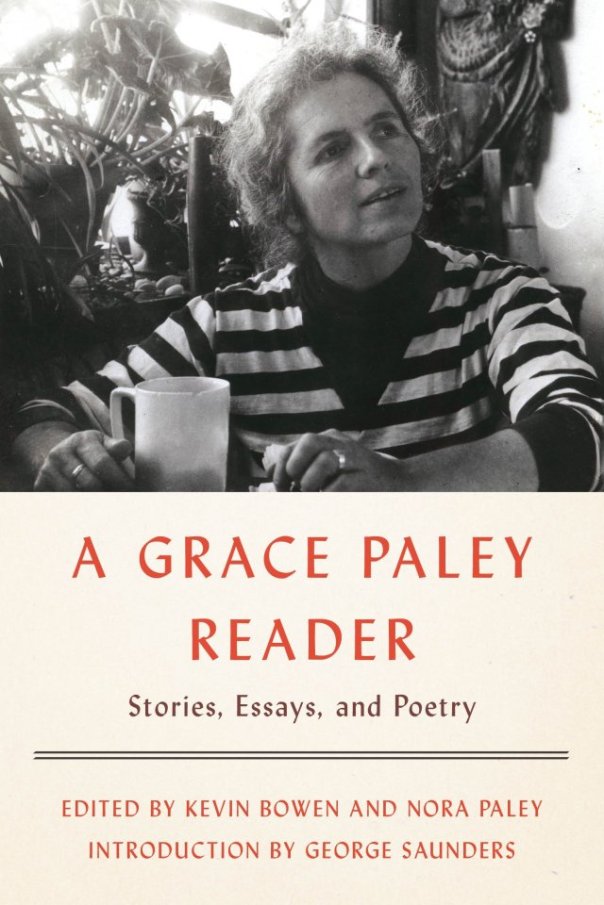
A Grace Paley Reader: Stories, Essays, and Poetry

1960s: Days of Rage's avatar1960s: Days of Rage


“I sit down with a cup of tea. I have to get some words on a page. The problem this morning is that I cannot pull my eyes away from the news: chemical weapons, toddlers in oxygen masks, fathers holding lifeless babies, politicians playing war games. I have a hard time focusing on mornings like this one. I think of a friend, a bright voice for good, who had to log off of social media for a time, hashtag signoffs: #resist, #soldieron. I know that feeling. I am like a runner at the starting blocks, waiting for someone to pull the trigger. I think I could change the world if someone would just pull the trigger … What I wouldn’t give for a little Scotch in my tea on a morning like this. I pick up Grace instead. The new A Grace Paley Reader, edited by Kevin Bowen and…

View original post 297 more words

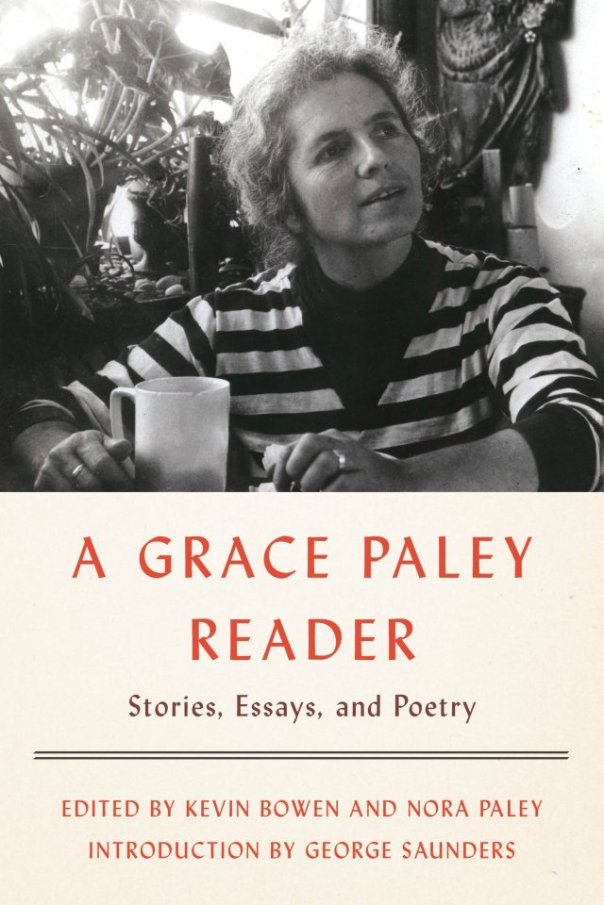
A Grace Paley Reader: Stories, Essays, and Poetry

1960s: Days of Rage's avatar1960s: Days of Rage


“I sit down with a cup of tea. I have to get some words on a page. The problem this morning is that I cannot pull my eyes away from the news: chemical weapons, toddlers in oxygen masks, fathers holding lifeless babies, politicians playing war games. I have a hard time focusing on mornings like this one. I think of a friend, a bright voice for good, who had to log off of social media for a time, hashtag signoffs: #resist, #soldieron. I know that feeling. I am like a runner at the starting blocks, waiting for someone to pull the trigger. I think I could change the world if someone would just pull the trigger … What I wouldn’t give for a little Scotch in my tea on a morning like this. I pick up Grace instead. The new A Grace Paley Reader, edited by Kevin Bowen and…

View original post 297 more words

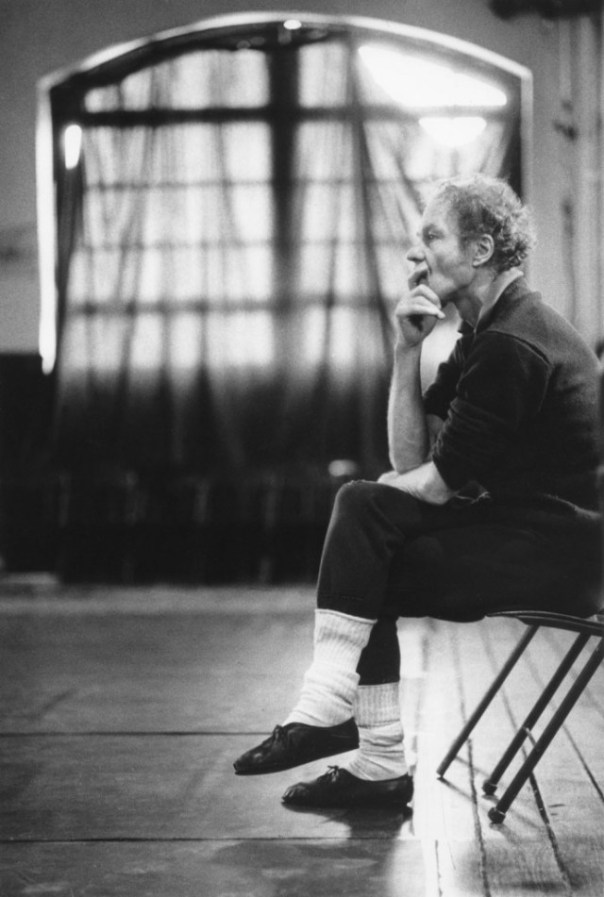
Never Pure Source: In Response to Merce Cunningham

1960s: Days of Rage's avatar1960s: Days of Rage


“… In 1960s diaries and letters, Merce Cunningham records days spent cooking beans and watching television, flipping between old movies, the news, and variety shows. In different spaces in which he lived and worked throughout the decades, I imagine him solo, or alongside his partner John (Cage), using chance to determine structure of movement in time and space—throwing hexagrams, flipping coins, tossing dice, opening his work up to other flows. TV waves discharging into the ether, refracted in choreographic form. Western movement, for the first time, unhinged from the frontal perspective of the proscenium, holding multiple centers, requiring many attentions—discontinuous, infinite, prismatic like nature and television. When you open your process up to the unknown, what other logics are let in? Does chance have interiority? Authorial voice, perspective, desire? Though many who worked with Merce insist chance was only one strategy by which he made dances, decisions made by generating…

View original post 221 more words

A Friend, An Enemy

1960s: Days of Rage's avatar1960s: Days of Rage


“On April Fool’s Day, 1965, Amiri Baraka (known then as LeRoi Jones) sent a postcard to the poet Kenneth Koch. The image on the front of the postcard is racist: three alligators chase a Black man, who looks up to heaven with tears streaming down his face. A four-line poem presents his ‘prayer’: Dese gater looked so feary / And yet dey ‘peered so tame / But now that I done met ’em / I’ll neber be de same. According to the Newberry Library, the Curt Teich Company began producing postcards with this image in 1940. But Teich produced similar postcards as early as 1918, and the ‘alligator bait’ stereotype has a much longer history. On the back of the postcard, Baraka writes: Dear Kenneth,  Better start saying your prayers, if you think you can spend your time playing chess while millions struggle!  Love, LeRoi 2X  The postcard was sent…

View original post 207 more words

“Is everybody okay? Let’s get something to eat”: On George Carlin and the Intellectual Bankruptcy of the Right

plthomasedd's avatardr. p.l. (paul) thomas

In Season 4, episode 3 of Seinfeld, the show becomes a meta-sitcom. George and Jerry pitch a sitcom to NBC, Jerry, and establish what would become the short-hand way to describe the actual show, expressed by George:

George Costanza: I think I can sum up the show for you in one word. Nothing.

Russell Dalrymple: Nothing?

George Costanza: Nothing.

Russell Dalrymple: What does that mean?

George Costanza: The show is about… nothing!

Jerry Seinfeld: Well, it’s not about nothing.

George Costanza: No, it’s about nothing.

Jerry Seinfeld: Well, maybe in philosophy, but even nothing is something.

Seinfeld S4 E3

But, if you dig deeper, ironically, Seinfeld is not just a “show about nothing,” but the characters themselves are, well, let’s allow Jerry to explain (after being challenged by his girlfriend that he never gets mad):

Patty: OK, Jerry, enough. I’m…

View original post 1,428 more words

Banning Books Is Un-American

plthomasedd's avatardr. p.l. (paul) thomas

[Submitted to newspapers across SC without response, so far; will update if/when published]

person holding Ray Bradbury book
Photo by Will Porada on Unsplash

In the fall of 1973, the Drake School Board in North Dakota banned Kurt Vonnegut’s Slaughterhouse-Five.

Vonnegut, born November 11, what is now celebrated as Veterans Day, was a World War II veteran who survived the firebombing of Dresden. That horrific event a couple decades later became Vonnegut’s most celebrated novel, the same novel banned after being assigned in Drake High School.

“I gather from what I read in the papers and hear on television that you imagine me, and some other writers, too, as being sort of ratlike people who enjoy making money from poisoning the minds of young people,” Vonnegut explained in a letter to the school board. There he also defended the value of his novels: “They beg that people be kinder and more responsible…

View original post 580 more words