

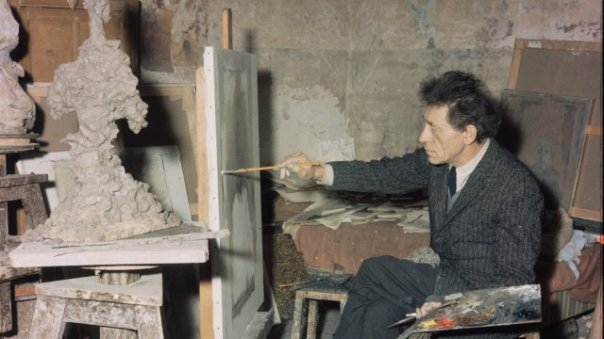
 Studio in Paris in 1958
“Alberto Giacometti (…10 October 1901 – 11 January 1966) was a Swiss sculptor, painter, draftsman and printmaker. Beginning in 1922, he lived and worked mainly in Paris but regularly visited his hometown Borgonovo to see his family and work on his art. Giacometti was one of the most important sculptors of the 20th century. His work was particularly influenced by artistic styles such as Cubism and Surrealism. Philosophical questions about the human condition, as well as existential and phenomenological debates played a significant role in his work. Around 1935 he gave up on his Surrealist influences in order to pursue a more deepened analysis of figurative compositions. Giacometti wrote texts for periodicals and exhibition catalogues and recorded his thoughts and memories in notebooks and diaries. His critical nature led to self-doubt about his own work and his self-perceived inability to do justice…
View original post 198 more words





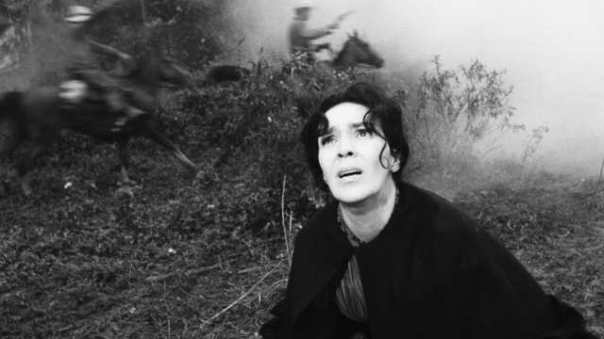 Lucía: In Progress “What can it mean for cinema to be revolutionary? Answering a version of this question in a 1977 interview, the Cuban filmmaker Humberto Solás stressed the importance of real-world context. In a capitalist environment, a revolutionary film must strive for the effect of a guerrilla action, transcending mere analysis or exposé. In a socialist society, however, with the revolution already achieved—as in the Cuba of the sixties, where Solás and his compatriots were forging a very particular cinematic New Wave—what is needed is not a call to arms but a reminder of the work still to come. Such films, Solás argued, ‘must present the revolution as a permanent fact, an ongoing process which nothing can reverse.’ Few movies have ever adopted this mandate with the conceptual sophistication and pointed vigor of Solás’s first full-length feature, Lucía (1968), an astonishing reinvention of the historical epic. With its…
 dean ramser